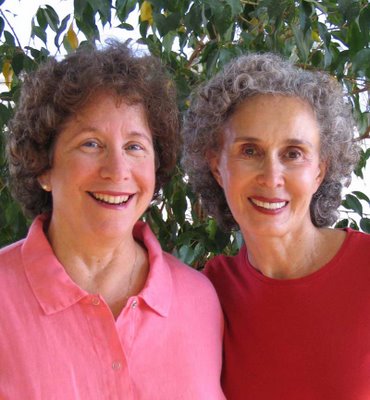
Today on our blog we are pleased to welcome Carol Tavris, best-selling author (with Elliot Aronson) of “Mistakes Were Made (But Not by Me): Why we justify foolish beliefs, bad decisions, and hurtful acts.”
Q: Carol, why do so many of us prefer to justify mistakes rather than admit we were wrong about something?
A: First of all, it's no surprise that people lie to others to cover up misdeeds, crimes, blunders and bad behavior - children do it as soon as they can talk, and we adults do it to protect our jobs, relationships, and reputations! But the kind of "self-justification" we talk about in our book is not the same as lying to other people. It's an unconscious mechanism that allows us to lie to ourselves, and it comes into play following just about every decision we make or important action we take.
The mechanism is "cognitive dissonance": the uncomfortable sensation we feel when an important belief or memory or decision clashes with evidence that it might be wrong. If you smoke, and you know smoking is dangerous, you're in dissonance, and you have to resolve it - either by quitting or by justifying your smoking ("it keeps me thin"). But the most difficult dissonance occurs when we - smart, ethical, kind people that we are! - learn we have done something dumb, unethical, or hurtful. The easiest way to reduce that dissonance is to simply blind ourselves to the evidence and justify what we did. "Sure I took my sister’s bracelet from mom’s estate, but I deserved that bracelet after everything mom gave her all those years." We usually do not feel consciously that we are "justifying"; we feel merely that we are right - because of the brain's need to preserve a coherent belief system and protect our view of ourselves.
Q: Are there any particular aspects of this process that affect "sandwiched boomers?"
A: You bet. One way is that in midlife, we become aware that we have lived long enough to write our life story: how we got to be where we are, who we are, what our parents did to us, and so on. As we write that "life narrative," we literally shape our memories to fit it. Elliot and I think of memory as a "live-in, self-justifying historian": as research shows, we tend to forget information that conflicts with our version of events, and remember information that confirms it. If your "story" is that you suffered your whole life because of your mother's selfishness or neuroticism, for example, you may overlook or forget the many good things she did for you - that information is dissonant with how you see her.
Also, notice that when many people tell their life story, they often start writing themselves out of their part in it - the part about their responsibility. "You mean I had something to do with starting that family rift? Don't be silly - it was entirely her fault." We say, "My dad treated me that way because of how he was"; we don't say, "Maybe he treated me that way because of the kind of kid I was."
Amazingly, our memories are a better sign of how we feel now about our parents or grown children than about what actually happened. This is why generations often get into fights about "what really happened." So "sandwiched boomers" are in a pivotal time: they are listening to their elderly parents' accounts of events, their children's, and figuring out their own. And wondering why there is so little overlap! The fascinating opportunity, of course, is that if we can put aside our own self-justifications and certainty that our story is the only right one, and ask our parents and children for their stories, we might actually learn something.
Q: What are the benefits and dangers of self-justification?
A: Self-justification is hard wired for good reason: it lets us sleep at night without tormenting ourselves about bad decisions, or roads not taken, or embarrassing mistakes. In fact, the people who can't reduce dissonance often suffer precisely because they keep beating themselves up over things that can't be undone. But the downside is this: If we blind ourselves to the possibility that the decision wasn't the best, that we did make a bad mistake, or that the road we didn't take might have been better, we can't change direction when we need to. We can't learn from the mistake or that impulsive decision. We can't stop traveling down the wrong road if we keep justifying it as the best and only road in the world.
Q: How can this refusal to admit we are wrong affect the relationships with our family-in-flux?
A: Most quarrels between couples, within families, and across generations boil down to "I'm right and you're wrong." But if both sides are willing to stop justifying their way of doing things as the only possible way, they can become less self-defensive, more ready to hear the other side's views, and, who knows, more able to correct some of their own failings. If people can let go of the need to be right, and focus instead on how to solve the problem that they keep quarreling about, they are going to be a lot better off.
Q: So how can we learn to admit our mistakes?
A: First, we have to take the sting of dissonance out of it. We can understand that mistakes, bad decisions, or lapses of judgment do not mean we are stupid or evil; they just mean we are human. So the task is to find the path between: (a) justifying the mistake and pretending it was the best thing in the world to have done and (b) punishing ourselves with constant remorse and embarrassment. The middle way is not to minimize or ignore the mistake, but rather to face it and try to figure out how and why it happened, so we won't make it again. Almost anyone can learn to do this. It is not a deep-seated personality trait but a malleable attitude about the self.
Q: What good comes from acknowledging when we are wrong?
A: We become more human, more sympathetic, when we come down off the pedestal of self-righteousness. In our professional lives also, progress depends on our having the ability to say, "this theory doesn't have the data to back it up" or "this procedure isn't working," instead of clinging to it out of professional pride.
Scientists are trained to look not only for evidence that supports what they already believe, but also for evidence that disconfirms it. If more of us pushed ourselves to do this, think of how much more effective we could be. We'd be able to see the world more clearly, more truthfully, rather than through the distorted dark glass of self-justification.
Q: What do you think is the best way to admit mistakes?
A: A simple "I made a mistake; I'm sorry" goes a long way toward defusing anger and setting the stage for reconciliation and problem solving. This is especially important across generations, because our culture encourages so much parent-blame and buck-passing. Setting down the burden of blaming others, and letting go of the need to deny our own part in our own life story, can be liberating and exhilarating. It allows us to come to terms, make amends, build bridges - and move forward.
Carol, thank you for joining us today. We have enjoyed reading your stimulating book and hope that our readers will find it fascinating as well. We look forward to talking with you again.
Labels: Carol Tavris, communication, conflict, Elliot Aronson, family, generations, Mistakes Were Made, Sandwiched Boomers