Family Relationships

Join other women in the sandwich generation - share ideas and solutions as you learn to nourish family relationships without starving yourself.

Wednesday, December 14, 2011

Poets Gloria Vando and Bill Hickok Visit our Blog


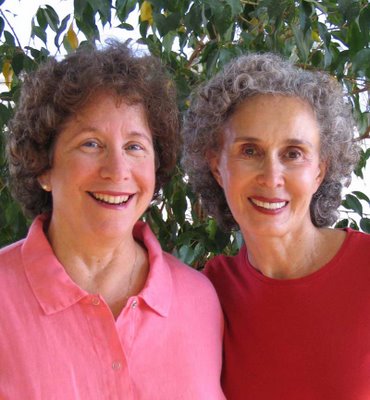
Today we have a unique Virtual Book Tour for you - a married couple who each have published books of their poetry, Gloria Vando and Bill Hickok. Gloria has been writing poetry since she was in junior high school but for Bill it's a more recent avocation. Gloria's poetry has won her accolades and awards over the years and Bill has now received rave notices for his first book, published close to his 80th birthday. We welcome them warmly to our blog today to talk about their love of poetry.

NR: Bill, you just published your first book, The Woman Who Shot Me & Other Poems, at age 80. As a cousin of Wild Bill Hickok and after a career in construction, how did you begin writing poetry?

Bill: Actually I've been writing for years - it comes easily to me. When I have an idea, I can just start, with no writer's block. I've done many op-ed pieces for major newspapers - I enjoyed making them humorous. After meeting Gloria at an art opening in Kansas City over 30 years ago and getting married six months later, I began studying poetry. In 1992, we founded The Writer's Place, a literary center in Kansas City - and ever since we moved to Los Angeles, I've been active in a poetry workshop group here.

NR: How do the poems in The Woman Who Shot Me reflect who you are now?


Bill: The book is a mixture of memory, fantasy, and how I feel today. I'm lucky in that flashbacks to my youth will appear from years ago and I build on that to create a poem. At my age, I have a long span to look back on.

NR: What's it like living with another poet? How does that affect your work?

Bill: We're very supportive of each other. We have no ego in it. If one of us asks, "What do you think?" we'll give suggestions about how to add "meat" to the work - to move the reader through laughter, tears, recognition.

NR: Gloria, you've won numerous prizes and honors for your books, including awards for Promesas: Geography of the Impossible and Shadows & Supposes. How did you decide to dedicate your life to writing poetry?

Gloria: It was never a conscious choice. I vacillated between three loves: philosophy, literature, and painting. I thought for a while I would be an artist. But every time I tried to make art I felt inhibited, as though I were communicating in the wrong language, writing with the wrong hand. The correct hand, the comfortable hand, drew words.

But I think my love of poetry goes back to my childhood. I grew up in a family that revered literature. Every aunt, uncle, cousin could recite major poems by heart. My grandmother, with whom I lived as a child, regaled me with poems and stories. She was an avid reader and storyteller. My father was a poet and my mother’s first poetry book was published when she was 68 years old. My daughter, Anika, a singer-songwriter, is now writing poems too, so I suppose it runs in the family. As a child, I attended many Sunday afternoon recitals that featured Latino entertainers in a variety of art forms that included dance, operatic arias, string quartets, classical guitarists, and declamadores, who recited poetry and got standing ovations. Looking back on this now, I see that my early appreciation of poetry must have begun then. I was keenly aware of the deep and sincere respect the sizable Latino audience maintained for poetry and for those who wrote and recited it. I began memorizing poems at an early age. And I began writing them.

NR: What part do you think your multicultural background has played in your poetry?

Gloria: As a member of two cultures I feel a part of, yet apart from, each one - a tricky balancing act, because poems have to be anchored somewhere. I enjoy my bilingualism. Many Spanish words have an emotional content for me that their English counterparts cannot approximate. To write solely in English would be less than satisfying in certain situations. And Spanish has a rhythm and music that I feel enriches my work, especially in my first book, Promesas, which deals with the immigrant experience and my family roots.


One always hopes for a universal theme, one that touches everyone. As artists we are out of the mainstream, the outsiders, so it’s comforting to connect with others through our craft. I hope to gain understanding, empathy, acceptance of other cultures. There is entirely too much unnecessary suffering in the world. Perhaps I can help alleviate a bit of it.

NR: What are your muses? Where does your inspiration come from?

Gloria: Stanley Kunitz said poems are gifts. And they are! They come at odd times and I am thankful for them. I wrote one of my favorite poems, “Growing Into Lilac,” while driving a car on Fairfax Avenue in Los Angeles. Not having a camera, I made a picture with words: “Three women in lilac saris, their scarves / uncurling in the cool afternoon breeze, / carry their children in their arms beneath / a canopy of jacaranda trees,…”

As a rule I prefer to write poetry late at night when it’s quiet and my censors are fast asleep. I let the poem take me wherever it wants. The initial writing is almost unconscious. It’s an adventure, a discovery. I write longhand, in pen, on blank paper so there are no lines to inhibit me. Then I transcribe it to my computer, print it out, revise it, print it out again, revise it again, and again.

NR: In addition to writing poetry, you also publish others' works. Tell us a little about Helicon Nine Editions, where you are the editor-in-chief.

Gloria: In 1977, I founded Helicon Nine: The Journal of Women’s Arts & Letters - we published the work of over 500 women artists, writers, musicians, and scholars. In 1990 it evolved into Helicon Nine Editions, a small press that publishes fine books of poetry, fiction, essays, and anthologies.

NR: What's coming up for you now?

Gloria: A truly wonderful project! My mother, my daughter, and I have a book of our poems, Woven Voices: Three Generations of Puertorriqueñas Look at Their American Lives, coming out this spring with the cover done by another daughter, Lorca. I’m co-editing and publishing an anthology of poems about the economy, In the Black/ In the Red: Poems of Profit & Loss, which features prize-winning poets and artists including four poets laureate of the United States and of individual States

NR: What's it like to work with your mother and daughter?

Gloria: It’s a privilege and a pleasure. My mother is wise and talented and a survivor---she's 95. She's also very funny and we giggle a lot. My children are kind, gracious, generous, and they make me laugh. They care about people, the world, the animal kingdom, the environment - they're activists. And they're creative: musicians and in theatre. They are, in short, what we call in Spanish, buena gente (good people). They give me hope for the future of our planet.

NR: What advice would you give to other women wanting to pursue a career in the arts?

Gloria: Envision where you want to go and start there. Try to get lots of support. I have this ridiculous idea that I can do anything I set out to do. Now that's pure nonsense, because I'll never be able to fly. But I can soar in metaphorical ways. And you can too.

Here’s a story I tell my students. I grew up reading T.S. Eliot, William Butler Yeats, and the other gods of that generation. They were a tough act to follow - not to mention Shakespeare. I once asked Virgil Thomson, the American composer, who had studied music in Paris with Nadia Boulanger, why so many young American composers went to Paris to study with her. “Because,” he said, “she gave us permission not to write like Beethoven. She gave me permission to write like me, a young Baptist from Missour-ah!” I was so happy that I hugged and kissed him, because he had given me permission to write like Gloria Vando—in other words, someone with a unique vision to share and to celebrate!

NR: Our thanks to Gloria and Bill for joining us today and reminding each of us that we have permission to be our authentic selves. If any of you aspiring artists out there have questions for our poet friends, click on "comments" and let us hear from you.

Labels: , , , , ,

Wednesday, March 09, 2011

Living the Life of Your Dreams


We've come across an new ebook that we want to tell you about. Written by Caryn FitzGerald, it features 30 ordinary people sharing their experiences living extraordinary lives. Living the Life of My Dreams: Essays & Interviews with 30 Ordinary People Living EXTRAordinary Lives can inspire you with some amazing stories of people who have gone from ordinary to extraordinary.

You'll find plenty of practical ideas in Caryn's book about how to create the life you want by tapping into your passions and talents. And the message about perseverance that runs throughout the book - take action with a first step and stay on the path - is an excellent reminder for all of us.

Featured are people such as:
Nora Dunn, The Professional Hobo
Shelly Rachanow, Author of What Would You Do If You Ran The World
Sally Shields, Speaker, Radio Personality and Author of Amazon.com bestseller, The Daughter-in-Law Rules
Pablo Solomon, International Artist
Shirley Cheng, Blind at 17, Author with over 25 book awards a decade later
Achayra Sri Khadi Madama, Yogi, MMA trainer with 4 black belts earned after age 50!

Caryn has arranged to offer you bonus gifts from her partners around the world, if you purchase her book today:
Courage and Lessons Learned: Reaching For Your Goals - our ebook with practical tips for creating your own success
The Self Improvement Guide
Journey to Shangri La - full CD
The Daughter-in-Law Rules ebook
and over 35 more bonuses available for one day only – March 9, 2011

To learn more about Caryn's book and take advantage of this inspirational offer, purchase the e-book today and receive the links to download your bonus gifts.

Labels: , ,

Thursday, December 09, 2010

Elizabeth Edwards: A Source of Inspiration

Elizabeth Edwards, diagnosed with breast cancer in 2004, died Tuesday at the age of 61. She often said she wanted to be in control and define her own life, not be defined by cancer or her husband's affair. After their separation, she figured out a new way of interacting with her estranged husband that was healthy for her children. Because for years she had been preparing them for what was to come. What Elizabeth called her 'dying letter' was really a lesson in living.
Sept. 10, 2010 - Los Angeles, California, USA - Sep 10, 2010 - Los Angeles, California, USA - ELIZABETH EDWARDS (Senator JOHN Edwards wife) at the Stand up To Cancer Los Angeles event held at Sony Studios. © Red Carpet Pictures
At one point Elizabeth wrote, "The days of our lives, for all of us, are numbered. We know that. And yes, there are certainly times when we aren't able to muster as much strength and patience as we would like. It's called being human. But I have found that in the simple act of living with hope, and in the daily effort to have a positive impact in the world, the days I do have are made all the more meaningful and precious. And for that I am grateful."

A source of inspiration, hers was a struggle of extraordinary dimensions. Elizabeth lived with high political ambition, marital betrayal, advancing cancer and optimistic determination. Her lasting legacy was that she weathered life's storms with fortitude and grace.

In a recent interview she said that she wanted to be remembered as someone who stood in the storm and, when the wind didn't blow her way, adjusted her sails. Elizabeth Edwards was a role model for all of us.

Labels: , , , , , , , ,

Monday, July 26, 2010

Families Are Inspired in the National Parks

Given your limited budget this year, have you made any plans for summer vacation? For some Sandwiched Boomers, squeezed between caring for growing children and aging parents, the choices may be limited.

According to a recent poll, close to 80% of adults believe that family and friends are more important than possessions - in other words, relationships trump 'bling' in creating happiness, satisfaction and fulfillment of the American dream. So, in these tough financial times, families are still taking vacations together yet are managing to cut back on their spending. Many are accomplishing this feat by visiting the National Parks - figures show that attendance has been unusually high.

Whether or not you choose to visit the Parks, this week we'll focus on some ideas about what goals you can achieve by vacationing together. Your kids will grow from the experience and you'll all have fun together.

Engage in the world around you. Join with other families exploring the country or start by becoming more involved in your own community. What are your family's interests and passions? Hiking, history, nature, adventure, native plants and animals? You can learn more about them together and expand your universe at the same time.

Find role models to inspire you.. Sculptor Gutzon Borglum dreamed about creating a memorial to American heroes that would last through the ages. Beginning in 1927 he worked in the mountains of South Dakota, drilling and chiseling until by 1941 he had sculpted Presidents Washington, Jefferson, Lincoln, and Roosevelt on Mount Rushmore, looking out onto the Black Hills and Badlands. These men reflect goals to strive for - courage, freedom, compassion and conservation, among others. And the nearby sculpture-in-progress, commemorating the Lakota leader, Crazy Horse, honors the richness of the Native American culture and the dignity of the tribal people.

If you are looking for more tips highlighting innovative ways to deal with the realities of the current economic situation, visit our website Her Mentor Center for information about our recent ebook, Taking Control of Stress in a Financial Storm: Practical Strategies and Resources for Success, available to download in PDF format. And tune in again later this week for more suggestions for making the most of your family vacations.

Labels: , , , , , , , , , , , ,

Monday, April 20, 2009

Susan Boyle and 'I Dreamed a Dream'

Last week we all had a chance to learn a lesson from Susan Boyle when she sang 'I Dreamed a Dream' before judges in the trials of 'Britain has Talent.' What a surreal and thrilling moment for her. And what a wake-up call for the rest of us.

Her 15 minutes of fame aren't over yet with, so far, over 20 million views on YouTube. Why the viral nature of this phenomenon? Of course we're all pretty fed up with the media focus on teen pop stars and desperate for some good news or a heartfelt story. But is it that we're really looking for a role model whose character inspires us to follow our dreams?

In some ways Susan Boyle is everywoman. Her initial appearance onstage, with the negative reaction from the audience and judges, taps into insecurities we all have. Who hasn't felt frumpy or unattractive, unsure of ourselves or at a loss for words? Susan has lived a simple life and didn't expect to be so popular. She has been busy caring for her elderly mother and practicing her music. It makes you wonder, has our society been focused on the wrong things?

Tune in all week as we discuss the values and character strengths that can lead to personal success. And weigh in with your own ideas. In the meantime, click on the title above and read an article about Captain Sullenberger and what makes a hero.

Labels: , , , , , , ,

Link

Monday, August 11, 2008

The anticipation of the Beijing Olympics has been palpable - and the spectacular opening ceremonies, at the impressive Bird's Nest, proved it was well worth the wait. The ideals of the summer games are represented by Lopez Lomong, elected by his teammates to be the the United States flag bearer. One of the Lost Boys of Sudan, he was not only rescued from a Kenyan refugee camp by a United Nations program, but also qualified for the U.S. team in the 1,500 meter race.

What a story - personified in the host country, China, which has been strongly criticized for its record on human rights. One of the key concerns has been the war torn Darfur region of Lomong's home, Sudan. Lomong joined Team Darfur, a group formed to raise awareness of perceived abuses, yet says he's an ambassador of the U.S., not the government. He's walking on eggshells and showing his character, sending a message as an athlete from Sudan: "I am worried about the kids who are dying in Darfur, kids who don't have the dream they could be good athletes or Olympians or doctors, because they will be running away from their villages separated from their families." His greatest hope is to inspire young kids around the world, like he was. And that, in large measure, is what these games are about.

Labels: , , , , ,