Family Relationships

Join other women in the sandwich generation - share ideas and solutions as you learn to nourish family relationships without starving yourself.

Thursday, May 14, 2009

Part 4 - Thelma’s Legacy

"What do you do, Mrs. Ryan?" Mrs. Huntley asked.

These people looked as if they spent most of their time inspecting the leather bindings on their books. What could she say, that if she had a big winner in the ninth she was going to buy a microwave?

"I manage my investments." Joanna looked over at her mother as she said this and smiled.

Dinner proceeded with bursts of conversation, then silence. Thelma lost track of exactly how many glasses of wine she had drunk, but still felt that she could focus adequately.

She was staring into a large black and white photograph of a bald man with a mustache. He smiled benignly.

"Who is that man, and the man in the large poster near the door?" Thelma asked Clive.

"Lenin is by the door, and that's Freud, across from you," Clive said, as if any dinner guest of his should not have asked the question.

Thelma stared at Freud. "Are you a communist, Clive?" Thelma asked stiffly.

Joanna started and then said, "Mother, really, people can like Lenin without being communists."

"Mother Ryan, that is an interesting question." Thelma knew right then that there would be nothing interesting about it.

"One's political persuasions are so rarely truly probed." I bet we're going to probe this one, Thelma thought.

"Political inclinations do relate to one's sexuality, one's economic status--," he went on.

Mrs. Huntley, who seemed, at least to Thelma's wine soaked eyes, a tad juiced herself, suddenly said, loudly, "People rarely entertain like this anymore. Do you entertain, Mrs. Ryan?"

A silence fell.

"No Mother Huntley, I don't much these days, not since my husband died." There was a pause. "I'm afraid that people might pour wine down my organ."

Mr. Huntley giggled, and Joanna, who had learned to expect anything out of her mother's lips, said softly, "Mother has a small organ that my grandfather gave to us. He was a missionary in Ethiopia."

"How lovely for you. But why would anyone pour wine down it?"

"Wine leads to that sort of thing, I think," Thelma muttered, conscious that she was now not sure where the wine was leading her. She had reached a state where she was a little shaky, where every word called for concentration and energy, so that lips would form them without slurring.

After dinner, drinks were served, and Clive bustled about, talking all the while of ideology, politics, poets, poetics, hermeneutics, a word that made Thelma want to grind her teeth. In fact, maybe she had made some funny noises with her teeth. Thelma was at the stage in her drinking in which she thought of doing things and then wondered if she had actually done them.

"Estate planning is crucial, really, and something mother and I have worked on together, as a team," Mr. Huntley went on. "We are quite a team," and he patted the fat bump on top of her stomach.

"I'm leaving my entire estate to Joanna," Thelma said proudly, and then realized that her estate would probably be the organ and the Oster blender she had had for twenty-five years.

Clive laughed and said, "Oh don't do that, Mother Ryan, we will just have to take them to the dump."

No one laughed but Clive, who experienced his wit as immediate and incisive. In the silence, though, he felt shock, not applause. Joanna went around to Thelma's chair. "It was just a joke, Mother," she turned slightly toward him, "He didn't mean anything by it."

Thelma laughed self-consciously, but then felt the kind of rage rising that she knew was very dangerous. She looked back at Joanna, in her black stockings and sensible beige skirt. So sweet, so serious, a young woman of purpose, of intellect, and very kind. In her drunken state Thelma was inordinately proud of the wonderful beauty of this fine girl, this person of substance.

How in the world had she sprung from the besotted loins of Frank and Thelma Ryan? Another wave of rage swept over her, and she knew she was descending into the madness that exists only over the edge, down into the bitter dark gall that ran inside, burning her, heavy, like molten lead. I can't lose her, not to them, she thought. She knew she was going to do it, she felt herself thinking of doing it, and then she did it.

She picked up the crystal wine glass and hurled it against the wall, where the brownish liquid splattered like dark blood.

Thelma heard someone yelling, it must have been herself; "You are not good enough to fuck my daughter in the ass."

Join us tomorrow to find out how Anne's story ends.

Labels: , , , , ,

Wednesday, May 13, 2009

PART 3 - Thelma's Drinking

"Clive, what the hell you mean, it's got to be Clyde, I'm tellin' you definitely. It's Clyde," Rafe pronounced,

"Rafe, I do think you might admit that my own daughter knows the name of her fiancé better than you do."

"Hell she do, you don't know, he could be shittin' her. It's Clyde."

Rafe, Ginny and Thelma were bound together by dreams, by the concentrations and obsessions of the gambler. Rarely did their conversation include anything external to those dreams.

"It is Clive Huntley, I'm telling you."

"It sounds like a name out of a play," Ginny muttered as she looked at the next day's racing form. "You know, 'bring me my whiskey and soda, Clive.'"

"It's Clyde," Rafe insisted.

"Rafe, I'm going to hit you in a minute," Thelma said angrily, as she took a big gulp of Jack Daniel's.

"Bring me my whiskey and soda, Clyde," Rafe said, looking down at several names he had circled in the paper.

"That does it, that really takes it. It's bad enough that she's marrying this guy, and now you keep saying he's Clyde. What if I said your name was Rade instead of Rafe?"

"It's not, it's Rave."

"Oh Christ," Thelma yelled. "First I'm listening to poetry about penises, then I'm talking to a deranged black man about names. Do I need this?"

Thelma walked a bit shakily up the steps to Clive's apartment, one of those Berkeley places she considered picturesque, with plants and trees twining around the top step. She had cut down on her alcohol consumption that day, knowing that she should be somewhat more in charge of herself. Thelma always looked a bit wispy and startled, but this evening her blonde-grey hair curled neatly around her face. She had on her best lilac dress. Lilac, the color of the soul, she thought as she had fastened the small buttons down the back.

It was a three-room apartment, and as Thelma entered, she glanced at a life-sized poster of a man with mustache, cap, and a generally gloomy visage. Mr. and Mrs. Huntley were already there. They rose graciously. Thelma lurched towards them out of nervousness and shook their hands rather harder than she should have, then backed down onto a chair.

"What would you like to drink, Mother Ryan," Clive asked with a too cheerful smile.
Thelma was so startled by the Mother bit that she giggled, imagining herself on a broomstick.

"What are you having?" Thelma asked as if she barely touched the stuff.

"White wine, that is, I think we are," and Clive looked around at everyone for confirmation. They all nodded.

"That'll be fine for me too, then." Goddamn, she thought. I should have known it, white wine drinkers.

The conversation had been interrupted by her arrival, and now Joanna started it up again, something about political systems and their relationship to ideology. Thelma now had a good chance to check out the Huntleys. The Mister was a bit portly, with grey hair and grey suit, altogether grey, period. Mrs. Huntley was something else again, short, not attractive, not colorful, unsmiling - she did have a small lump of a stomach that bulged just beneath the top band of her navy blue wool dress. Thelma hated stomachs like that and had often wondered what it would be like to carry around something bulgy like that up front. But then she couldn't hate her for her stomach, could she?

Another glass of wine was poured. Joanna was smiling at her, and once again Thelma vowed that she would not go over the edge - no going over the edge, no sir.

"The state of modern criticism, I'm talking now about hermeneutics, Marxist criticism, deconstruction - it's very healthy, active, a major contribution to the dialectic of modern thought," Clive intoned solemnly. Thelma stared at a white, hairy mole on the left side of his chin. What a pasty little man, with short, stubby fingers that looked like a baby's.

Mr. and Mrs. Huntley seemed to know what he was talking about and nodded. Joanna was in the kitchen, and wonderful warm, meaty smells were coming out through the door. Thelma looked around. The room was completely surrounded by bookshelves lined with books. Every book appeared to be arranged alphabetically. She glanced down at a shelf of records near her chair - all in order there too. For a moment, Thelma was stricken with a weird sort of awe.

Join us tomorrow for Part 4 of Anne's story.

Labels: , , , ,

Monday, May 11, 2009

"'Diving Duck Blues'" - Part 1 - Thelma's Daughter

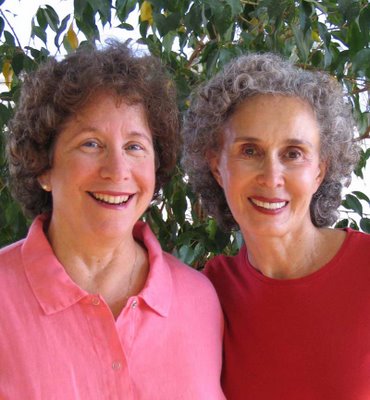
A. R. Taylor is an award-winning playwright, essayist, and writer of fiction. We're serializing one of Anne's stories, originally published in the Berkeley Insider, all this week. "'The Diving Duck Blues'" involves the agony a mother feels at the great distance between herself and her daughter. Knowing full well that she has failed her child, Thelma still tries to understand her world, and to some extent, fit in. Ultimately, she can't, but she can still love her.

"'Diving Duck Blues'"

“If the river were whiskey, babe,
and I was a diving duck,
I'd dive on that bottom,
Baby - and I'd never come up.”
Sleepy John Estes

Thelma Ryan looked down at the red and white racing ticket and then tore it up. Outside Rafe and Ginny were talking on the swing. They were happy - they had had two winners and an exacta. Thelma's luck had been bad lately, probably because the moon was in Scorpio, she thought, as she looked down at the elaborately printed invitation perched next to the African violets over the sink.

"An Evening of Poetic License." She stared at it, gloomily.
"Come on out here, Thelma," Rafe yelled, "We're doing the Pick Six."

Thelma took a sip from a glass of scotch she had nearby, and sat down at the kitchen table. She held the invitation in her hand, wondering how she could possibly go to this event, not even really sure what the event was. Someone was reading poetry, and her daughter would be there, probably be in charge or something like that. She took another sip of scotch. Thelma and her husband, Frank, had been sipping whiskey for thirty years, maintaining, as it were, a fairly constant level of happiness. How much did her daughter know about her drinking, Thelma wondered.

"Ginny likes Prince Hardcastle in the eighth, Thelma," Rafe yelled again. Rafe was a handsome black man, about sixty, with very few teeth. Thelma and Ginny met him at Golden Gate Fields when he gave them a seventy-to-one shot that came in. Since they had had no big win in eight months, this made for a serious friendship.

"It's 'Slugfest,' I'm telling you," she yelled back. "The crap it is," Ginny yelled again. Ginny was a woman of few words, vivid dress, and intense dreams. Thelma wandered out to the swing and sat next to Rafe, who was completely absorbed in the racing form. It was a cool, sweet smelling day, the kind that made Thelma glad her fifty-two years had been spent in northern California.

"I don't know what to do," Thelma muttered. "Who does, Honey?" Ginny laughed.

She handed the thick white note to Ginny, who looked at it suspiciously, turning it around several times. "What the hell is it?"

Thelma suddenly felt too close to the edge of her drinking to explain, but then she focused her eyes on a dirty, almost mashed tennis ball lying in the grass. Joanna played tennis. She had given her daughter her first tennis racket, even though the steady "pock, plop" of the game put Thelma to sleep.

"Somebody's reading poetry, maybe a poet or somebody, or people like Joanna."

"Does Joanna write poetry?"

"I think she just reads it, or I don't--" Thelma drifted off. She did not quite know what Joanna did, studied a lot, that she knew, but about what, why and all, she just could not figure out. Some have their nose in a book, others in a bottle, she thought, not without a hint of laughter.

Thelma's drinking career had been long and steady. It had risen to a crescendo when her husband Frank died, and had now tapered off to about a fifth a day. She and Frank had been drinking buddies and had always managed to get each other home. Thelma never felt any real pressure to stop, although the night she sent the Plymouth into a ditch, called the tow truck, arrived home, whispering to the driver to keep quiet because Joanna was asleep, and managed to have not a single memory of the entire event (Frank told her about it)- all of this made her feel that she should cut down, if only a bit.

Thelma thought of herself as an artist of something she called the "buzz maintain." Whiskey just kept that little hum going that made the world spin at a slightly lower speed.

And she knew exactly where the line was that separated mere fuzziness and generalized good will from complete screaming wildness and blackout. Once in a while she went over that edge just to scare herself.

She wondered now if Joanna had known that at all those school plays, those ghastly talent shows, those award nights when the fat Spanish teacher would begin with "Buenas noches, everybody," Thelma was bombed. Unfortunately Joanna was sure to walk away with two or three awards, invariably presented at the end of the evening, after a horrendously painful list of Tommy's and Joey's and Kimberley's and Tara's, all of whose parents were dutifully present and sober, at least according to Thelma's glazed appraisal of the situation.

"At least I was there," she said out loud.

"Where?" Ginny muttered, now circling choices on her card.

"That 'Easy Easy' in the fourth, I've lost so much friggin' money on that asshole, he should be runnin' claiming races at the County Fair," Rafe declared. "Strictly glue factory material."

"Why do you bet him all the time, then, genius?” Ginny said as she inhaled her cigarette dramatically,

"I don't know, I keep thinkin', this time, baby, this time, but then I know that he'll be standin' in the gate, lookin' around sayin' 'A race, what race, I just want to stand here and fart.'"

Tune in tomorrow for Part 2.

Labels: , , , , ,

Tuesday, March 31, 2009

Educate Yourself

With the G20 meetings scheduled this week to focus on the global economic crisis, Sandwiched Boomer families continue to be hit by the recession and job losses. If these changes are hitting close to home, here are two tips to help you get started on building flexibility into your family:

Educate yourself about family finances. Get involved with the family budget as you seek out ways to reduce your expenses. Keep track of minor expenditures that can add up, like dinners out, entertainment and credit card interest rate costs. Think outside the box as you educate yourself on new possibilities open to you. They may involve dramatic changes like downsizing your home, selling some possessions or even giving up plans for early retirement.

Expect a husband who has lost his job to have an emotional reaction. It's normal to feel frustrated, tense, and anxious at this time. But look for signs of more serious emotional changes such as depression, anger, or feelings of worthlessness. Stress can lead to dysfunctional responses like excess drinking, gambling or acting out. Acknowledging the common effects of job loss will help you avoid conflicts over minor issues.

Click on the title above to take you to our website, www.HerMentorCenter.com where we offer you additional articles to help educate you and improve your coping skills. Look at past articles archived in the Nourishing Relationships section and the Newsletter Library section. You are welcome to sign up for our free newsletter, Stepping Stones, on the website. The link above takes you to our article, Seven Ways to Delay Gratification in a Troubled Economy, that gives you further tips.

Labels: , , , , , , , , , , , ,

Link

Monday, January 12, 2009

Strategies to Keep Your New Year's Resolutions

Over two thousand years ago, the ancient Romans began the practice of making New Year's resolutions when they named the first month after Janus, the god of beginnings. Janus had two faces, one looking back at the old year, the other looking forward to the new one. In order to secure good fortune in the future, January became the time when you ask forgiveness for past deeds and look inward for how you can improve.

Now that you have made your own personal resolutions - still an honored ritual at this time of year - how do you avoid another universal tradition - breaking them? We all know that it's easier to say you are going to give up a bad habit than to actually stick to your new plan. As parents have told their children for centuries, "Do as I say, not as I do."

You may have resolved to finally lose the ten pounds that have been plaguing you for years, to start an exercise program you can stick to, to let go of your self-destructive smoking, drinking or over-spending habit. Or, perhaps you're one of the 50% of Americans who vow to spend more time with family and friends this year. So where do you begin? And how do you increase the odds that you will continue? With the New Year, you have a clean page, ready to take your dictation.

Click on the title above to take you to our HerMentorCenter.com article, New Year's Resolutions for Sandwiched Boomers. It gives you 9 ideas about setting New Year's resolutions to reduce pressures for members of the Sandwiched Generation. And tune in this week as we give you some tips to help you accomplish your goals.

Labels: , , , , , ,

Link