Family Relationships

Join other women in the sandwich generation - share ideas and solutions as you learn to nourish family relationships without starving yourself.

Wednesday, January 12, 2011

Optimism about Gabrielle Giffords' and America's Recovery


The recent news has been good concerning the ongoing recovery of Congresswoman Gabrielle Giffords after she was shot point blank in the head on Saturday. Reports are that she is breathing on her own as her husband holds her hand. The outpouring of prayers and good thoughts coming from Americans around the country will help to sustain her and her family through the long and arduous recovery that she faces. Support also goes out to the families of the six murder victims, whose funerals begin tomorrow as 9 year old Christina Taylor Green is laid to rest.

How will the country recover from this tragedy? Will Americans come together to face this heartbreak as one nation or will we be driven apart by finger-pointing and fractious debate? The palpable distress created by the horrific shootings have added to the already high levels of stress identified by the recent national survey conducted by the American Psychological Association.

We hope that such unfathomable horror will never personally touch you or your loved ones, but here are some techniques to use when you are coping with other stresses in your life:

Focus on what you can control and what you can accomplish, not what you can't. Close to one-half of those surveyed by APA said they experienced irritability and anger as a symptom of stress. While you often can't influence circumstances, you can recognize your emotions and control how you handle them. To move away from frustration, let go of negative thoughts and unrealistic expectations. Clearly define your goals or aspirations and keep focused on them. Make something positive come out of a negative situation.

Draw on your strengths. Survey respondents readily admitted their lack of willpower in creating a healthier lifestyle but 70% believe they can improve and institute the changes they have identified. Use the personal strengths you have relied on in the past as well as those you have developed more recently. Brainstorm new ways to apply the abilities you have in a novel way as you generate new opportunities for yourself.

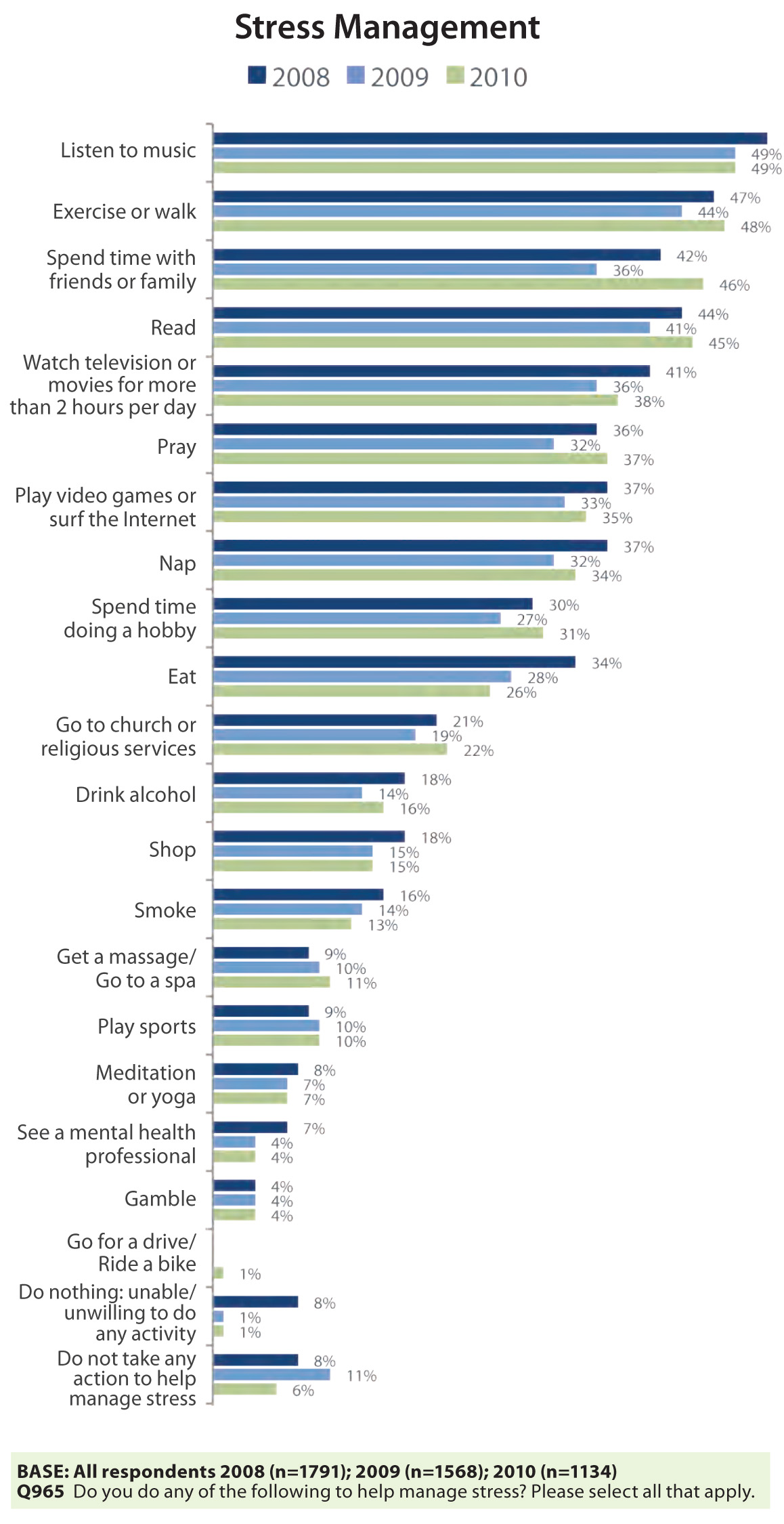
Be patient with yourself. Know that you will recover balance and serenity at your own pace. As long as you keep moving forward, you will eventually reach your destination. Like one-half of survey respondents, you may find that listening to music, exercising, spending time with family or friends and reading are comforting ways to manage your stress.

Talk about your thoughts and feelings with family and friends and reach out to others in your support system. Be open to asking for help and validation of your emotions. You may want to consult a professional counselor for a non-judgmental ear and help in sorting out your concerns. Start a journal to aid in the process of coping with your anxiety.

You'll likely find that your personal recovery, both physical and emotional, will take time. Support is valuable as you begin the process of rebuilding body and spirit and restoring hope as you cope with your own feelings of stress and anxiety. And the American Psychological Association has more tips for coping with stress in the aftermath of traumas such as these horrific shootings.

Labels: , , , , , , , ,

Monday, January 10, 2011

Congresswoman Gabrielle Giffords and Stress in America


The weekend shooting of Congresswoman Gabrielle Giffords - and the attendant murders of six bystanders - has again pushed the American psyche into overload. Though out of harm’s way themselves, many people experience stress and anxiety when faced with these kinds of uncontrollable situations. While it appears the gunman's serious mental illness motivated the shooting spree, the horrendous act itself has raised stress levels all across the United States, already high due to the poor economic climate. In fact, a recent national health survey found that 75% of the general population experiences at least some stress every two weeks, with half of these rated at moderate or high levels.

According to the American Psychological Association, key findings from their recent survey indicate that stress levels have increased over the past five years, impacting both physical and emotional health. Most Americans are feeling moderate to high stress levels, with many feeling overwhelmed and emotionally exhausted. The most frequently cited sources of stress are concerns about money, work and the economy. Nearly one-half of those who participated in the survey were fearful about their job stability. Over one-half also noted that family responsibilities and relationships were significant causes of stress.

What can you do to reduce your stress levels and take better care of yourself now and during the rest of 2011? The American Psychological Association has some suggestions to manage your distress in the aftermath of the shooting. And here are some of our tips to get you started:

Maintain balance in your life between personal needs, work and your family obligations. Don't over commit yourself even as you retain a normal routine. Carve out some special time for yourself even in the midst of caring for your growing children and aging parents.

Exercise moderately several times a week. Only one-quarter of those surveyed were satisfied with their level of physical activity. To increase yours, find an activity that you enjoy and will stick with - walking with friends, water aerobics, dance or yoga classes, training at the gym.

Eat sensibly, following a balanced diet of healthy foods rich in nutrition that serve as a natural defense against stress. Avoid the use of drugs and alcohol to self-medicate and limit your use of sugar, caffeine and cigarettes as they can contribute to your anxiety. Get enough rest and sleep to allow your body to recover from the stresses of the day. Over 40% of the survey respondents reported feeling fatigued on a regular basis and lacking in energy.

Use relaxation techniques. Set aside time for a regular routine of deep breathing, guided imagery, meditation, or other stress reduction methods. Decide to put off worrying - much of what you may fear never actually happens anyway. Remember to be open to the healing effects of laughter.

Using these tips can help you become more resilient as you cope with the stresses around you on a daily basis. And to learn more about how you can manage the pressures you face in our economic downturn, check out our ebook, Taking Control of Stress in a Financial Storm: Practical Strategies and Resources for Success.

Labels: , , , , , , , , , , ,

Wednesday, December 03, 2008

The American Psychological Association, in a survey of 2500 people from all across the country, found that stress levels have increased significantly in the past two years, especially in the last six months. Over 80% of the responders said that money was a significant worry for them. And that was before the financial meltdown of the past month. So today we have two more tips for you to avoid feeling pressured and out of control by the roller coaster economy.

Learn stress reduction strategies by attending a seminar, group, meditation or yoga class. Contact your local psychological association to find out what other resources are available in your community such as a mindfulness program. Consult with your religious counselor to discover if meditative prayer is comforting for you. Once you learn a technique that feels right, incorporate it into your daily schedule so that tensions do not build up. Gather information from the Internet or self help books about how to minimize the impact of the financial pressures you are now experiencing.

Keep communication open with your spouse, children and aging parents. Talk out disagreements before they become heated arguments that get out of control. Be honest about stating your needs and desires clearly. Don't put a lid on your emotions, just on expressing them in an aggressive manner. When conflicts arise, agree to be flexible and cooperative - and work toward reaching a compromise if possible.

Tomorrow we look at some additional strategies for coping with the stressful economic environment.

Labels: , , , , , , , ,

Thursday, October 09, 2008

A recent American Psychological Association survey found that eight out of ten Americans say the economy is a major souce of stress in their lives. Nearly half are worried about providing for their families' basic needs.

As the economic turmoil continues, there can be a ripple effect. And you or family members may experience symptoms such as irritability, insomnia, lack of motivation and feelings of sadness. What follows are some healthy strategies to help you work your way through these tough times.

Take pause but don’t overreact or become passive. As you attend to what’s going on around you, avoid getting caught up in doom-and-gloom mentality. This can lead to high levels of anxiety and bad decision making. Trty to remain calm and stay focused.

Be proactive by identifying your financial stressors and making a plan. Write down specific ways you and your family can reduce expenses or manage your finances more efficiently. Although putting it down on paper can be worrisome in the short term, committing to a plan will gradually reduce stress.

Get professional support. Credit counseling and financial planning can help you take control of your money situation. If you continue to feel overwhelmed, talk with a mental health professional who will help you understand the emotions behind your financial worries and show you ways to manage your stress.

Labels: , , , , , , ,