Family Relationships

Join other women in the sandwich generation - share ideas and solutions as you learn to nourish family relationships without starving yourself.

Wednesday, April 04, 2012

Attaining Happiness Without a Winning Lottery Ticket

Is happiness really as simple as a warm puppy? Stopping to smell the flowers? Or as materialistic as a winning lottery ticket? There have been scores of philosophers and theologians over the years attempting to define happiness and to identify its components. But recently Michael J. Fox, living with Parkinson's for over 20 years put it more plainly:

I really love being alive. I really love my family and my work. I love the opportunity I have to do things. That's what happiness is.

If you're working to increase your happiness, perhaps you've already begun with the strategies we talked about earlier this week - increasing your gratitude and engaging by using your character strengths. Today, using Fox's formula of affirmative focus, family and meaningful work accomplishments, we have four more tips for you in the quest to attain true happiness.

Savor the pleasurable events and emotions you experience. First immerse yourself in these activities, being mindful so that your experience is rich and deep. Then set aside time later to re-live and enjoy the event and your feelings all over again. You'll find that your body becomes more relaxed, your thoughts more focused and your mood more upbeat.

Build and nurture personal relationships. Studies continue to show that positive relationships provide a buffer for the stresses we all encounter and are correlated with greater happiness, well-being, optimism, improved health, even a longer lifespan. And they work to create an upward spiral - the happier we are, the more we attract additional positive relationships.

Create a meaningful life by helping others. When you make a commitment to help others, your altruism also benefits you by increasing your levels of joy and contentment. Receiving a windfall of money - like that coming from a lottery win - doesn't actually lead to a long-term rise in happiness when spent on oneself, once basic needs are met. Yet spending a portion of that money on others - either as a gift or as a charitable donation - is correlated with an increase in happiness.

Set goals for yourself and work to achieve them. Striving for and accomplishing a goal leads to increased self-esteem and a sense mastery and efficacy. When you overcome challenges along the way, it creates even deeper well-being and feelings of control. And the optimism that you have about future meaningful successes can generate authentic happiness.

President Abraham Lincoln, who went through great trials and difficulties, shared his view:

Most people are about as happy as they make up their minds to be.

How happy will you decide to be? Can you get there without depending on a lottery ticket?

Labels: , , , , , , , , , , , ,

Monday, April 02, 2012

So You Didn't Win the Lottery...Now What?


If you're reading this blog post today, the overwhelming odds are that you didn't win the record-breaking lottery over the weekend. Americans spent $1.5 billion in their magical thinking quest to win the jackpot, fantasizing about how they would happily spend the $640 million that was to be paid out to the winner. As it happened, there were three winners so the final after-tax take home this year for each will be about $100 million. Still, nothing to sneeze at.

Are you wondering how others have fared after winning the lottery? In many cases, not well. Over 1/3 of past winners were in serious financial trouble within five years, some facing bankruptcy. Others saw their health deteriorate or addictions spiral out of control. Relationships often turned sour, with friends or family taking advantage of them. And after an initial spurt in elation, most were not any happier than they were before winning.

So now that you don't have to spend time counting your fortune or interviewing and hiring a wealth adviser, here are two approaches to think about as you seek to achieve the authentic happiness you thought a winning number would bring:

Bring your experience of gratitude into the forefront. Keeping a gratitude journal can help you become more aware of what brings you pleasure. Several times a week, count your blessings and write about three specific experiences for which you were thankful that day. They could include a dramatic sunset, warm hug from a friend, tender compliment from your partner, touching story, beautiful violin concerto, delicious dessert. As you focus on these and choose not to take them for granted, you'll be increasing your level of joy. Express your gratitude to others who have made a positive difference in your life - you'll feel happier and so will they.

Engage in the world around you using your personal strengths. When you're absorbed in a challenging activity you love and are skillful at, you'll feel more alive and authentic. Your energized focus and immersion in the task at hand create flow. This peak experience is accompanied by deep feelings of fulfillment and happiness. Identifying, developing and utilizing your character strengths at work and in your leisure interests bring you flow and a sense well-being that is genuine and lasting.

For more practical and winning tips for achieving happiness, check in with us here again on Wednesday.

If you had hoped to use your lottery winnings to help with finances after your kids boomeranged home, we've also got some useful strategies for you. Log onto our interview on the Fox Business website with boomer Casey Dowd, Repopulated Empty-Nests: What to Do When Your Kids Move Back Home and let us know how our tips work for you.

Labels: , , , , , , , , , , , , , ,

Wednesday, March 23, 2011

Building Resiliency After the Disasters in Japan


The Japanese concept of gaman - strength, patience, discipline - is evident in the reactions of the people there to the cascade of disasters that have hit them: earthquake, tsunami, nuclear contamination. In the midst of widespread damage, they are grieving their tremendous loss of lives and property but are also determined to endure and already beginning to rebuild. With the tradition of working together and an attitude that "everything will be all right," the Japanese people are hoping to move forward.

What can we learn from the people of Japan about resiliency in the face of tragedy? World events - and the 24/7 news about them - contribute to the anxiety and tension we feel on a daily basis. Without the effect of these outside events, the most frequently cited sources of stress in the recent American Psychological Association survey were money, work and the economy. Over one-half of the respondents also noted that family responsibilities and relationships were significant causes of chronic stress. Today, added to that, people are experiencing additional anxiety, though out of harm’s way themselves, because of the uncontrollable events that have hit Japan.

Coping with stress is important for building resiliency and maintaining our physical as well as mental health. Earlier this week on the blog we talked about four strategies to use when you are feeling overwhelmed. Here are five more suggestions for you to use now and on a regular basis:

Practice relaxation techniques. Set aside time for a regular routine of deep breathing, guided imagery, meditation or other stress reduction methods. Decide to put off worrying - much of what you may fear never actually happens anyway. Remember to be open to the healing effects of laughter.

Exercise several times a week. Only one-quarter of Americans surveyed by APA were satisfied with their level of physical activity. To increase yours, find an activity that you enjoy and stick with it - walking with friends, water aerobics, pilates or yoga classes, training at the gym.

Eat sensibly. Resolve to maintain a balanced diet of healthy foods rich in nutrition that serve as a natural defense against stress. Avoid the use of drugs and alcohol to self-medicate and limit your use of sugar, caffeine and cigarettes as they can contribute to anxiety.

Reach out to your support system. Ask for help. Talk about your thoughts and feelings with family and friends - they can validate your emotions. You may want to consult a professional counselor for a non-judgmental ear and guidance in sorting out your concerns.

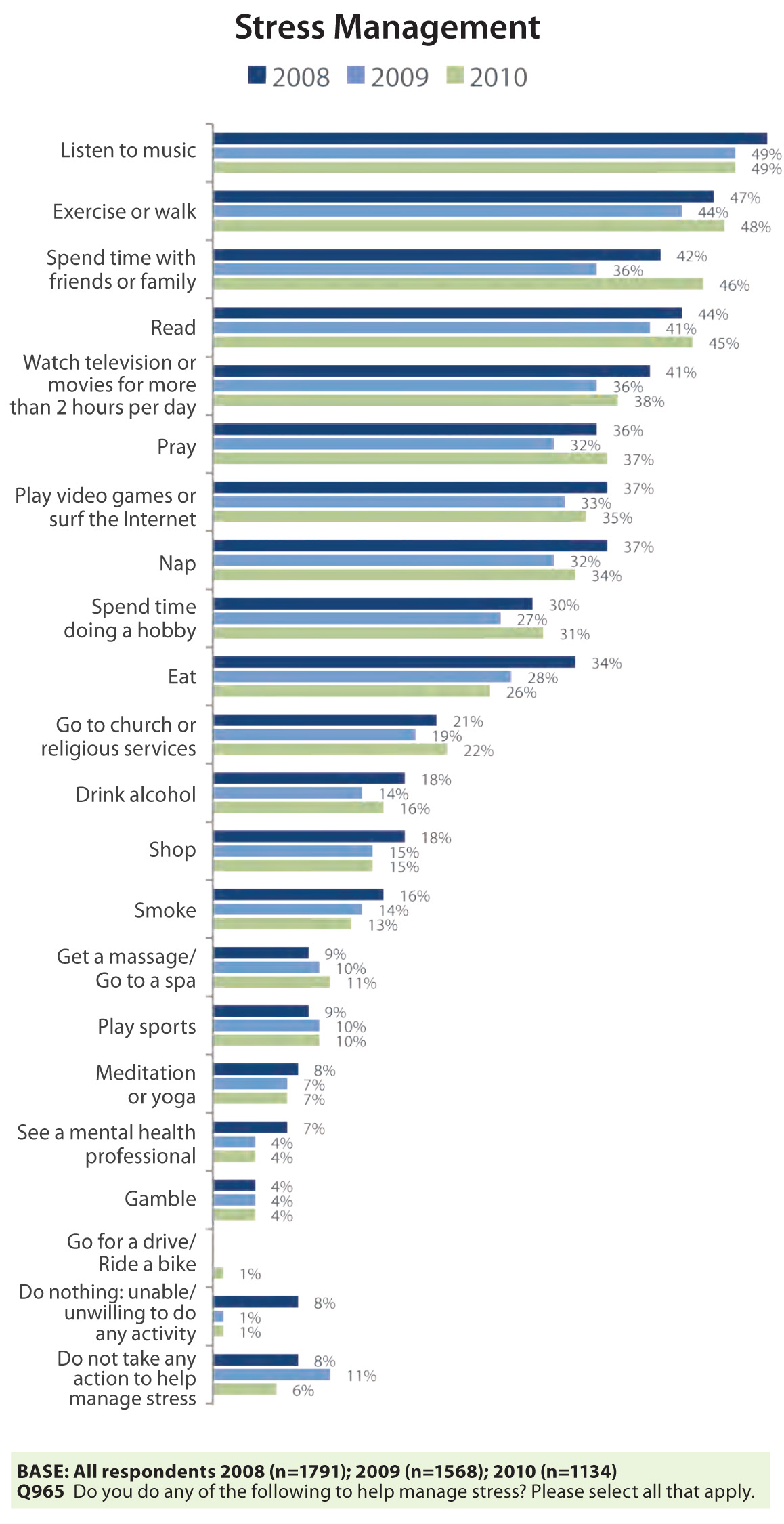
Be patient. Know that you will recover balance and serenity at your own pace. As long as you keep taking steps to move forward, you will eventually reach your destination. Like one-half of survey respondents, you may find that listening to music, exercising, spending time with family or friends and reading are comforting ways to manage stress.

Close to one-half of those surveyed by the American Psychological Association said they experienced irritability and anger as a symptom of stress. The APA has compiled a stress tip sheet to help reduce these kinds of negative emotions. You can learn to manage stress and become more resilient when you practice the strategies we've focused on this week. Nevertheless your emotional recovery, like the Japanese, will take time. Support - both for yourself and what you provide to others - is valuable as you begin the process of rebuilding and restoring hope in these difficult days.

Labels: , , , , , , , , , , ,

Monday, March 21, 2011

Learning How to Cope from the Japanese


For the past 10 days, we've seen heartbreaking pictures of epic devastation in Japan, resulting from the massive earthquake and ravaging tsunami there. And read frightening reports of damaged nuclear reactors with newly elevated levels of radiation in the food and water supply. But what we've also seen are people reacting with composure and a cooperative spirit. And we've read about people demonstrating resilience and unity in the face of tremendous horror. Even with the shock of one-half million homeless and estimates of 10,000 dead, the culture of the Japanese remains one of harmony with a focus on what is best for the group. There is certainly grief and mourning the loss of loved ones, but the reaction to the tragedies has not led to a further deterioration of community cohesion.

From your distance, how do you respond? Are you overwhelmed by the 24-hour news coverage? Has your level of anxiety increased? If you're feeling vulnerable, you're not alone. The emotional reactions to disasters such as these may be even worse for baby boomers, who reveal higher levels of depression than other age groups, according to the website ThirdAge.com.

The palpable distress created by shocking news reports has added to the already high levels of stress identified by the American Psychological Association in their national survey. The study found 75% of the U.S. population experiences at least some stress every two weeks, with half of these rated at moderate or high levels, leaving people emotionally exhausted. And stress levels have increased over the past five years - even before the catastrophes in Japan - impacting both physical and psychological health.

APA has compiled some strategies to help those recovering from disasters. And to reduce your stress levels and take better care of yourself, here are some of our tips to help manage the pressures you face:

Focus on what you can control, not what you can't. The people of Japan could not stop the earthquake or tsunami but they did choose to react to the disasters with teamwork and a sense of purpose. When can't influence negative circumstances of your own, you can still decide how to handle them. Let go of painful thoughts and unrealistic expectations. Keep a journal to aid in the process of releasing frustration and coping with anxiety. Clearly define your goals and aspirations. As you keep your focus on what you can do, a positive accomplishment may emerge from the negative situation. Giving a helping hand does wonders - it provides aide to those in need and makes you feel useful too.

Maintain balance in life between family, job and your own needs. Don't over commit yourself - rather, attempt to retain a normal routine. Set aside some special time for yourself to recover your equilibrium - even if you are a sandwiched boomer with a family in flux. Get enough rest and sleep to allow your body to recover from the stresses of the day. Over 40% of the APA respondents reported lacking energy and feeling fatigued on a regular basis.

Shift your attention to what is truly important. Although hundreds of thousands in Japan lost their homes and possessions, they drew together as families and friends. As you revise your priorities, recognize the value of the underpinnings of your own strength - family, friends, spiritual connection. Express gratitude for your many gifts and change the focus from yourself to those around you. Offer help to those who require it, in Japan or in your own community. You'll feel better when you do and provide essential material support to the needy.

Draw on your strengths. APA survey respondents admitted their lack of willpower to create a healthier lifestyle, but 70% still thought they could improve and make the changes they had identified. What personal strengths have you used in the past to kick-start your progress? Rely on those now as well as ones you've developed more recently. Brainstorm ways to apply these abilities in a novel way.

The recovery in Japan will not be easy or quick. As Confucius said, A journey of 1000 miles begins with a single step. Our hearts are with the people of Japan as they continue to take small steps forward toward personal and national healing. We can all learn from their determined attitude and courageous behavior in reaction to the tremendous crises they face.

For more tips about how you can cope with your own challenges, check back here on Wednesday. And you can receive a complimentary copy of our ebook, Courage and Lessons Learned: Reaching For Your Goals when you sign up for our free monthly newsletter, Stepping Stones.

Labels: , , , , , , , , , ,

Wednesday, January 12, 2011

Optimism about Gabrielle Giffords' and America's Recovery


The recent news has been good concerning the ongoing recovery of Congresswoman Gabrielle Giffords after she was shot point blank in the head on Saturday. Reports are that she is breathing on her own as her husband holds her hand. The outpouring of prayers and good thoughts coming from Americans around the country will help to sustain her and her family through the long and arduous recovery that she faces. Support also goes out to the families of the six murder victims, whose funerals begin tomorrow as 9 year old Christina Taylor Green is laid to rest.

How will the country recover from this tragedy? Will Americans come together to face this heartbreak as one nation or will we be driven apart by finger-pointing and fractious debate? The palpable distress created by the horrific shootings have added to the already high levels of stress identified by the recent national survey conducted by the American Psychological Association.

We hope that such unfathomable horror will never personally touch you or your loved ones, but here are some techniques to use when you are coping with other stresses in your life:

Focus on what you can control and what you can accomplish, not what you can't. Close to one-half of those surveyed by APA said they experienced irritability and anger as a symptom of stress. While you often can't influence circumstances, you can recognize your emotions and control how you handle them. To move away from frustration, let go of negative thoughts and unrealistic expectations. Clearly define your goals or aspirations and keep focused on them. Make something positive come out of a negative situation.

Draw on your strengths. Survey respondents readily admitted their lack of willpower in creating a healthier lifestyle but 70% believe they can improve and institute the changes they have identified. Use the personal strengths you have relied on in the past as well as those you have developed more recently. Brainstorm new ways to apply the abilities you have in a novel way as you generate new opportunities for yourself.

Be patient with yourself. Know that you will recover balance and serenity at your own pace. As long as you keep moving forward, you will eventually reach your destination. Like one-half of survey respondents, you may find that listening to music, exercising, spending time with family or friends and reading are comforting ways to manage your stress.

Talk about your thoughts and feelings with family and friends and reach out to others in your support system. Be open to asking for help and validation of your emotions. You may want to consult a professional counselor for a non-judgmental ear and help in sorting out your concerns. Start a journal to aid in the process of coping with your anxiety.

You'll likely find that your personal recovery, both physical and emotional, will take time. Support is valuable as you begin the process of rebuilding body and spirit and restoring hope as you cope with your own feelings of stress and anxiety. And the American Psychological Association has more tips for coping with stress in the aftermath of traumas such as these horrific shootings.

Labels: , , , , , , , ,

Friday, June 04, 2010

Resiliency in Difficult Times

Do you feel inundated by bad news coming at you from all sides? The oil spill in the Gulf of Mexico is spreading and the gushing thousands of feet below the surface has yet to be fully contained; new unemployment figures in the U.S. confirm the dismal private sector job creation that continues to lag; international conflicts rage and at home citizens are divided about immigrants' rights. World news reflects the tensions you may be feeling in your own relationships. How do you deal with the challenges coming from the rich but often problematic complexity of your family life? Here are some tips for you:

Draw upon your own strength. You will learn more about your capabilities when you are tested by hard times than when everything is going well for you. Resiliency is increased each time you get up and put one foot in front of the other. Bravery comes in many actions - facing an illness, providing for your family, starting a new career - not only on the battlefield. To learn more about identifying your Character Strengths, visit the Authentic Happpiness website and take the VIA Survey of Character Strengths. Use the ones that seem to define you - Signature Strengths - to support your progress through tough times.

Just as those in the foxholes feel the honest emotions of fear, anger, pain, guilt, anxiety and loneliness, allow yourself to experience these emotions when they are a part of your life.
Mature woman crying, side view, close-up
Especially if you are a Sandwiched Boomer, it's easy to become overwhelmed by all you have on your plate. Torn between caring for your growing children and aging parents, it's normal to feel stressed and anxious at times. Don't blame yourself. Once you are able to acknowledge these feelings, then you can begin the long process of coping with them.

If you remember the fragility and transience of life as you move through it, you will savor each good moment you have. Integrate and reflect on all you have achieved in balancing your work and family with your own needs. Living your life to the fullest is a lasting mark of respect you can pay to your family and to the veterans you honored this week who have sacrificed the innocence of their youth for you.

For some role models of courage, look to the left of this post. When you sign up for our monthly newsletter, Stepping Stones, you will receive a link to a complimentary copy of our ebook, Courage and Lessons Learned. There you'll find stories of resiliency and practical strategies for success in difficult times.

Labels: , , , , , , , , , , ,

Tuesday, February 16, 2010

The Haitian Earthquake: Emotional Support and Personal Strength

If you're like so many Haitians and have recently suffered the death of a loved one, you can take control of what's within your reach. It may not be easy, but you have the wisdom to know the difference between what you can manage and what you can't. Try to get support from family, friends, your spiritual community, a therapist or a bereavement group. Make the decision to ask for help whenever you need it - you don't have to do it all alone.
Haiti Wrestles With Basic Needs As Recovery From Deadly Earthquake Begins
Make a public commitment to those who want to see you do well. Tell others about your intentions and create a strong reality that will keep you motivated. Re-establish routine in your life, both at work and with family. As you set new long range goals and short term objectives, commit to a process of change - and then move forward, one small step at a time.

Primarily rely on your own instincts. Believe in what you’re doing to heal yourself. Maintain firm boundaries and talk honestly about how you're feeling. Realize your hidden internal strength as you trust yourself and look inside for answers. Emotional discomfort can become an opportunity - it serves as an invitation to grow.

Solitude itself provides a chance to emotionally revitalize. Rejuvenate your spirits with whatever works - listen to music that stirs your soul or curl up with a book that engages your fantasies. Learn to feel more positive through regular meditation or yoga practice. Every night, before you go to bed, write affirmations about what is still good in your life. And log on again tomorrow for more tips that can help you begin to heal after loss.

Labels: , , , , , ,

Thursday, January 28, 2010

Coping with Stress and Anxiety

Senior woman on the beach


You may be feeling anxious because of the economic meltdown, security fears brought on by acts of terrorism or natural disasters such as the earthquake in Haiti. Whatever the reason for your high level of stress, if you want to keep it in check, try on the following tips to restore a sense of hope to your life:

Use relaxation techniques. Set aside time for a regular routine of deep breathing, guided imagery, meditation, or other stress reduction methods to alleviate your feelings of anxiety. Decide to put off worrying - much of what we fear never actually happens anyway.

Focus on what you can control in your life and what you can accomplish, not what you can't. Let go of negative thoughts and unrealistic expectations. While you often can't control circumstances, you can control how you handle them. Clearly define your goals or aspirations and keep focused on them. Make something positive come out of a negative situation just as people across the world did in providing aid to Haiti after the devastating earthquake there.

Draw on your strengths. Use those you have relied on in the past as well as those you have developed more recently. Brainstorm new ways to apply the abilities you have in a novel way as you create new opportunities for yourself.

Be patient with yourself. Know that you will recover your balance and serenity at your own pace. As long as you keep moving forward, you will eventually reach your destination.

To learn more about strategies to help meet the challenges of the Sandwich Generation, visit our website, www.HerMentorCenter.com. And click on the post title above to be linked to our article there, Top Ten Self-fullness Tips for Sandwiched Women.

Labels: , , , , , , , , ,

Link

Wednesday, January 06, 2010

Being Resilient after January Blues

Three senior women in garden looking at laptop screen, smiling


Just as Janus, the Roman god of doorways, had two faces, one looking back and one forward, you too have the ability to make choices for your future, using the wisdom you have gained in your past.

Draw on your strengths. What worked for you before when you were feeling miserable? What core values served as your guide as you coped with frustrations and disappointments? Use these again as you face challenges in January and watch your resiliency come to the forefront. Don't hesitate to call upon the resources that are there for you.

Notice the control you do have over how you feel. When you change your thoughts from negative to positive ones, see how your emotions change. Make a decision to spend less time worrying and more counting your blessings. Instead of holding on to the family conflict that boiled up over the holidays, let go of your resentments and anger. When you begin to forgive, you stop feeling sorry for yourself and become more optimistic.

Identify activities that serve to reduce the stresses in your life - then include them in your schedule. If you're a Sandwiched Boomer, these can range from arranging for someone to help you with childcare or eldercare responsibilities to setting aside some time to sit down and listen to music, read a good book or just do some deep breathing. Get in touch with your spiritual connections for balance and grounding. When you are feeling relaxed and authentically free, you'll be better able to cope with the hassles you face this winter.

Get support from your family and friends. It was easier to connect during the holiday season, but make an effort to follow-up with your social network in January. Share your concerns with them and see if you gain a fresh viewpoint or validate your feelings. New support and discussion groups generally begin after the New Year and classes at local community colleges do as well. Reach out and join to gain insight and perspective. And don't forget to spend some time with friends just for the plain fun of it - laughter is a great tension reliever.

To read more tips on creating a positive outlook, even during the month of January, click on the post title above. It links you to our website, www.HerMentorCenter.com and our article, How Boomers Can Sing Rock and Roll Instead of the Blues.

Labels: , , , , , , , , , , , ,

Link

Friday, July 10, 2009

Video Tips for Keeping Your Perspective in a Recession

Redefining a crisis as a challenge gives you the power to begin, step by step, coping with the situation. See the changes you need to make in this recession as the opportunity to create a more fulfilling life for yourself and your family. Recognizing your strengths and resources keeps you optimistic and resilient. Click on the video for 10-second tips about keeping your perspective in this recession.


For more tips about how to stay positive during this economic recession, click on the title above. It will link you to www.HerMentorCenter.com and our article, "Five Ways Sandwiched Boomers Can think Positive in Tough Times."

Labels: , , , , , , , , , , , , , ,

Link