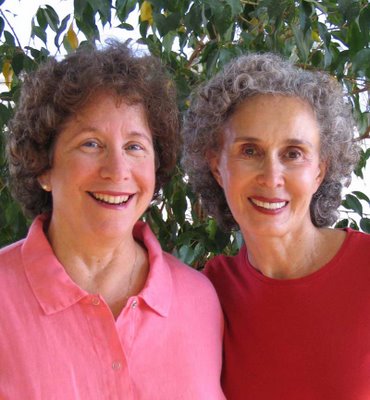
We are so pleased to be hosting Dr. Susan Lieberman today to talk about her new book,
Getting Old is a Full Time Job: Moving on From a Life of Working Hard. Susan writes about her insight into the 12 "jobs" of retirement - ranging from
Strategist to
Script Writer to
Soul Catcher. Susan has a gift for using the challenging issues in her own life as a starting point for her highly accessible books. We enjoyed
visiting with her here several years ago as she talked about
The Mother-in-Law's Manual and her
learning curve as a MIL.
 Susan, after your last book on mothers-in-law, how did your new one come into being?
I started the Houston chapter of a national group called
The Transition Network. It’s for professional women 50 and over moving from their mainstream work to 'What’s Next?'
We meet once a month and focus on our lives and our many different kinds of transitions. I love the women I have met through TTN. They are smart, reflective and candid, and as I listened to them, I heard a recurring theme. We kept judging ourselves, often negatively, against the criteria we used when we were building our professional lives. For example, I would be sitting in the kitchen happily sipping tea and reading the New York Times, something that makes me happy, when I would ruin it by castigating myself for still being in my robe at 9:30. It hit me that when we retire,
rewire, shift down or switch our focus, we needed to develop a new template for success. That was the beginning point for the book.
It seems that instead of going to therapy, when I need to work out my own issues, I sit down at the computer, and I needed to figure out what retirement meant for me.
Are you really retired? You have started a new business and written two books since you left a full time teaching job. Do you consider that retired?I love this question. People often want to help me understand how busy and engaged I am and not at all a “retired person,” as if that were a minor illness. Yes, I AM retired. Here is what that means to me: I have not stopped being productive or engaged in the world. I am just not driven by external demands, by how others want me to spend my time on or by what others think it is important to achieve.
My life now is much more determined by internal interests and desires. I am the CEO, COO, HR Director, shareholder, vending machine operator and janitor of this company called MY LIFE. I get to do my own performance appraisals, and now, finally, I can spend my time as I wish. I don’t work 50 or 60 hours a week any more, and I avoid work that makes me unhappy.
 In Getting Old Is A Full Time Job, you talk about 12 jobs waiting for us in retirement. Which of these most captures your attention?
 Hands down, the hardest job for me is
Purveyor of Pleasure. I was really good at working. I had a 50-year history of successful work. I was not so good at playing, at figuring out what that meant for me, besides working well. After I left my full-time job, I was determined to “have fun.” The problem was I couldn’t figure out what was, for me, fun. I don’t much like sports, I don’t sew or garden. I am a good cook but I didn’t really want to be a better cook. I couldn’t work it out until someone suggested I substitute the word “
pleasure” for “fun.” Then I got it.
Writing books for me is deep pleasure. I won’t describe it as FUN. It’s hard work, It can get intense and frustrating. But it gives me so much pleasure to do the interviews, work out what I think is important to say and play with saying it in ways that other people find accessible and useful.
It doesn’t give me much pleasure to do the marketing. Using my mainstream template for success, which included economic gain and recognition of accomplishments, of course I should be spending lots of time marketing. Using the success template for this stage of my life, I should just be writing another book and enjoy it, even if I don’t get rich or famous. So please, buy a book because I am not working on many ways to get people to do that.
The other job that captures my attention is
Director of Physical Planning. I just told you I am not much for physical exercise so getting myself to the gym and walking several mile a couple times a week takes discipline. It isn’t, for me, fun or even pleasurable, but feeling good, being able to wrestle with my grandkids, being able to do what I want IS fun, so I know I have to make myself stay in shape and not allow myself to be diverted. Not having to do it at 6:30 A.M. also makes the job easier.
You don’t sound so very old. How did you pick this title?I am 69. I started working on the book when I was 67. I didn’t feel OLD then nor do I now…but I am not young. I am not really middle aged any more. What has happened to my generation is that 18 additional years have been inserted in to the average life span. So people at 90 and people at 70 all fall into the same post-middle aged category and we are, of course, not the same.
But getting old is not a curse. It’s what happens. If I am not getting older, I am getting deader.
Sixty is not the new forty. What it is, rather, is the new sixty. My sixty is not the same as my grandmother’s sixty but my son is forty, and he and I are not in the same place.
So often, when someone finds out I am sixty-nine, they say, “Oh my, you don’t look sixty nine,” as if it would be a bad thing if I did. First, I look about average. Half the people I know my age look better and half probably don’t look as good – and that’s been true since I was 19. Second, what should 69 look like? And third, what if I did look 69? Would I need immediate plastic surgery? Of course, most women – men, too – like feeling attractive. I like it too – but how I feel and how I think, how flexible I am in body and sprit, how much more able I am now to forgive, overlook and understand is what’s important, not how many wrinkles in my neck.
My friend, Irene, told me I couldn’t use the word OLD in a book title because no one wants to talk about feeling, getting or being old. But really, that’s what was on my mind, that is what interested me…how I do this aging bit in a way that makes sense for me since I am, without regard to my wishes, going to be doing it—if I’m fortunate.
Who is the audience for Getting Old is a Full Time Job?I think this book is for people about 55-75, those who are retired or thinking about some sort of retirement. Dick Goldberg, a tough critic who is national director of Coming of Age, told me this was a good book for men because it talks about jobs, and men like jobs. I very much wanted to write a book that appealed to both men and women so that made me happy. But just this week I got two compliments that made me even happier.
One came from my good friend Sue in St. Louis and who called to ask me for 15 books. Why on earth, I asked, do you need 15 books? “Well, my mother took my copy, loved it and now wants to give it to all her friends and neighbors.” And, Sue added, “You should feel good because my mother doesn’t like anything!” The other pleasing comment came from a woman in my breakfast club who told me she had given a copy to her housekeeper for Christmas, and her housekeeper loved the book as well.
To write a book that appeals to a 55 year-old petroleum engineer, a 64 year old housekeeper, an 82 year old crotchety grandmother and my wonderful sister-in-law who is still working flat out as an architect makes me button-bursting proud. And it reinforces my notion that because 21st Century aging and retirement is quite different than what has come before, we don’t have enough models, enough visible ways of thinking through this stage that Mary Catherine Bateson calls
Second Adulthood and we all need to be talking together about how to do retirement as well as we did other stages in our lives – or better.
Thanks for joining us today, Susan and filling us in on your latest pleasure in retirement,
Getting Old is a Full Time Job. Readers, if you want to ask Susan questions about how to get started on your own 12 jobs, just click on "Comments" below and follow the prompts. Susan would love to hear from you - and so would we!
Labels: aging, fun, Getting Old is a Full Time Job, pleasure, retirement, Susan Lieberman, The Transition Network, work