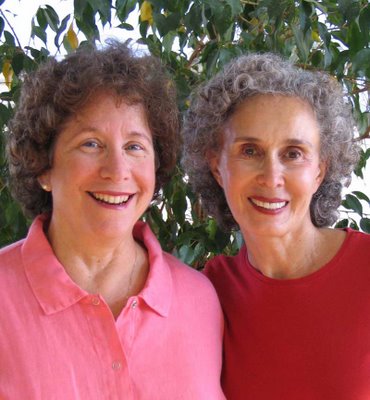
Family Relationships

Join other women in the sandwich generation - share ideas and solutions as you learn to nourish family relationships without starving yourself.

Wednesday, March 21, 2012

Virtual Book Tour: Getting Old is a Full Time Job

We are so pleased to be hosting Dr. Susan Lieberman today to talk about her new book, Getting Old is a Full Time Job: Moving on From a Life of Working Hard. Susan writes about her insight into the 12 "jobs" of retirement - ranging from Strategist to Script Writer to Soul Catcher. Susan has a gift for using the challenging issues in her own life as a starting point for her highly accessible books. We enjoyed visiting with her here several years ago as she talked about The Mother-in-Law's Manual and her learning curve as a MIL.

Susan, after your last book on mothers-in-law, how did your new one come into being?

I started the Houston chapter of a national group called The Transition Network. It’s for professional women 50 and over moving from their mainstream work to 'What’s Next?'

We meet once a month and focus on our lives and our many different kinds of transitions. I love the women I have met through TTN. They are smart, reflective and candid, and as I listened to them, I heard a recurring theme. We kept judging ourselves, often negatively, against the criteria we used when we were building our professional lives. For example, I would be sitting in the kitchen happily sipping tea and reading the New York Times, something that makes me happy, when I would ruin it by castigating myself for still being in my robe at 9:30. It hit me that when we retire, rewire, shift down or switch our focus, we needed to develop a new template for success. That was the beginning point for the book.

It seems that instead of going to therapy, when I need to work out my own issues, I sit down at the computer, and I needed to figure out what retirement meant for me.

Are you really retired? You have started a new business and written two books since you left a full time teaching job. Do you consider that retired?

I love this question. People often want to help me understand how busy and engaged I am and not at all a “retired person,” as if that were a minor illness. Yes, I AM retired. Here is what that means to me: I have not stopped being productive or engaged in the world. I am just not driven by external demands, by how others want me to spend my time on or by what others think it is important to achieve. My life now is much more determined by internal interests and desires. I am the CEO, COO, HR Director, shareholder, vending machine operator and janitor of this company called MY LIFE. I get to do my own performance appraisals, and now, finally, I can spend my time as I wish. I don’t work 50 or 60 hours a week any more, and I avoid work that makes me unhappy.

In Getting Old Is A Full Time Job, you talk about 12 jobs waiting for us in retirement. Which of these most captures your attention?

Hands down, the hardest job for me is Purveyor of Pleasure. I was really good at working. I had a 50-year history of successful work. I was not so good at playing, at figuring out what that meant for me, besides working well. After I left my full-time job, I was determined to “have fun.” The problem was I couldn’t figure out what was, for me, fun. I don’t much like sports, I don’t sew or garden. I am a good cook but I didn’t really want to be a better cook. I couldn’t work it out until someone suggested I substitute the word “pleasure” for “fun.” Then I got it.

Writing books for me is deep pleasure. I won’t describe it as FUN. It’s hard work, It can get intense and frustrating. But it gives me so much pleasure to do the interviews, work out what I think is important to say and play with saying it in ways that other people find accessible and useful.

It doesn’t give me much pleasure to do the marketing. Using my mainstream template for success, which included economic gain and recognition of accomplishments, of course I should be spending lots of time marketing. Using the success template for this stage of my life, I should just be writing another book and enjoy it, even if I don’t get rich or famous. So please, buy a book because I am not working on many ways to get people to do that.

The other job that captures my attention is Director of Physical Planning. I just told you I am not much for physical exercise so getting myself to the gym and walking several mile a couple times a week takes discipline. It isn’t, for me, fun or even pleasurable, but feeling good, being able to wrestle with my grandkids, being able to do what I want IS fun, so I know I have to make myself stay in shape and not allow myself to be diverted. Not having to do it at 6:30 A.M. also makes the job easier.

You don’t sound so very old. How did you pick this title?

I am 69. I started working on the book when I was 67. I didn’t feel OLD then nor do I now…but I am not young. I am not really middle aged any more. What has happened to my generation is that 18 additional years have been inserted in to the average life span. So people at 90 and people at 70 all fall into the same post-middle aged category and we are, of course, not the same.

But getting old is not a curse. It’s what happens. If I am not getting older, I am getting deader. Sixty is not the new forty. What it is, rather, is the new sixty. My sixty is not the same as my grandmother’s sixty but my son is forty, and he and I are not in the same place.

So often, when someone finds out I am sixty-nine, they say, “Oh my, you don’t look sixty nine,” as if it would be a bad thing if I did. First, I look about average. Half the people I know my age look better and half probably don’t look as good – and that’s been true since I was 19. Second, what should 69 look like? And third, what if I did look 69? Would I need immediate plastic surgery? Of course, most women – men, too – like feeling attractive. I like it too – but how I feel and how I think, how flexible I am in body and sprit, how much more able I am now to forgive, overlook and understand is what’s important, not how many wrinkles in my neck.

My friend, Irene, told me I couldn’t use the word OLD in a book title because no one wants to talk about feeling, getting or being old. But really, that’s what was on my mind, that is what interested me…how I do this aging bit in a way that makes sense for me since I am, without regard to my wishes, going to be doing it—if I’m fortunate.

Who is the audience for Getting Old is a Full Time Job?

I think this book is for people about 55-75, those who are retired or thinking about some sort of retirement. Dick Goldberg, a tough critic who is national director of Coming of Age, told me this was a good book for men because it talks about jobs, and men like jobs. I very much wanted to write a book that appealed to both men and women so that made me happy. But just this week I got two compliments that made me even happier.

One came from my good friend Sue in St. Louis and who called to ask me for 15 books. Why on earth, I asked, do you need 15 books? “Well, my mother took my copy, loved it and now wants to give it to all her friends and neighbors.” And, Sue added, “You should feel good because my mother doesn’t like anything!” The other pleasing comment came from a woman in my breakfast club who told me she had given a copy to her housekeeper for Christmas, and her housekeeper loved the book as well.

To write a book that appeals to a 55 year-old petroleum engineer, a 64 year old housekeeper, an 82 year old crotchety grandmother and my wonderful sister-in-law who is still working flat out as an architect makes me button-bursting proud. And it reinforces my notion that because 21st Century aging and retirement is quite different than what has come before, we don’t have enough models, enough visible ways of thinking through this stage that Mary Catherine Bateson calls Second Adulthood and we all need to be talking together about how to do retirement as well as we did other stages in our lives – or better.

Thanks for joining us today, Susan and filling us in on your latest pleasure in retirement, Getting Old is a Full Time Job. Readers, if you want to ask Susan questions about how to get started on your own 12 jobs, just click on "Comments" below and follow the prompts. Susan would love to hear from you - and so would we!

Labels: , , , , , , ,

Monday, March 19, 2012

Gray Divorce

Are you and your spouse still happy, sharing activities like exercising together? If so, you may not know about a new trend hitting baby boomers - Gray Divorce. In the past 20 years, the divorce rate for boomers has doubled even as the total divorce rate has been going down. According to the U.S. Census Bureau, in 2009 more than 25% of all divorces were among couples over 50.

AARP has identified that in 2/3 of these divorces, it is women who seek the split. Often their motivation is to enjoy the years ahead after children have been raised and left home. With the expectation of many extra years of an empty nest, these women choose to focus on satisfying their personal needs and goals rather than remaining in an unhappy marriage. In other cases, about ¼ of the time, a wife institutes the proceedings after an infidelity by her husband.

For over 50% of gray divorces today, this is not their first experience with a split. The risk of a second divorce is two times greater than for those still in their first marriage. And for a third marriage, the risk of a divorce is four times more likely. Other high-risk groups for gray divorce are African Americans and those with only a high school education. To avoid making the decision to divorce, marital therapists like Dr. John Gottman encourage midlife couples to respond to each other's attempts at reconnection.

While being alone is the greatest fear of boomers after a divorce, the vast majority rate themselves as happy. Still, there are some difficult consequences for wives and husbands: women tend to have greater financial difficulties while men generally have less contact with their children than before. Preparing for possible negative outcomes of a late in life divorce can help you cope with these unusual challenges.

For more insight about the issues in a second adulthood, join us on Wednesday when Susan Lieberman, Ph.D. answers our questions about her newest book, Getting Old is a Full Time Job: Moving on From a Life of Working Hard. Dr. Lieberman will introduce us to the 12 "jobs" she's identified that we need to complete as we move from work to "what's next." Be a part of the conversation with Susan here on Wednesday.

Labels: , , , , , , , , , , ,

Monday, March 07, 2011

Toning Down Your Fights

Here we are again in March, which has the reputation of coming in like a lion, out like a lamb.


Do these changes in the tone of the weather mirror the shifting atmosphere of your relationships?

Images: FreeDigitalPhotos.net

Everyone has fights sometimes but have you been wondering how you can switch your relationship squabbles from turbulent to sunny in the same way March does? Whether you're dealing with a significant other, your child, parent, in-law, friend or colleague at work, here are some tips for toning down the rhetoric and creating your own calm in the storm:

Commit to working toward change. Decide to let go of old hurt feelings and instead focus on the present and what you can do to transform it. When you find yourselves fighting the same battles again and again, determine to finally resolve them or agree to put them away with the understanding that you'll accept your differences of opinion.

Let go of your anger. Step back and take a deep breath - several actually. Leave the conversation for a while and find a healthy outlet for your negative physical energy - go for a jog, yell in the shower, hit a pillow, call a friend. When you remove yourself and deal with your anger, you can come back to the disagreement later when you both have calmed down. For some ideas about how sandwiched boomers can develop this approach, check out a past blog post.

Listen, really listen. Develop the skill of active listening - paying attention to what your partner is saying without distracting yourself by planning a response. Ask empathic questions and work to understand his position, feelings and needs, even if you don't agree with them. Conflict resolution techniques can work among family members as well as they do in business and international relations.

Fight fair, even as you keep your communication open and honest. Keep your messages on topic and avoid name-calling and criticisms about character traits and past actions. Focus on talking about behaviors and issues that can be modified. Let your partner know about how you react to his or her actions without putting a value judgment on them. For more tips about improved and effective communication, re-read our post about limiting your arguments.

Be willing to take some responsibility. As you acknowledge your part in the turmoil and begin to see your partner's perspective, it's easier to find the means to compromise and cooperate. Learn some of these practical strategies we offered to new bride Chelsea Clinton and her groom, Marc Mezvinsky, on a past blog post.

Insert some positives into the equation. Give compliments for positive behaviors you want to reinforce. Forgive your partner for mistakes made and offer an apology when you have been the one in the wrong. Shared humor can ease the strain of hostility and help forge a new sense of connection.

If your husband has been the main source of tension in your marriage, our virtual book tour with Jed Diamond about his book Mr. Mean: Saving Your Relationships from the Irritable Male Syndrome can give you some additional suggestions about how you can dilute the anger and start enjoying each other again.

As you know so well, your relationship with your mother - or daughter - isn't immune to a roller coaster of emotional highs and lows either. As a matter of fact, it's often the closest emotional connection a woman has in her life. But close doesn't always mean easy. When you want some more insight into how to pull back a little, click on our virtual book tour with Susan Shaffer and Linda Gordon, authors of Too Close for Comfort: Questioning the Intimacy of Today’s New Mother-Daughter Relationship.

And here on the blog we also hosted a virtual book tour with Dr. Susan Lieberman, author of The Mother-In-Law’s Manual: Proven Strategies for Creating and Maintaining Healthy Relationships with Married Children. So if you're searching for more ideas about how to smooth over the friction between you and your daughter-in-law, you'll get some helpful advice from her.

You'll find more tools for developing successful relationships when you search our blog. Let us know what works for you - and remember spring is just a few weeks away.

Labels: , , , , , , , , , , , , , ,

Tuesday, August 25, 2009

Mothers-in-Law Speak Up


We continue our series on your emerging role as a mother-in-law and questions you have about how to nourish your relationships with your children-in-law. Our readers commenting on the virtual book tour we hosted last week with Dr. Susan Lieberman found her words empowering as they set new directions in their relationships with their sons- and daughters-in-law.

Janet had been struggling with her in-law relationships for years and now had some new ideas about how to work on them; Sandy recognized that she could only change her behavior, not that of her children and children-in-law.

Susan's response to Janet and Sandy: THANK YOU! I did not come to this book as an "expert" but rather as a woman standing in a difficult place. I wrote the book I needed to read. I'm so grateful when others find it helpful. I can tell you that writing the book has helped me handle my own mother-in-law issues more skillfully. I can also, more abashedly, tell you that when you write the book and then find you are not following your own advice, you really feel like an idiot...but we all do the best we can -- including our daughters-in-law. I've been trying to sneak into my DIL's head to figure out why I trigger her as I do. Of course, I have no way of knowing if my thoughts are accurate, but my hunch is that my voice brings up something about her own parents' voices and her feelings about bending to their will. Maybe I'm making up nonsense, but since it helps me be more tolerant of behavior I find hurtful, I'm sticking to it.

A grandmother wrote that she was concerned about the way her grandchildren were being raised and didn't how whether to bring the subject up with her daughter and son-in-law.

Susan's response: Concerned Grandma presents a pickle...I'm pretty sure whatever you say is not going to be appreciated. That said, I know it is next to impossible to stay quiet if you think the children are being harmed. So, I have been thinking about this and have a couple thoughts:

1) Talk to other women, not only the ones who are most like you, and describe as neutrally as possible, the behavior that concerns you. Find out if others are as alarmed as you. If they are not, you might have to rethink your position.


2) Look for data, articles, books, etc that address the issue(s) that most concern you and present it as something to consider.

3) Make a date with your daughter. Tell her you are struggling and really don't know how to go forward. On the one hand, everything in you says, "Don't meddle," and on the other, everything in you says, "There is something we need to discuss." Ask her is she would be willing to have a discussion with you in which you both try to hear each other and not follow into a defensive posture. If she rebuffs this effort, you are going to have to back off.

4) Is there someone else in the family...a sibling or favorite aunt who could take up the cause on your behalf. My observation is that the more insecure our kids feel about their parenting skills...and the less skillful they are...the less able we are to speak. If you think this is serious enough, you may just have to speak out, but know that they may be a cost. Good luck on this one.


Once more, we thank Dr. Susan Lieberman for her reflections and personal insight into the role of mothers-in-law. Let us know how you enjoy her book, The Mother-in-Law's Manual.

For more tips on getting along with a daughter-in-law, click on the post title above to take you to our article, From Baby Boomer to Mother-in-Law: How to Play Your New Role. You can then explore our website, www.HerMentorCenter.com, for more of our articles with helpful pointers on how to improve your relationships with your family in flux.

Labels: , , , , , , , , , ,

Link

Monday, August 24, 2009

More Questions and Answers for Mothers-in-Law


Our readers have more probing questions for Susan Lieberman - and her answers have given us all a lot to think about. What feedback would you give to some of the mothers-in-law who have written in? How do you relate to your own daughters-in-law and sons-in-law? What seems to work for you? What doesn't?

Here are a few more issues that concern MILs:

One reader said she felt invisible and wanted to have more of a relationship with her married kids and their spouses. Another, Whitfield, wrote in that she'd been a MIL for over 20 years and still walked on eggs with her DIL, who didn't reach out to her.

Susan's response to "invisible" and Whitfield: Oh my, I so wish I had a magic wand that would give those of use who want more closeness with our children a simple way to find it. Of course, I don't. What to say to a question that so many women hold?

First, it may be that your children love you deeply but are simply lost in their own lives and that's the way it is for now. It may also be that while we think we are, well, terrific, our children see our behavior differently.

Is it possible to ask you son or daughter if there is something you are doing that pushes them away because sometimes you do feel there is a big distance. Could you ask what YOU can do that would be good for them...a terrific dinner sometimes with no help expected before or after, some errands, some gardening?

I don't know if you children have children but as someone noted earlier, grandchildren can open the door to more interaction. When my younger son had his first son, he called to say, "Mom, oh my god, I get it. You love me like I love him!"

Worst case, you have to find surrogate young friends who want what you can offer that your own child cannot appreciate.

Don't give up. Keep holding the possibility of a better relationship. Keep sending them loving thoughts and doing loving deeds, even if it seems like you are wasting energy.

Another reader asked if it was typical that her relationship was more with her grandkids than her children-in-law.

Susan's response: Is it typical that relationships change and even improve when there are grandchildren? YES. My observation is that our children see our loving their kids as an expression of our love for them -- and, often, love as well that we can help them out. Grandchildren also deflect attention away from the adults and soften potential conflicts.

You are lucky that your children value your contributions, and, in part, might it have something to do with your own tactfulness and willingness to let the parents set the rules?

I watch young people and their lives are so busy. If we lived at a faster pace than our parents, don't you think our kids are living still faster than we did? You are right that they do not always have so much time for us. My sons assure me that how much time they have for me is NO indication of how much they love me. I choose to believe them.

Again, our thanks to Susan Lieberman for sharing her wisdom about mothers-in-law. Do you have any mother-in-law stories you'd like to contribute here? We'll keep the lines open for MIL tales, good and bad. Just click on the comment link below or write us at mentors@HerMentorCenter.com and we'll bring your voice to the table. Remember, we're all in this together - working to nourish our relationships.

Labels: , , , , , , , ,

Link

Friday, August 21, 2009

Mothers-In-Law: Your Questions and Answers


Yesterday and the day before, we hosted Susan Lieberman on our blog for a wide-ranging set of questions and answers. Susan invites women everywhere to join in the conversation about how mothers-in-law can foster healthy relationships with their married children and their spouses. In her book, The Mother-in-Law's Manual, she covers the full scope - from women’s expectations before their children marry to hopes about how their children will behave when their mothers are really old.

We had so many interesting questions and answers come in about this complex and emotional relationship. Here are some of the questions our readers raised and Susan's thoughtful answers. We will highlight more of them next week so stay tuned!

Vicki talked about getting along better with a DIL when she didn't have high expectations about the relationship. She wondered if that was the problem with her other DIL.

Susan's response: Yes, Vicki, that IS what I mean. We don't do this consciously, but we have filters that affect what we hear. When we expect, for example, to hear affection and enthusiasm and we don't, we feel a loss. When we expect nothing, what we hear is what we hear. I want to add something that has helped me in my relationships with my daughters-in-law. I decided that the expectations I needed to set were for me. I expect myself to be a certain kind of parent, to be loving and generous and forgiving...and I keep working on it regardless of what I get back. This helps me feel okay about me.

Another woman asked whether or not to talk to her son and DIL about her expectations.

Susan's response: What you say, I think, depends on what you feel. If you share your expectations, is it with the subterranean belief that they will then have some responsibility for addressing those expectations? There is, I believe, a question behind this question behind this question...which is why we imagine our children will share our expectations and why, almost all the time, we think they have some obligation to address them. This is a guess, but is it true that you are feeling some anger with your son and his wife? As long as that is there, my own advice would be to stay quiet until you can work your way through it. My own experience is that the anger always leaks through and discolors the conversation. If you are able to subdue the anger...and by the way, disappointment is different than anger...then there might be a time when you could address one expectation by acknowledging that you three see the world differently, noting what makes sense for you and asking for their help in figuring out how to make things work for all of you. If that goes well, down the line you might bring up something else, but, sad to say, we are no longer driving the ship.

Carolyn asked about calling her DIL on the phone when she didn't get any calls back from her.

Susan's response: Carolyn, I would love to chat with my daughter-in-laws more, but I, like you, do not have the sense it is a pleasure for them. When I know their husbands are traveling, I might call to see how it is going but otherwise, I seldom call. Instead, I send my gourmet cook DIL NYTimes food articles and recipes I think she will like and comment to my other DIL online about some of the great kids' pictures she posts. I make sure when I email my sons about family business that I copy their wives. I wish they were chattier and that my being chatty with them didn't make me feel inappropriate...but that isn't how it is.

Brenda wanted to know how to have fun with her DIL the same way she could with her son-in-law.

Susan's response: Brenda, the research shows that the MIL/DIL relationship is, in general, a tenser dyanamic than with sons-in-law. Add to that personality differences. And then add our own expectations of men and women...and there you have your situation...not so unusual.

Some thoughts about what you can do to make the situation with your daughter-in-law better: First, worry less. Can you get more comfortable in yourself when you are around her? Don't look for things that prove your negative thoughts about her.

Of course, we don't want to do or say things that hurt or harm, but how much time can we spend trying to suck up? Stick with that humor, even if no one else is easy. It is so hard, I know, not to feel comfortable with the people our children love. For me, I just keep telling myself that the game is not over.

Our thanks to Susan Lieberman for her input this week. Join us again next week here at Nourishing Relationships as we continue to chat about our complex role as mother-in-law. The discussion is always open here. What other issues that have been troubling you in your role as a mother-in-law? What do you think about Susan's answers?

Labels: , , , , , , , , ,

Link

Thursday, August 20, 2009

Mother-In-Law Strategies for Healthy Relationships


We are happy to welcome Dr. Susan Lieberman back for more questions and answers about her book. In The Mother-In-Law’s Manual: Proven Strategies for Creating and Maintaining Healthy Relationships with Married Children, Susan uses the same strategy she found so helpful when her children were growing up - talking to other women going through the same experiences. She deals with all facets of the in-law relationship, including how to handle difficult family members, how to discuss what seems like impending disaster and how to approach our babies having babies.

We've posed some questions you might want to ask her if you came to one of her book signings. And feel free to send us in your own through the comment link below.

Nourishing Relationships: Some mothers-in-law have confided, "My child’s spouse shuts me out. How do I handle this?"

Susan: I wish we could stand on the balcony together and watch what is happening…whether there is something you are unintentionally doing that pushes a button, whether his or her behavior doesn’t seem so cold to others or whether, in fact, you are, indeed, getting the cold shoulder.

There isn’t one best response. In many cases, you might find some quiet moments with your own child and ask for advice – which is different than criticizing the partner. "You know, I don’t seem to be getting it just right with X, and I so want us to have an easy relationship. Could you give me some advice about how to do this better?"

Now, if you get the advice, all you can do is LISTEN. You can't get defensive, counter, or argue. Breathe, breathe, breathe.

Maybe you can talk directly to your in-law, but you have to have enough comfort to feel centered and relaxed to this. If you are angry, hurt or in any other way off balance, these conversations are more difficult. The best approach is to ask questions, ask advice, not make statements.

It is possible that others in the family can offer advice – but then you have to take it…have to consider what you are being told and try out the suggestions and see how they work.

And, in some cases, we may have to make do with a relationship that is less than we wish. Here is what I discovered for myself. When I have judgments about my daughters-in-law, they pick up the vibrations. What I have to change is my own attitude, not theirs. I have to be the person I want them to be, treating others with the same respect and affection I want for myself and hope for the best. How things are in the beginning does not mean that is how they will always be.

One last comment: no matter what you think or feel, do NOT discuss this with your married child. This is the person he or she chose to marry. NEVER expect your child to chose between you and a spouse because if you raised the child well, the choice will be the spouse. Keep believing the relationship will get better, keep being a good, kind, uncritical person and there is a chance, in time, things will thaw.

Nourishing Relationships: Other MIL's have said, "I like the person my son married but she is so messy. Her house is always chaotic. My son works so hard and she doesn’t even tend to his laundry."

Susan: This is NOT your problem. Your son (or it could just as easily be a daughter) is now a grown up. If he doesn't like the way the house or laundry is managed, it is his job to discuss it and work something out. Being neat is easy for some of us, and we are likely to think it should be easy for everyone. And what is important to us is not necessarily so important to others.

More than one daughter-in-law told me that when her mother-in-law – or her mother – comes and starts picking things up and making neat, it doesn't feel like help, it feels like a rebuke. So we get to keep our houses however we want and our children and their partners get to keep theirs as they wish. And, no, you may not say, "But my child didn't grow up that way…" That was then and this is now.

Instead of focusing on what isn't right by your values, think about what really works for this couple and look for the good. If you can't find any, again, I am so sorry to say but the problem is yours.

Nourishing Relationships: Your book is called The Mother-in-Law's Manual. Is it just for mothers-in-law?

Susan: I like this question because my answer has happily been changed a lot since the book came out in May. When I wrote it, I thought my audience was just mothers-in-law. However, to my surprise, I am being told it works well for a broader audience. A woman emailed and said, "If you substitute 'step-parent' every place you have 'mother-in-law,' this book works perfectly."

Many young people have said the book helped them understand their parents and gave them a much healthier perspective. And an acquaintance who is neither a mother or mother-in-law, called to say the book was really useful in sorting through her own family dynamics.

My favorite bit of praise – and I know this might sound like boasting but it so delighted me -- came from a man I have worked with in Missouri on things completely unrelated to this book, the father of four teens, who must have bought the book out of some kindness. "Susan, I read the whole darn book. You have no idea how unusual that is for me. And, I learned stuff." That, for me, was really delicious.

Another great comment was the woman who said, "This is the only time I found a how- to book that reads like a novel."

I'm not sure, in fact, that this is a how-to book. It's a rumination on my own experiences abetted by the best advice of scores of women I interviewed. It isn't me saying, "Do this." Rather it's me saying, "Here's the corner I found myself in and here's what I have discovered about how I might get out."

Nourishing Relationships: Can you suggest any additional reading for MILs?

Susan: When I started to write this book, I couldn't find the books I needed but I now can recommend two other books that might be good collateral reading. I loved Deborah Tannen's You're Wearing That? Understanding Mothers and Daughters in Conversation. Her insights about mothers and daughters are, I think, very helpful in understanding the tensions between women and between women and men. And a new book by Terri Apter, a British psychologist, What Do You Want from Me? Learning to Get Along with In-Laws also looks at the mother-in-law relationship. It is more oriented towards human dynamics, less personal than The Mother-in-Law's Manual, less informal, but I think the two books complement one another well.

Nourishing Relationships: Thanks, Susan Lieberman for joining us. We have gained so much from your wisdom. Readers, this is just some of the helpful information Susan has compiled for you in her book. Click on the post title above if you want to get a copy for yourself. And keep your questions coming - we'll highlight Susan's answers tomorrow.

Labels: , , , , , , , , ,

Link

Wednesday, August 19, 2009

The Mother-in-Law's Manual


Today we welcome Susan Lieberman, Ph.D. for a Virtual Book. We found her book, The Mother-in-Law's Manual: Proven Strategies for Creating and Maintaining Healthy Relationships with Married Children, to be so chock full of good information that we have asked her to stay on with us for two days, so send in your comments and questions. We'll highlight them again on Friday with her answers.

When her boys married, Susan had no idea that there was an entire new learning curve waiting just around the corner. She had expected parenting to be demanding, but it never occurred to her to think becoming a mother-in-law would bring its own challenges. Where was Dr. Spock on this stage of development?

Nourishing Relationships: Welcome, Susan. Being mothers-in-law ourselves, we know it can be a complex relationship. How did you come to write a book about mothers-in-law?

Susan: I always assumed that when our terrific sons met women they loved, we would love them as well. And beyond that, I also assumed those women would consider me a bonus. Honestly…I was quite surprised when it didn't happen that way. At first, I wanted to blame the wife, and then I came to my senses and realized that making this work was my work to do.

I thought I was done with parenting when the kids grew up. Now I see this mother-in-law gig as the last act of parenting…but Spock and Brazelton and those other parenting gurus stopped too soon. I wrote this book to figure out what I needed to learn to get the good relationships I want.

Nourishing Relationships: What is the most important thing you learned?

Susan: The most important thing, I came to see, is that the fewer expectations we have, the fewer disappointments we will have. And if we think we have no expectations, look again. Odds are they are there, hidden just below the surface.

Nourishing Relationships: Why is this mother-in-law stuff so difficult? MILs didn't expect tensions and yet they are there.

Susan: There isn't one reason, of course, but here is a cause that I think affects many of us. If we have a job at work and our employer decides to shift us to another role, he or she calls us in, and, perhaps, says something like this: "Thanks for doing X all these years. You have done a great job. But now we want you to do Y."

You might say, "But I really like doing X and would love to continue."

Your boss says, "I am glad you have been happy, but from now we really need you to do Y and we know you will do that successfully as well. Such and Such will be taking over X."

So you leave the office and it quite clear that you have been reassigned. But nobody calls us mothers in and says, 'You have been a great leading lady for a couple of decades but you are no longer going to play the role of leading lady. You have been downsized and now you have a character actor part.'

Maybe it took us quite a while to get that leading lady role down. But now we are good at it. We like it. And the replacement…it's possible she or he is young and green and not nearly as adept as we. Nonetheless, we have a new script, a new place to stand on the stage. This is tough, and many mothers don’t get the message. They keep reading from the old script and the new lead doesn't like it.

Another reason has to do with type and temperament. It's natural to enjoy people who are like us, make meaning the way we do, respond similarly. New people in the family can be different. Sometimes, we think that's "wrong" or hurtful when it's just different.

For example, I'm an extrovert. I like to talk over what is on my mind. Both of my daughters-in-law are introverts. It is not in their nature to pick up the phone and call to chat. This is painful for me…but it is about ME not about THEM and expecting it is one of those expectations that will lead to disappointment.

Nourishing Relationships: We presume you interviewed women who had good relationship with their married children and their partners. Is there something about these people you can tell us?

Susan: Such a good question. These women said things like,
"I got to lead my life and now they get to lead theirs."
"I don’t always agree with their choices but know I didn't want interference and I'm sure they don't either."
"I want them to be happy and have good lives, but I've done my part. Now it is up to them."

Nourishing Relationships: Thanks for your candor and insight, Susan. We look forward to carrying on this discussion tomorrow. If you'd like more information about her book, click on the title of the post. And, readers, send in your questions and comments for Susan.

Labels: , , , , , , , , ,

Link

Tuesday, August 18, 2009

You as a Mother-in-Law

Tomorrow we welcome Dr. Susan Lieberman to our blog for a Virtual Book Tour highlighting her book, The Mother-in-Law's Manual: Proven Strategies for Creating and Maintaining Healthy Relationships with Married Children. Please come with your questions and comments for her. She has graciously and generously agreed to be available both Thursday and Friday of this week to give you some answers. So think about what concerns you in your relationships as a MIL and prepare to pick Susan's brain this week.

In the meantime, you can find some articles about improving the relationships with your children-in-law on our website, www.HerMentorCenter.com. Click on the post title above to take you to our article about getting along better with a daughter-in-law, From Baby Boomer to Mother-in-Law: How to Play Your New Role. And, once you are on our website, feel free to explore other sections of our Nourishing Relationships article archives. An article you will find in the Expanding Family article archives, What You Can Learn from President Obama's Mother-in-Law, focuses on relationships with sons-in-law.

Labels: , , , , , , ,

Link