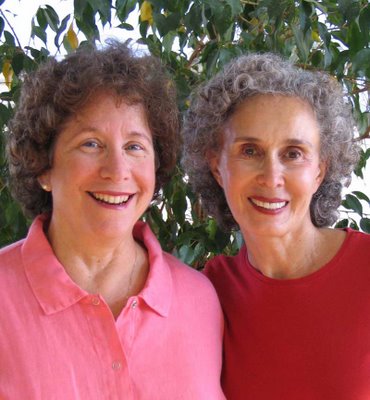
Family Relationships

Join other women in the sandwich generation - share ideas and solutions as you learn to nourish family relationships without starving yourself.

Monday, March 19, 2012

Gray Divorce

Are you and your spouse still happy, sharing activities like exercising together? If so, you may not know about a new trend hitting baby boomers - Gray Divorce. In the past 20 years, the divorce rate for boomers has doubled even as the total divorce rate has been going down. According to the U.S. Census Bureau, in 2009 more than 25% of all divorces were among couples over 50.

AARP has identified that in 2/3 of these divorces, it is women who seek the split. Often their motivation is to enjoy the years ahead after children have been raised and left home. With the expectation of many extra years of an empty nest, these women choose to focus on satisfying their personal needs and goals rather than remaining in an unhappy marriage. In other cases, about ¼ of the time, a wife institutes the proceedings after an infidelity by her husband.

For over 50% of gray divorces today, this is not their first experience with a split. The risk of a second divorce is two times greater than for those still in their first marriage. And for a third marriage, the risk of a divorce is four times more likely. Other high-risk groups for gray divorce are African Americans and those with only a high school education. To avoid making the decision to divorce, marital therapists like Dr. John Gottman encourage midlife couples to respond to each other's attempts at reconnection.

While being alone is the greatest fear of boomers after a divorce, the vast majority rate themselves as happy. Still, there are some difficult consequences for wives and husbands: women tend to have greater financial difficulties while men generally have less contact with their children than before. Preparing for possible negative outcomes of a late in life divorce can help you cope with these unusual challenges.

For more insight about the issues in a second adulthood, join us on Wednesday when Susan Lieberman, Ph.D. answers our questions about her newest book, Getting Old is a Full Time Job: Moving on From a Life of Working Hard. Dr. Lieberman will introduce us to the 12 "jobs" she's identified that we need to complete as we move from work to "what's next." Be a part of the conversation with Susan here on Wednesday.

Labels: , , , , , , , , , , ,

Wednesday, January 18, 2012

Virtual Book Tour: Mother Daughter Show

Today we’re delighted to welcome Natalie Wexler to our Virtual Book Tour. Her recently published novel, The Mother Daughter Show, is both hilarious and poignant. We know it will appeal to anyone who's ever had a daughter, and to anyone who's ever been one. So let’s get started:

Nourishing Relationships: What inspired you to write The Mother Daughter Show?

Natalie Wexler: I wrote The Mother Daughter Show partly to try to maintain a sense of humor about a situation I found myself in - the real Mother Daughter Show, a longstanding tradition at Sidwell Friends School, where my daughter was a senior.

Every year the mothers of graduating senior girls write and perform a musical revue for their daughters, and it seems like almost every year peculiar things happen between the mothers. I wanted to understand why - what was it about this situation that made people act in ways they usually don’t? One obvious possible reason was that the senior year of high school is a stressful year, for mothers as well as daughters: there’s the pressure of applying to college, the stress of wondering where your child will get in, and the emotions stirred by the prospect of your precious little girl leaving the nest.

So I wanted to explore that, but I also saw the novel as an opportunity to write more broadly about the mother-daughter relationship. I gave each of my three main characters (Amanda, Susan, and Barb) a mother of her own as well as a teenage daughter, to allow for a multi-generational aspect to the book. There are tensions between these older mothers and daughters as well, and one of the mothers, Barb, is stretched thin caring for her ailing mother while trying to control her rebellious daughter.

Also, Susan and Amanda begin to see some parallels between the way they interact with their daughters and the way they’ve interacted - or perhaps still interact - with their own mothers. (There’s nothing like having a teenage daughter to give you some empathy for your own mother!) And Barb realizes that her difficulty confronting her daughter may be a reaction against her own mother’s penchant for criticism. Inevitably, our relationships with our kids are affected by our relationships with our own parents, one way or another, and I wanted to examine that.

N R: Who is your favorite character in the book, and why?

Natalie: I suppose I feel closest to Amanda, although she is no more “me” than any of the other characters are real individuals. But she fills the role that I did in planning the show, which is to say writing funny lyrics to a bunch of existing songs. Just as I did, she gets totally wrapped up in the creative process, unable to stop herself from churning out song lyric after song lyric, even when it becomes clear that other mothers want to take the show in a different direction.

I also sympathize with Amanda’s dilemma as a longtime stay-at-home mother who needs to make money and cherishes what seems to be an impossible dream: to find a job that not only pays well but also provides an outlet for her talents and gives her a sense of self-fulfillment. That can be tough at any point in life, but it’s a real challenge for someone in their fifties who’s been out of the workforce for twenty years - and is trying to re-enter it in the middle of a recession.

N R: What turned out to be your greatest challenge in writing The Mother Daughter Show?

Natalie:
Coming up with a plot that worked. My first several drafts hewed much more closely to the show itself, and several readers told me that I needed more dramatic action. Apparently the mechanics of the show just weren’t that interesting to the general public! I wanted to keep the show as the background that framed the story, though, so the challenge was to come up with another plot that I could somehow shoehorn into the one I had. At first I didn’t think I could do it, but eventually I figured it out.

N R: Your own children attended an elite private school in D.C. How much of your story was drawn from real life?

Natalie: In terms of the details, not that much. To some extent I’m satirizing things that probably go on in any private school milieu (although as far as I’m aware, Sidwell is the only school that has a Mother Daughter Show - and I’ve learned they’ve decided to discontinue it). Of course, there’s a Washington, D.C. aspect that’s distinctive. For instance, a President’s daughter attends my fictional school, and the Obama girls currently attend Sidwell. But the Presidential daughter in the novel, who is an extremely minor character, is clearly not Sasha or Malia, any more than any of the characters are real people.

What I did borrow from real life about that situation is the excitement surrounding the presence of the First Family at the school, at least when they first got there (the novel begins in February 2009). In the book, tickets to the annual auction and the school play sell at an unprecedented rate, because people think the President and First Lady might show up. That really happened, more or less. Of course, as in the book, the President didn’t end up attending many school functions, apparently because he was a little preoccupied with trying to solve the nation’s problems.

All that having been said, I think many of the themes in the book transcend the private school milieu, and I hope that just about anyone - whether their kids go to private school or not - will be able to identify with them.

N R: You are an accomplished author, having written the award-winning historical novel, A More Obedient Wife and now the contemporary satire The Mother Daughter Show. Can you speak to the differences in your approach to each project?

Natalie:
The two novels are quite different, and the creative process was different in many ways as well. To write a historical novel, you have to immerse yourself in the period you’re writing about (in the case of A More Obedient Wife, the 1790s). That requires a lot of research, and even then you’re always worrying that you’ve gotten something wrong (at least I was!). So it was a nice change not to have to grapple with that for The Mother Daughter Show. Instead of burying myself in the library, I could just use my observations about the world around me.

Also, with A More Obedient Wife, my starting point was real letters between real people who lived 200 years ago. I saw my task as recreating, as much as possible, the lost lives and personalities of these people, while at the same time constructing a coherent plot. With The Mother Daughter Show, my goal was more to get away from what really happened. In a way, I knew the situation I was writing about too well—it was tempting to just write down what happened rather than create a well developed story. And at the same time, I knew too little. To create characters that work, an author needs to know them inside out, and I simply didn’t know the other women working on the show that well. Maybe it would have been easier to just write down what really happened, but it wouldn’t have worked as a novel.

Thanks, Natalie, we really appreciate your spending time with us today. You can learn more about Natalie and her writing on her website. And now it’s your turn, readers – click on ‘Comments’ below, follow the prompts and share your remarks or ask Natalie questions. We'll be glad you did!

Labels: , , , , , , , , , , , ,

Monday, August 01, 2011

Boomerang Kids Moving Back Home After College

Not since the Great Depression have so many fledgling adults moved into the empty nest with mom and dad. This cyclical trend has accelerated along with the economic crisis. So many of our kids are dealing with school loans or debts and can't find a job. It makes sense for them to head for home, where there's the hope of some emotional and financial support.

The statistics have changed markedly over the past few years. Monster's 2009 annual entry level job outlook reports that 40% of 2008 college graduates moved in with their parents and 42% of 2006 graduates were still living at home. A poll from Twentysomething, Inc. indicates that 85% of 2011 college seniors planned to move back in with their parents. This is attributed to a 15% unemployment rate in the 20-24 year old cohort as well as other economic factors that are postponing financial and residential independence. The numbers are even worse for students who attended for-profit college programs (and who may not have even left home in the first place).

The huge boom in boomerangs has generated its fair share of pop culture angst. This phenomenon really doesn't reflect failure on the part of parents or the laziness of kids today. Transition to adulthood just seems to be more fragmented and complicated. And who wouldn't take advantage of a warm, comfortable and familiar port in the storm?

But coddling can stunt development and over-managing isn't the best way to monitor the investment you've made in your kids. Here are some ideas that will eventually help you reap the dividends:

Have a serious conversation. Understand why your emerging adult is moving back and how you feel about it. It will be best for everyone if, early on, expectations are similar. Watch out for triangulation - that is, identifying any one of you as the problem and aligning one against the other. It's common for relationships to shift as you all work to accommodate these changes. You need to be prepared for less privacy and spontaneity as well as new patterns of interacting and parenting.

Establish accountability and boundaries. Negotiate household chores and financial obligations upfront. Having rules in place will ease the transition and smooth out the day-to-day interactions. As your kids have been on their own and independent, clarify issues around curfew, checking in and sleepovers. And set limits together, as adults.

Do you have a boomerang kid moving back in? Click on "Comments" below to share your concerns and solutions. Log on Wednesday for more practical ideas that can help your family make it work.

Labels: , , , , , , , ,

Sunday, July 17, 2011

Three Cheers for the Sandwich Generation

July is Sandwich Generation Month, a chance to pay tribute to adult children who are juggling the demands of raising their own children while caring for their aging parents. The number of Americans 65 and older is projected to increase from 40 million in 2010 to over 88 million by 2050, doubling the ranks of those experiencing this stressful combination of responsibilities.

We expect to take care of our growing children. After all, isn't that in the parenthood job description? Even after the last kid moves out and we are settling into the empty nest, if one of them drops out of college, loses their job or separates from a partner and boomerangs back, we let them come home. But with ailing parents it can be even more complicated.

From time to time, we all feel like there aren't enough hours in the day. But for the sandwich generation, that's especially true. The stress, guilt and exhaustion that come from trying to keep so many balls in the air can be overwhelming. One goal of Sandwich Generation Month is to raise awareness. Here are some tips so you don't have to cope with all the demands by yourself:

Encourage your parents' independence. Identify what they really need you to do and what they can handle. Have respect for their dignity, experience and wisdom as they make decisions and take responsibility. Step back so they do as much as they can for themselves.

Find professionals to help you out. Put this into place ahead of time if you live far away or before there is a crisis. Do your parents need a geriatric assessment or the support of a social service agency? Learn about health care advocates, specific gerontologists, in-home help and the continuum of care concept.

There are community resources available. Take advantage of them. Home health and companion care companies help with chores such as cooking, cleaning, laundry and grocery shopping. And adult day care centers encourage supervised time for your parents to socialize while you get a break.

Sign the email list to the left of this post and receive our free monthly newsletter, Stepping Stones, full of information to help you, members of the Sandwich Generation. You can also download our complimentary ebook, Courage and Lessons Learned: Reaching Your Goals. And log on again Wednesday for more tips that can put your mind at ease.

Labels: , , , ,

Wednesday, September 15, 2010

The Empty Nest in Tough Economic Times

These are tough times, with so many baby boomers suffering from unemployment, money problems and foreclosure. There are plenty of reasons to feel anxious and sad. And if you're dealing with the empty nest, that may feel like the last straw.
ST. PAUL, MN - SEPTEMBER 02:   A woman cries during Actor and former U.S. Sen. Fred Thompson's (R-TN) speech on day two of the Republican National Convention (RNC) at the Xcel Energy Center on September 2, 2008 in St. Paul, Minnesota. The GOP will nominate U.S. Sen. John McCain (R-AZ) as the Republican choice for U.S. President on the last day of the convention.  (Photo by Chip Somodevilla/Getty Images)

Give yourself an emotional break and see what happens. Understand that even though your kids have moved out, you're still needed although not in the same way. Letting go of your parenting responsibilities means letting go of the family role you've played so far. Sit back and breathe in deeply as you appreciate this opportunity to create different relationships within your family.

Practice letting go. Cry if it helps - it's natural to feel plenty of emotion at this turning point. Try to visualize one door closing and another door opening. Relax into feeling more calm and carefree. Let yourself get excited by the possibility of exploring what you want to do with all the free time you now have.

Decide to write regularly in a journal. As you think about all that is happening in your life right now, you will naturally acknowledge the pressure you're feeling. And by identifying and dealing with what is going on for you emotionally, you'll learn to take more control over this process of change. You'll find that journaling is a great tool for reducing stress and increasing self-awareness.

The Newsletter Library of HerMentorCenter.com is packed full of information that can help you move forward. You'll learn from other womens' experiences. And then why not buy Taking Control of Stress in a Financial Storm for only $2.45 - it will change your attitude and help you cope in these difficult times.

Labels: , , , , , , , , , , , , ,

Friday, July 16, 2010

Sleep-away Camp: Prepares You for the Empty Nest

The longer your kids are at sleep-away camp - and with more time for yourself – are you developing a different perspective? Not having to orchestrate their daily activities or worry about their self esteem, you may be realizing that your protective instincts keep you on edge.
Pensive woman sitting on jetty
Time apart can help you re-evaluate your role as mother. And when the kids come home, you may be ready to start back on a different footing - perhaps expect them to be more responsible and do their chores without being told. After all, camp is a maturing experience. And although you want to treasure the growing up years, it's never too early to help your kids build strengths and skills that will lead to independence.

This newfound freedom you've discovered, after years of non-stop mothering, may very well have given you a taste of what the empty nest can be. This article from the NBC website, LifeGoesStrong.com, offers tips for soon to be empty nesters - because you, too, need to prepare for greater selfhood.

There was a recent segment on the Today Show about how you can love your children and hate your life. Dr. Gail Saltz discusses how raising perfect children has become a competitive sport, complete with pressure to succeed and guilt about not doing enough. Watch this video. And then commit to nurturing yourself as well as your kids:

Enjoy your family. Bring humor into your daily life and laugh together. Discovering activities that are new to all of you allows each of you to enjoy the process without being critical or competitive. You can laugh at your errors as you learn together.

Use cooperation and compromise. Be flexible in resolving your family issues. Negative feelings are difficult to face head-on, but the rewards can be more honesty and a renewed sense of trust. Resist holding on to resentment - learn to forgive and to apologize for your own mistakes.

Give compliments freely. Sometimes it seems easier to criticize than to praise and acknowledge positive behavior. Adjust your antennae to be more attentive to the actions you want to reinforce. When you are thinking something positive, say it out loud to your partner and children.

Build basic trust and loyalty. If you are devoted to your children and to your marriage, your behavior will reflect this deep commitment. Knowing that you are dedicated to the needs of your family can give you the confidence to pursue your own personal goals out in the world.

Work to create balance.
Once you have decided what you want for yourself, let your priorities determine what is realistic. And go for it! Know that you may vacillate between enthusiasm about your new plans and sadness about what you are leaving behind.

Sleep-away camp can be life changing for your children and for you. Embrace it. And as you welcome your children home from camp, be grateful for their wellbeing. July is National Make a Difference for Children Month. Why not celebrate your kids' homecoming and set an example by giving back as a family to children in need. What could be better for everyone?

Labels: , , , , , ,

Tuesday, November 03, 2009

Choose a Topic and Read Some Blog Posts

There won't be a blog post today as we're both traveling - Rosemary is flying from Philadelphia to Chicago and I'm off to to Morocco. But tune in tomorrow as we'll be back on schedule.
Plane landing on runway
In the meantime, why don't you look around the blog. Scroll to the upper left-hand corner of the blue banner at the top of this page and type in the subject that interests you in the white space - empty nest, sandwich generation, mother-in-law, aging parents, woman's conference? Clicking on the magnifying glass will take you to some posts you may enjoy reading.

Labels: , , , , , ,

Thursday, October 08, 2009

The Empty Nest: A Chance to Reinvent Yourself

One reader sums it up: "I am a full believer that the better way to avoid the problems of empty nest is balance. Your entire life cannot be the kids. Throughout the child rearing days a portion of your time and mind should go to continuing to build the relationship with your spouse. Another important portion of your time and mind should go to nurturing yourself. Doing what you love to do. When the kids are gone you have more time to dedicate to both of these. There is always a sense of loss, but there is something there to fill the void."

Practice letting go. Try to visualize one door closing and another door opening. Relax into feeling more calm and carefree. Let yourself get excited by the possibility of exploring what you want to do with the free time that is now available to you.

Decide to write regularly in a journal. Think about what's happening in your life right now and you'll see that there's no right or wrong way to feel. Accept that you, too, are on a more independent path now. By identifying and dealing with what is going on for you emotionally, you'll learn to take greater control over this process of change. Couple walking near the pier
Recognize that you now have full license to put energy into reinventing yourself. The lid has been lifted off the box – embrace new options that you may not have imagined possible. Continue to move away from center stage regarding your kids and move toward your own deferred plans and goals. It's the best time to enjoy the chance to fulfill your dreams.

Some think that putting yourself first is selfish, no matter what the stage of life. But that's not what the experts say. So click on the title of this post for tips on what we call self-fullness. And keep us posted on your progress!

Labels: , , , , , , , ,

Link

Wednesday, October 07, 2009

The Empty Nest and the Sandwich Generation

For those of you in the Sandwich Generation, there are lots of circumstances that lead to an empty nest - your growing children moving to college, moving away to take a job or moving into marriage or a committed life with a partner. And any of these situations may require major role shifts for all the family.

Watch the video below about a transition that unfortunately resulted in problems for everyone. But if you read the August blog posts we suggest, you'll see that that there are solutions.


Accept your ambivalence about the empty nest. Discuss your situation with friends who care about what you're going through. You'll discover that you have a lot in common and that they feel the same about their own experiences. That can be validating and comforting. Practice letting go. Try to visualize one door closing and another door opening.

Clicking on the title of this post will take you to HerMentorCenter.com and an article about what you can learn from President Obama's Mother-in-law. Then, at the top lefthand corner of that article, you'll see "Return to Home Page." Click on that and then on Newsletter Library and Nourishing Relationships for more tips about adapting to other role changes.

Labels: , , , , , , , , ,

Link

Tips for Adjusting to the Empty Nest

"My only child is in her first year of college and, even though I've always worked and she's been 'on her own' for years now, I really miss her. I can hardly wait for parents' weekend." This is a commment from one of our readers who read yesterday's post about the empty nest.

Do you associate the empty nest primarily with children leaving for college? For some parents, the greatest feelings of loss occur when their adult children get married. The changes during this transition can be dramatic and traumatic as the young couple moves on to create their own independent family unit.

Prepare for a greater sense of separation. As you find your adult children distancing more over time, realize that this is natural and normal. They have their own lives now and so do you. The details and activities you share may be less frequent but can be just as meaningful.
Thinkstock Single Image Set

Understand that you are still needed, although not in the same way. Letting go of your parenting responsibilities means letting go of the particular family roles you've played so far. Breathe deeply and appreciate this opportunity to create different relationships within your family.

Learn more abut adjusting to these changes by clicking on the title of this post. That will take you to HerMentorCenter.com and an article about how to Play your New Role as Mother-in-law.

Labels: , , , , , ,

Link

Monday, October 05, 2009

Baby Boomers and the Empty Nest


Now that autumn is here and your college-aged kids have moved out, you may be feeling unsettled, even melancholy. This can be a complicated time of transition for some families - but not all.

For some parents 'no kids at home' represents a fresh start. Here's what Mira had to say after her youngest child went away to college: "This is the only time I've been completely free since my daughter was born. I spent months after she went away to college just relaxing and doing whatever I wanted, until I got bored. And now I've enrolled in graduate school - I'm going to pursue my passion for learning and an MBA."

So let's figure out what it is that you're really thinking about - how they'll get along in school or how you'll adjust to the empty nest?

All week we'll be focusing on this timely topic and we want to hear from you. If your kids are away at school, what are the unexpected feelings you are dealing with? And, if this transition is behind you, what words of wisdom can you share with all of us?

Settle into the subject by clicking on the title of this post. That will take you to HerMentorCenter.com and an article about How to Love your Kidults by Letting Go.

Labels: , , , , ,

Link

Monday, January 05, 2009

Sandwiched Boomers Re-examine Marriage

As Sandwiched Boomers with demanding family responsibilities, you have a tough balancing act. You're attending to your kids, parents and personal needs while still trying to nurture your marriage.

If your kids are teenagers you know they still need you, but not in the same way. Your role is different and you're left trying to adjust to changes in your identity. Or perhaps you have greater commitments now that either your parents or in-laws are older and need more help. There may be conflict about how to find the time and energy to help care for them.

Marriage often takes a back seat to the goings-on in a hectic household. And, as the nest empties, you may notice that you and your partner have grown apart. Now is the time to make a fresh start. For the rest of the week, we'll focus on tips that can help you reduce your family stress and reconnect with your partner.

Over the past several years we've published free monthly newsletters - many of them are about this very issue. And on our website, www.HerMentorCenter.com, we've archived all of them. If you want to read about the marriage dance at midlife, click on the title at the top of this post. You'll find the stories of women who are facing struggles in their marriages as well as some ideas about how to assess what's going on in their relationships. Tune in tomorrow for more helpful tips on making marriage work.

Labels: , , , , , , , ,

Link

Thursday, October 16, 2008

The continued market turbulence - another drop of over 700 points yesterday - has hit Sandwiched Boomers hard, especially those nearing retirement. Estimates by the Congressional Budget Office are that retirement plans have fallen by over 20% in value, raising anxiety levels and increasing feelings of vulnerability.

As a Sandwiched Boomer herself, Kate is worried about her aging parents and how she will care for them just as she is taking on new responsibilities helping to care for her granddaughter.

"Until a few weeks ago, I could hold it all together. But now it seems like everything is changing so fast. I'm not sure I can do it all. Change in general, getting older is really getting to me now - not so much health concerns as the reality of life moving on, children grown and not needing me as before and so on. It's just a strange stage for me, not so much bad, just different as I find my new place, my new roles as mom in law, grandma, and almost empty nester. To help me get through each day, I depend on prayer and my relationship with the Lord, a few supportive friends, a great husband."

Gwen is an empty nester and having a hard time coping alone with her recent health issues as she worries about how her finances will hold up.

"My biggest hardship is being alone and away from my children. I've been single now for almost 10 years but it hasn't gotten any better since I don't make friends easily. I wish I could, but that's just who I am. I love my job, but when I come home at night, it's a lonely place. I don't want to be a pest to my kids but they're my only lifelines."

Labels: , , , , , , ,

Wednesday, January 30, 2008

A new study that was discussed on the Today Show indicates that happiness, in large measure, derives from the quality of our relationships. Although we all know that may very well be true, during life transitions stressors can take their toll.

Some eventual disruption in longterm relationships is not uncommon - often initiated by changes in the shared environment or by a more subjective and internal process. what kind of feelings come up as you assume new roles and relinquish the ones that have defined you in the past?

Are you facing an empty nest and trying to adjust to changes in your identity? When your last child moves out, you experience a cascading and wide range of emotions: sadness, the need to hold on, fear, a sense of freedom, the desire to begin the next chapter of your life. Discussing how you feel with your partner and listening to what he has to say can bring you closer during this period of adjustment.

Labels: , , , , ,

Saturday, October 06, 2007

We have received several interesting comments to our recent blogs, two of which we want to highlight today. They represent the range of issues we Boomer Sandwich Generation women are dealing with these days.

Audrey, a college admission counselor, knows that when our offspring leave for college, we parents have many reactions to the empty nest - sadness, relief, loneliness, satisfaction, the realization that our hands-on parenting days are over. We also have more of a valuable commodity, free time. She has created a program which takes advantage of the increased availability of our time, energy and interests. Through her new program called "Back to College for a Day," she has organized interesting lectures on a variety of topics by Los Angeles area professors. If you want more information about her program, set for October 27, 2007, visit her website at www.backtocollegeforaday.com.

Then there is the other end of the spectrum.


Concerning our interview with Carol O'Dell, one woman expressed the complex challenges of caring for an emotionally difficult aging mother while still trying to honor the needs of her own family. As she put it, "I feel badly for her but am not prepared to put the quality of my family life on the line."

Just as in the aptly named children's game, tug-of-war, we may feel like we are in a battle zone - pulled simultaneously from both sides and stretched to the limit in the middle. It is a struggle for each of us to sense our own breaking point – which we must do if we are to learn how to protect ourselves for the long haul. It's not easy to put limits on the connection with your aging parents, but you may need to place that relationship in the context of the rest of your life. Trust yourself as you design a plan that works for all of you, yourself included.

Let us know how you are grappling with these same kinds of issues in your own extended family - we can all learn from each other.

Labels: , , , , , , , , , , , ,