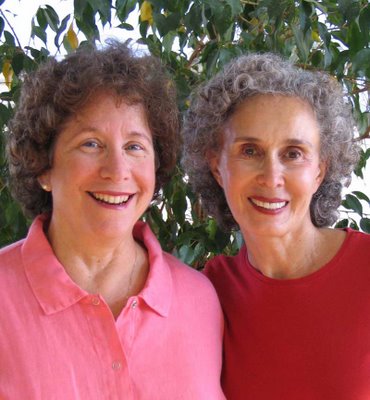
Family Relationships

Join other women in the sandwich generation - share ideas and solutions as you learn to nourish family relationships without starving yourself.

Monday, July 30, 2012

How I Knew I Needed a Vacation


In 2009 we featured Dr. Carol Orsborn on a Virtual Book Tour right here on the blog. We’ve known each other for years through our work online. But since Carol moved back to L.A. from New York, it’s been a treat to have lunch--no computers or iphones--just old fashioned face to face.

We’re delighted that Carol is our guest blogger today. With many of us about to travel before summer’s end, here are Carol’s recent reflections on her much needed vacation:

My husband Dan and I have been working much harder than we’d ever anticipated to be doing at age 64. And normally, I’m fine with this. But as the vision of a dream retirement–work and stress-free–fades with every down tick of the stock market, I paid heed to my spirit crying out for at least a moment’s taste of freedom. So a week ago, we headed 2 hours east of Los Angeles into the mountains of Big Bear.

As is my habit, I grabbed a spiritual book off my shelf to bring with me, eyes closed. So imagine my delight when it turned out to be poet May Sarton’s “Journal of a Solitude.” Our first morning there, in the summer camp air, it was as if May were writing the words in my own heart, each word a deliverance to sanity just to know that I was not alone in my yearning.

She writes: “For a long time now, every meeting with another human being has been a collision. I feel too much, sense too much, am exhausted by the reverberations after even the simplest conversation. But the deep collision is and has been with my unregenerate, tormenting, and tormented self. I have written every poem, every novel, for the same purpose—to find out what I think, to know where I stand. I am unable to become what I see. I feel like an inadequate machine, a machine that breaks down at crucial moments, grinds to a dreadful halt, ‘won’t go,’ or, even worse, explodes in some innocent person’s face.”

It was only a 3-day trip, but halfway through day 2, I could already feel my spirit responding to the sight of a mother duck paddling along with her 6 babies, my resilience as well as the meaning of life restored. My encounters with others were delightful. I started journaling again.

I’ve been back a couple of days now, and I’m still walking around with a silly grin on my face, having remembered why it is I do what I do, and having forgiven myself for the gap between vision and reality.

So that’s how I knew how badly I’d needed a vacation. Life transformed from a collision to a celebration. Thanks, Big Bear, for helping me to remember what life is really about.

Readers, if you’ve been able to get away this summer, send a photo and description of your most meaningful moments to Mentors@HerMentorCenter.com We’d love to hear from you.

And thanks Carol, for reminding us of the benefits that can result from making a change. Carol is the founder of FierceWithAge, the Online Center for Spirituality and Aging. I’ve just completed her first virtual online retreat and I want to recommend it to you. Here’s how Carol describes it:

Passing beyond midlife initiates a new life stage. Knowing how determined you are to make the next stage of your life as vital as the decades that have come before, I recommend that you join in beginning August 6 for interactive, self-paced lessons delivered every weekday for three weeks directly to your inbox.

Learn more about the next retreat here. Carol, a wise and sensitive guide, is exploring uncharted territory in the field of aging. She also provides spiritual counseling to those who strive to stop being afraid of age, to instead become fierce with age.

Labels: , , , , , , ,

Thursday, June 28, 2012

Acting Techniques for Everyday Life


If you missed the Virtual Book Tour on Wednesday's blog, scroll down for author Jane Marla Robbins' interview about Acting Techniques for Everyday Life.


Want to feel strong and relaxed no matter what you're doing? You'll find answers by clicking on 'comments' at the end of yesterday's post. Our readers' questions will resonate, and Jane's responses are insightful, thoughtful and honest.

Thanks, Jane, for ideas about how to feel more confident in many difficult family, work and social situations. Your techniques create a sense of well being so we can make our most uncomfortable moments less stressful.

Labels: , , , , ,

Wednesday, June 27, 2012

Virtual Book Tour: Acting Techniques for Everyday Life


Readers, we're delighted you've joined our Virtual Book Tour today and a hearty welcome to author Jane Marla Robbins. We think that you'll be very interested in what this successful actress and performance coach has to say about her thought provoking book, Acting Techniques for Everyday Life: Look And Feel Self-Confident in Difficult Real Life Situations. So let's get started on some readers’ questions:

Nourishing Relationships: I am in a wonderful marriage, we don’t fight often, but when we do, I fall apart and I hate when that happens. Any tips?

Jane Marla Robbins: Actors often imagine personal images on the back wall of a theater. So, on the wall behind your husband, you might imagine some symbol of the love between you, some image of the good times you have shared. It could be the picture of Gustav Klimt’s famous lovers, if that makes you smile and trust in your love. Or it could be an image of you and your husband dancing when you just met and fell in love. Our bodies react to imaginary images, if we really see them, just as if their reality were actually there. Archetypal images are particularly powerful, and could help you to be grounded in the reality of your love instead of in a fear that your love will not survive the argument.

N R: My mother-in-law is sometimes so critical of me, I want to shrivel up and die. Are there any acting techniques I can use for being with her?

J M R: Let’s say your mother-in-law tells you you’re fat or stupid--or whatever insensitive label she manages to put on you. Try writing an Inner Monologue to say silently to yourself, as she’s criticizing you, or, worst case scenario, afterwards. It might include some of the following: “She isn’t really talking to me, she’s talking to herself. She hates herself. I’m okay. She’s mean. I should never expect love and support from her. If I want love and support, I have other people to whom I should go.”

You might write your Inner Monologue on a piece of paper and put it in your pocket. You can always just put your hand in your pocket, feel the piece of paper, and remember your truth. Writing down words on a piece of paper, words that remind us of our strength, or the insanity of our attacker, helps a lot of people.

N R: When I go out for dinner with my boyfriend and his friends, every time I begin to speak, my boyfriend interrupts--even though he’s complained that I don’t speak up enough when we’re with his friends.

J M R:
Here’s the Acting Technique I suggest you use: Speak the Truth. Tom Hanks says the ability to tell the truth is essential for any good performance. A lot of people need to practice knowing what the truth is and how to speak it. And a lot of us need to learn when not to say it, if it will make a relationship worse. In this case, however, I would suggest that you Speak the Truth to your boyfriend, and tell him that it doesn’t help if he interrupts. After all, at least we know he wants you to speak up more! If you can’t speak this simple Truth to your boyfriend, maybe he’s not the right boyfriend. On the other hand, if you work up the courage to tell him, you may be surprised by his reaction. He might even stop interrupting. He might even apologize. (A good test.)

N R: My brother and his wife, who I luckily don’t see very often, are nevertheless quite nasty and mean to me when I do. Is there an Acting Technique you would recommend when I have to see them at our family functions?

J M R: The first time I consciously used an Acting Technique in my “real life” I was frankly amazed that it actually worked. I was having to spend time with a man who had just married into my family, and who apparently could not be in the same room with me without mocking me, belittling me, or somehow putting me down. The times I had to see him became unbearable.

Then one day I pretended he had leprosy. I just told myself, “He has leprosy.” I didn’t imagine boils on his face, or bones sticking out of his hands, I just said, “I’ll try it. I’ll pretend he has leprosy.” I was using a simple acting technique called the Magic As If. I merely acted As If he had leprosy. It worked.

For one thing, it helped me to avoid him. I was pretending he had some terrible disease I could actually catch, why would I have wanted to get near him? So for starters I never got close enough for him to start in. The odd thing about my adventure with leprosy is that the day after I tried it, the guy actually told his wife, “Jane seemed better yesterday, didn’t you think?” Did he feel compassion from me for his disease (his meanness)? Or was it that, because I avoided him, he was no longer threatened by my energy, and therefore didn’t feel the need to try and diminish it or me? The bottom line is it worked; the abuse was over.

Leprosy may not work for you. If it doesn’t, you could of course substitute another disease for the people who upset you and from whom you may want to keep your distance. You can still love them (always a good idea!)--just don’t get too close!

N R: I just started dating someone, but I can feel myself wanting to rush into a relationship and I’m afraid she’s going to bolt. Any advice?

J M R: Try an actor’s “Inner Monologue.” Here’s one you might keep in your pocket and /or repeat in your head: “I enjoy building this relationship slowly.” Or, “I deserve to really know this person before I jump in the sac or marry them.” Or you might keep the Perfect Prop in your pocket, maybe a pair of glasses, to remind you really to see the larger picture here, to remind yourself really to see the woman. Not easy after only two dates! Or you could bring along a doggy collar and leash in your pocket--to remind you to put on the brakes and slow down.

N R: I am newly married, I love my husband but I am not always comfortable with his family. I think they don’t like me, they’re not very nice to me.

J M R: Here’s what worked for one of my clients: when you’re with them, you might imagine seeing and smelling a bouquet of your favorite flower (or box of your favorite chocolates, or whatever makes you totally happy). Bottom line: you’ll be smiling. And no one will know why. More important, you will know why. This will give you an extra sense of power, so you won’t feel as uncomfortable or unhappy or like a victim with this “not very nice” family.

The bouquet (or its substitute) works not only because you will have tricked your body into believing your favorite flowers are in front of you, but also because you will have given a gift to yourself, a special gift, which, like any perfect present you might receive, can make you happy. Plus, you will have a secret. Secrets help us to feel powerful, because when we’re afraid, our body fears being robbed--of its self-confidence, joy and ultimately of its life. But when we have a secret, we know it cannot be stolen, because nobody knows that we have it in the first place.

The gift of the “bouquet” will also make you feel gifted and loved, just as you would feel if you were in fact given your favorite gift. And when you feel really loved, you cannot feel uncomfortable and afraid. Plus you will no longer be the passive victim, but consciously active, an actor in your own life.

N R:
I’m suddenly nervous with someone I’ve just started dating and want to be cool. Any tips?

J M R: Here’s a technique to help you be not only “cool,’ but also Your Most Authentic, Relaxed and Best Self. It’s called Sense Memory. When, and only when you suddenly feel nervous, and not all you want to be (funny, charming, relaxed, smart, whatever), you would sensorily transform the person with whom you’re nervous into someone with whom you’re very comfortable. So you might smell your best friend’s perfume, or hear his or her laugh. Look at the person who may be making you nervous, and compare his or her hair to your Best Friend’s--Is it darker, longer? Or you could see your best friend’s eyes, with their mischievous glint, replacing the eyes of the person who makes you uncomfortable. Your whole body will relax AS IF the person with whom you feel fabulous is actually there.

N R: I have to see my ex, a difficult man. We have business to do and need to be together. Any advice?

J M R: Try Playing a Character. Meryl Streep always works for me. In extremis, sometimes playing a lion is needed. Your “Actor’s Adjustment” will be your secret. When you shake your head, only you will know it’s a lion’s mane, or that your nails are claws, should you need them.

N R: My boyfriend and I get into fights. They’re not that bad, but particularly when he gets angry, I get very upset. Is there an acting technique to help me with this?

J M R: Try finding the Perfect Prop, and even hold onto it in your pocket during an argument. It could be a piece of paper with your Inner Monologue, maybe with the words, “We will resolve this, we always do. We love each other.” You might also remind yourself that anger will not kill you. That said, it is always deeply upsetting for me to be with someone who is angry.

Other props might work--maybe a locket in your pocket from your most loving grandmother. Just touching it in the face of insanity could remind you of the people who love and support you, to remind you that the world is ultimately a safe and loving place. When we feel safe and loved, arguments are actually easy.

N R: I have a meeting with my boss. I like him, but I’m actually a little intimidated by him. I know our meetings would go better if I weren’t so intimidated. Is there an acting technique that might be helpful?

J M R:
I’m suggesting you have an arsenal of Sensory Memories that make you feel strong and happy. Scientific experiments at Harvard show that using the right Sense Memory (which the medical establishment calls “guided sensory imagery”) can lower your blood pressure, as well as your pain and anxiety levels. In other words, if you use the right Sense Memory, you and your body actually get stronger. So, what makes you feel strong and courageous, instead of intimidated and afraid? An awesome waterfall? Then imagine one on the wall behind your interviewer. If you sensorially re-create one, your body will not know the difference between the real waterfall and the imaginary one. Our cells hold the reality of all our sensory memories, that’s how our bodies are wired.

The senses, as Pavlov proved, are a doorway to the unconscious. For example, if you were to imagine a lemon wedge in your hand, tried to smell it, feel it and taste the juice in your mouth, you would probably start salivating. If, on the other hand, you were simply to command yourself to salivate, which is an automatic, unconscious response, like discomfort or nervousness, it’s unlikely that you would.

So, don’t logically tell yourself not to be nervous for a meeting with someone that might make anybody nervous. But give yourself a pleasurable Sense Memory and see if you don’t start relaxing and even smiling. Use any or all of your senses. You might imagine you’re drinking champagne--but only if it makes you relaxed and open, not drunk and stupid. You’d imagine tasting it, smelling its sweetness, feeling the bubbles on your nose, feeling your body relax.

Or you could hear a piece of music that makes you feel strong. Samuel L. Jackson heard the theme from Star Wars in his head for his fight scene in Star Wars II. He says it galvanized him and made him feel powerful. Feeling “intimidated” is just feeling afraid; but when we feel strong, we’re so much less likely to be scared.

N R: There’s someone at work who just can’t help being mean to me. Is there an Acting Technique I could use to help me not want to cry?

J M R: One of my clients, whose brother is particularly hard for her to be with, sings the following lyrics to herself when she is with him, to the tune of “I Feel Pretty” from Westside Story: “I don’t like him, I don’t like him. He’s withholding and nasty and mean. I don’t like him, it’s the saddest thing I’ve ever seen.” Scientific studies show that both words and music alter our brain’s chemistry--whether actually heard or imagined.

Thanks, Jane, for such insight and thorough responses. Now, readers, it's your turn to share your thoughts and ask Jane questions. Just click on 'comments' at the bottom of this post and follow the prompts. You can even sign in as 'anonymous' - it's as easy as that. And if you want to learn more about Jane and her work, spend some time on her website.

Labels: , , , , , , , , , , ,

Tuesday, June 26, 2012

Reminder: Virtual Book Tour Tomorrow

Ready for our monthly Virtual Book Tour? Log on anytime tomorrow and meet author Jane Marla Robbins, a successful stage and screen actress, and performance coach. Jane will do a Q&A about her book, Acting Techniques for Everyday Life. Using real-life examples and easy-to-follow exercises, she'll show you how to:

• Look and feel self-confident at job interviews
• Be more charismatic and witty at social occasions
• Better cope with difficult or intimidating people
• Perform at your best when speaking in front of a group
• Use special relaxation techniques to put yourself at ease
• Feel strong, relaxed, and happy no matter what you’re doing


Labels: , , , ,

Wednesday, April 25, 2012

Virtual Book Tour: Lauren Brooks and Kettlebells

We’re pleased to be hosting Lauren Brooks here on the blog today. She’s the author of Kettlebells for Women: Workouts for Your Strong, Sculpted and Sexy Body.

For those of you who don’t know, kettlebells are iron balls with handles that allow you to move the weight in a natural swinging motion with your hips. They provide an all in one workout that results in increased strength, conditioning and fat loss all at once. If you’re ready to know more about this unusual and effective kind of workout, let’s get started:

Nourishing Relationships: We all know how passionate you are about teaching kettlebells. Please tell us a little more about what inspired you to write this book for women.
Lauren Brooks: Writing a book about kettlebells allowed me to take everything that I’ve learned and believe in and put it down in an easy and welcoming step by step format. For the last 7 years, I have watched hundreds of transformations in people who have added kettlebells into their life. Many have had the opportunity to use my kettlebell DVDs. The majority of my fan base is female because my experiences made it easy for them to relate to me not only as a woman, but also as a mother who has gone through two pregnancies.

Many women have this fear that if they lift anything heavy they will get big and bulky muscles and thus not look feminine anymore. Others may glance at a kettlebell and immediately think, “There is no way I can do that, it looks too hard and I will probably hurt myself.” I am hopeful that my book will prove to women of all ages and fitness levels that they too can learn how to successfully incorporate kettlebells into their fitness regimen.

NR: Can you tell me a little about why you chose the book cover that you did? Most female fitness books have someone looking more cheery. Why the serious look?

LB: The serious look was to highlight that this book cuts right to the chase. There’s no fluff or fillers. I wanted to show that it’s all about building strength and toughness, yet leaves room for plenty of femininity. There is a time and place for cheeriness, but “Kettlebells for Women” is about focus.

NR: What would you say is the main premise of your book?
LB: This book is about showing women of all ages that they can unleash an incredible power inside themselves. No matter what fitness level or age, any woman will benefit tremendously by increasing her strength and conditioning in this primal way of movement. The feeling of being empowered, confident, and incredibly sexy is exactly what has happened for the ladies whom I know have incorporated kettlebells into their life. This book guides you in such a way to make it easy enough for anyone to follow. I’ve seen that even husbands, along with men in general, are getting inspired to join their women in these workouts. Like any new exercise, having several private sessions would ensure safety. However, once the form and technique is achieved, the beauty of this program is it can be done almost anywhere.

NR: I understand you have released 6 workout DVDs. Would you say that the book is a better option to start with?
LB: For the last 4 years people all over the world have been learning from and working out to my kettlebell DVDs. I generally recommend beginning with my first DVD, “The Ultimate Body Sculpt and Conditioning with Kettlebells,” since it has an extensive tutorial section along with a couple of follow along workouts. My workout partner in that DVD is in her mid 50’s and she truly sets the bar high as far as what people are capable of doing at any age. The book is a perfect companion to any of my DVDs. It breaks down around 100 different exercises using pictures and descriptions, which should enhance the learning curve.

NR: Is this something that people of any age and fitness level can benefit from?
LB: I have personally worked with women and men of all ages and all fitness levels. It’s getting very popular for the baby boomers since it’s approachable, fun, doesn’t take a long time out of the day and the results are fantastic. I have lots of happy clients who are between the ages of 30 and 80. They are all reaping the benefits of moving better and improved strength and conditioning, thanks to this easy, no nonsense approach to healthier living. Chronic knee pain is suddenly diminished along with hip and shoulder pain. Glutes are firming up, arms are toning, and everything else in life, such as carrying groceries, playing with children and improving in all sports for that matter, is just getting better!

NR: Where can I find the book and how do I get started?
LB: The best way to get started is to purchase a kettlebell ranging in weight anywhere from 15-18 pounds. I know that sounds like a lot, but it’s much lighter than you think when it’s used properly. My 50 and 60 year old clients are currently able to swing 53 and 60 pound kettlebells with ease! They are little ladies too! You can find the book and DVDs on my website. I look forward to hearing from everyone and can’t wait to hear about more journeys of optimal strength, fitness, health and happiness.

Thanks for taking the time to talk with us today, Lauren. Learn more about Lauren and her work on her Facebook page. And now, readers, it’s your turn. I know you have some questions as well as concerns about your fitness program. Lauren will be checking in throughout the day - so here's your chance - just click on "comments" below and fire away.


Labels: , , , , , , , , , , ,

Tuesday, February 21, 2012

Virtual Book Tour: Nobody Knows the Spanish I Speak


Have you ever thought about dropping out and having a midlife adventure? If so, you've come to the right blog, as we welcome author Mark Saunders to our Virtual Book Tour. Facing the prospect of job loss in their late 50s, Mark and his wife chose to drop out, sell everything and move to the central highlands of Mexico, where they didn't know a soul and couldn't speak the language. Mark's here to answer questions about his hilarious novel, Nobody Knows the Spanish I Speak:

Nourishing Relationships: Why did you decide to write about your experience as a first-time expat living in the middle of Mexico?

Mark Saunders: My wife and I were the last persons we ever thought would drop out and move to Mexico, especially when we did. We were in our late 50s at the time, did not have much money to back us up, and did not consider ourselves the adventurous types. We were both working in high-tech, for different companies, and coincidently our jobs were going away around the same time. At our age, we felt boxed in—or out. So we sold our condo in downtown Portland, Oregon, with the spectacular view of Mt. Hood and Mt. St. Helens and lived in Mexico off the proceeds of the sale. Put another way, we gave ourselves a self-funded, open-ended sabbatical. Funny things happened to us almost immediately and I thought I should start writing about what was going on, and do so mostly from the point of view of someone who was totally ill-equipped and ill-prepared to be an expat.

NR: What’s the number one question people ask you about living in Mexico?

MS: It’s a toss-up between “Is it safe?” and “What do you do for medical care?” The drug war is insane, of course. But it’s pretty much limited to the border towns and drug cartels or federales shooting at each other over turf. San Miguel is a ten-hour drive from the Texas border. I felt safer walking in my first Mexican neighborhood at night than my old Portland neighborhood. I feel just as safe in my new San Miguel neighborhood, which is closer to the center of town. Medical care is an interesting question. The first time we lived here we subscribed to a global health insurance policy for catastrophic medical needs. Everything else we paid for out of pocket. A doctor’s visit, for example, was about three hundred pesos or twenty-five dollars at the current exchange rate. In other words, it was close to what we would have spent as a co-pay in the States. Dental work is a lot cheaper here, too, and it’s high quality work. If you’re talking about brain surgery, you probably want to return to the US and get it done there. But if you need lab work or a basic physical or a leg cast or a thorough skin cancer checkup, you can get it done here and for a lot less than in the States. Plus, the doctors make house calls and the pharmacies deliver to your door. How cool is that? When all else fails, there are US-style major hospitals thirty to forty minutes away.

NR: What did you find most surprising about Mexico?

MS: So many aspects of life down here surprised me, pleasantly so, I’m not sure where to start. Of course, when you drive down you first notice the roads and the highway system in Mexico, especially the toll roads, which far exceeded my expectations. The scenery was, at times, spectacular. Watching a rising middle class has been fascinating. We have hi-speed Internet in our house, decent mobile phone coverage, and fresh, delicious produce and eggs every day. There’s even a burgeoning organic food movement in San Miguel. Perhaps the single greatest pleasure, even though I can’t call it a surprise, was how warm, gracious, and friendly our Mexican neighbors were and still are.

NR: What disappointed you most about living in San Miguel?

MS: My greatest disappointment and the bane of my existence down here is the level of noise. San Miguel is a party town and Mexicans love their fiestas. Their philosophy seems to be if it’s worth celebrating, it’s worth a lot of noise. I suppose if I were twenty again I’d feel different about it all but the noise is relentless. Perhaps my second greatest disappointment is that I can’t buy my jeans off-the-rack. I’m short and stocky and thought, finally, at last, a country where I’m closer to a normal size and I wouldn’t have to get my pants altered or wear them hiked up under my chin like some 80-year old guy playing Bocce Ball. I’m afraid I’ll also never figure out the door locks in Mexico. Some things are beyond my comprehension.

NR: How did you come up with your book’s title?

MS: I wanted a title that would combine Mexico and humor. One early title was (groan) “Two Years Before the Masa,” which wouldn’t work, I realized, since the Richard Dana book referred to disappeared from bookshelves a long time ago and only serious cooks knew that tortillas come from masa or corn dough. Eventually I settled on Nobody Knows the Spanish I Speak for the title because it’s a chapter from the book and because it captures, in six words, my total confusion and incompetence as an expat. Nobody Knows the Spanish I Speak is, of course, a play on the old spiritual “Nobody knows the trouble I’ve seen, nobody knows but Jesus” and, I think, it’s a title that says this is a light-hearted book about a non-Hispanic living in an Hispanic country. Plus, as bonus points, our car mechanic’s name was Jesus and he knew a lot about the troubles we had with our car.

NR: Has your Spanish improved?

MS: Yes, but not significantly. Sometimes clichés make the best or at least shortest explanations. In my case, you can’t teach an old dog new tricks. I regret not mastering a foreign language when I was much younger and had more brain cells on my team, with a better shot at winning. Now it’s almost impossible for me to get beyond the basic hello-how-are-you-see-you-later greetings. I try to speak Spanish whenever I can but it’s mostly individual words, broken up like ceramic tile and spackled together, supplemented with some vigorous hand signals and finger pointing. I’m not proud of my lack of proficiency in Spanish. I’d also like to be able to play the piano but I suspect at my age—here comes another cliché—that ship has sailed.

NR: Do you have plans for a sequel or second book about life in Mexico?

MS: Yes, sort of, maybe, I think so. I’m working on a book about our new Standard Poodle, Duke, a 75-pound apricot-colored male. He’s basically a snow dog who now finds himself living in the middle of a semi-arid climate. The working title is “The Duke of San Miguel.” He literally stops traffic whenever we take him out for his walks. And at least once a week someone asks if they can have their picture taken with him. We’re thinking of putting a sign around his neck and charging for the photos. I’m also working on two full-length plays, as well as adapting one of my screenplays to a novel.

If there are jokes in the book, I’m the butt of them, as well as the punch line to most setups. As it should be. The San Miguel Author’s Sala, since renamed the Literary Sala, published early drafts of two of the essays included in Nobody Knows.

NR: You often refer to old movies or rock lyrics. Was that a deliberate stylistic choice on your part?

MS: Indeed it was. Like a lot of people, I love movies and music and have been influenced heavily by both. Arlene likes to say I can’t remember to pay a bill on time but I can remember a piece of dialogue from a movie I watched twenty years ago. I also think dropping in bits of popular culture is another way of connecting to readers, especially in a humorous memoir targeted at readers around my own age. When I was in college, I knew a woman who would spice up her conversation with song lyrics, as if she were quoting Aristotle. By the way, I don’t quote Aristotle in the book, or Plato, for that matter. I do, however, cite Albert Brooks and Humphrey Bogart.

NR: Instead of selling everything and moving to Mexico, why didn’t you just take a six-month tourist visa and rent a place for awhile?

MS: We weren't interested in just another vacation, we wanted an adventure. We had worked our entire adult lives, with only an occasional week or two off, and felt it was time to try something new and we hoped interesting. Portland, Oregon, is a wonderful place to live but we didn’t see ourselves closing out our lives there. As difficult as it was to leave the comfort of familiar surroundings and dear friends, we craved a real change in our lives. Presto chango, we found ourselves in the middle of Mexico in a traditional neighborhood.

And don’t get me started about the topes or speed bumps. What we refer to as speed bumps in the States pale by comparison. It’s like that scene in the film Crocodile Dundee when the Australian guy is walking in New York City at night and is accosted by a desperate man waving a knife. The Australian laughs at the guy and says, “That’s not a knife, Mate.” Then he pulls out a huge knife that’s as big as a machete and tells the would-be thief, pointing it at him: “Now that’s a knife.” That’s pretty much how I feel about the difference between speed bumps in the States and in Mexico.

NR: I imagine it was difficult leaving friends and family behind but did they ever say or think you were crazy for moving to Mexico when you did?

MS: I’m sure plenty of our loved ones and acquaintances thought so. But they had the good manners to not tell us to our face we had flipped out.

NR: Had you ever lived in another country before or thought about it?

MS: When I was in the military I was stationed on Puerto Rico for nine months. However, I was stuck on the military base most of the time. Whenever I could, I’d take a bus into San Juan and spend a weekend, filling myself up with local food and culture. About ten years ago, Arlene was offered an engineering position in Dresden, Germany. She went back to Dresden to find us a place to live and called to ask me if I wanted to live in Old Town (Altstadt) or New Town (Neustadt). I told her it was Europe and I definitely wanted to live in the older part of town. She laughed and told me that Neustadt dated from something like the 1600s. Ultimately, she didn’t feel right about the job offer and turned them down. From that point on, though, we coveted the thought of living in another country, especially someplace in Europe. San Miguel is not Europe but it’s done a great job preserving a 17th century European look and feel. It’s a beautiful, historic setting and a favorite tourist spot for Mexicans.

NR: Did you ever regret dropping out and leaving the States?

MS:
Never. I think what we came to regret was leaving Mexico and returning to the States when we did, which was in late 2007, just in time to participate in or at least observe from the sidelines with great horror the tanking of the American economy. Returning to the States meant we were going to have to try and find work and the downturn in the economy, coupled with our ages, made that a Herculean task, to say the least. But we were homesick. What we probably should have done was returned to the States periodically for long stretches, a month or so at a time, and still keep a house in San Miguel. Hindsight doesn’t require reading glasses from Costco.
NR: This is your first book. What is your background as a writer?


MS: I did a lot of technical writing and then marketing writing over the years. In my spare time, I wrote and drew cartoons, weekly single-panels for newspapers and gag cartoons for magazines. I also did some editorial cartooning in college and after. I wrote gags for the comic strip “Frank & Ernest” as a freelancer and did quite well, since I love silly word play. I even tried stand-up comedy for a bit and didn’t do well at end. In fact, I bombed enormously at it and returned to writing, which was easier and more natural for me. I’ve never had to run into the bathroom just before starting to write and throw up. Eventually, I started writing short plays in my spare time. More than twenty of my plays have been either staged or read in theatres across the country, a few have won awards, and a couple have been published. Then, I started writing feature screenplays, all comedies. They’ve won awards but only one of my full-length scripts has been optioned. Two of my short scripts have been optioned as well and one was actually filmed. Please don’t ask about the film. The tipping point for me as a writer came in late 2001 when I applied for and won a fellowship. The award gave me six weeks in a cabin in the Southern Oregon woods to do nothing but write. My employer at the time was very generous and supportive and kept my job open for me while I took time off to write. However, from that point on, it was hard for me to work a regular job when I’d rather be spending my time writing. It was one of those “how ya gonna keep ‘em down on the farm” experiences, an epiphany that changed my life.

Thanks for being so candid and thorough in your responses, Mark. Now, readers, it's your turn to ask Mark questions about writing, midlife or Mexico. Just click on "Comments" at the bottom of this post and follow the prompts. You can even sign in as 'Anonymous.' It's as easy as that and we would love to hear from you!

Labels: , , , , , ,

Wednesday, October 19, 2011

Virtual Book Tour with Anne Kreamer

Readers, we're delighted you're here at our Virtual Book Tour and we give a hearty welcome to author Anne Kreamer. We first featured Anne and her book, Going Gray, in 2007. We think that you'll find what she has to say about her new and thought provoking book, It's Always Personal, very interesting. So let's get started:

Nourishing Relationships:
What motivated you to initiate the investigation to do this book and is there a personal story behind your desire to do this project?

Anne Kreamer:
My interest in the subject of emotion in the workplace crept up on me, starting from a very personal point of view, then growing in gradual concentric circles to include statistical research and neuroscience. A few years ago I was chatting with my former colleague, Sara Levinson, who has been a top executive within both deeply male (MTV, the NFL) and deeply female (Club Mom, the women’s group at Rodale publishing) professional environments. She asked me a funny question: Did I know any woman who had never cried at work? While I’d obviously never conducted a crying-on-the-job poll of my friends, I realized that no, I probably didn’t. And certainly I had cried, years earlier, when I was a senior vice president at Viacom’s Nickelodeon, the children’s network, and my uber-boss, Sumner Redstone, called me for the first time -- and screamed at me.

With that one cocktail-party question, I set off on a two-year journey exploring emotion -- negative emotions, positive emotions, all emotions -- in the modern workplace. The timing of Sara’s question was also interesting. It came during the recession in America which led to the tectonic plate-shifting fact that women were the majority of the workforce for the first time in history. Secondly, developments in the field of neuroscience meant that also for the first time in history we had the ability to observe living, working brains in action. Those two major new facts led me to wonder if this moment presented a unique opportunity to reassess traditional emotional workplace norms.

N R:
What are the main differences you noticed between men and women in the work place?

A K:
There is not one easy answer to this question -- in fact, the answer to this is woven throughout my book and involves both inherent neurobiological as well as socially conditioned differences. But I’ll try and address a few differences.

When equal employment laws were passed in the United States during the 1960s, men overwhelmingly controlled the style and protocols of the workplace, which de facto meant that equality for women meant that they had to adapt and adopt male standards for professional behavior – and really the blandest versions of male behavior at that. As they entered the workforce and for most of the almost half century since, women have been instructed to “man up” and “whatever you do, don’t let them see you cry.” To be successful, many women had to deny and suppress distinctly female parts of themselves -- their nurturing impulses, their essential femininity and, as I discovered, aspects of their intrinsic biology. So right off the bat the rules for women were different because women in significant ways weren't permitted to be themselves.

Let’s look an anger, for instance. In 2007, Victoria Brescoll, who teaches at the Yale School of Management, conducted three studies in which people watched videos of male and female actors pretending to apply for jobs, and sometimes showing anger. Whether the angry female in the experiments was described as a trainee or an executive, both men and women rated the angry woman lower than a comparable man if she showed anger. Additionally, the women’s anger was blamed on her -- “she is an angry person,” “she is out of control” -- whereas men’s emotional reactions were ascribed to some external factor that seemed to justify anger -- “the work was shoddy” or “the report sucked.” In real life angry women at work cry, with tears and blubbering as the unintended, rechanneled byproducts of anger.

One of the fascinating things I discovered through two national polls I conducted, and which academic research corroborates, is that women consider people who cry at work “unstable,” which sounds like a chronic and serious character flaw… whereas men see crying at work as at worst “unprofessional” behavior, more suggestive of a forgivable circumstantial lapse. Men in our survey said that after crying their minds felt sharper, the future brighter, and they felt more physically relaxed and “in control” than before the incident. Women? Women felt the exact opposite.

N R:
Are the reasons why people cry, or explode emotionally, at work mainly due to situations experienced in the office or events in their personal lives that are carried to the work place? Of this two, which one is more "frowned upon"?

A K:
I don’t think there is one that is more “frowned upon.” What I do think is that we are very, very confused about the boundaries between the two realms. In the old days -- pre-Internet, pre-cell phones -- it was a lot easier to believe that work = rational and home = emotional. But now that work and home life bleed into each other constantly, that distinction has become anachronistic and probably self-defeating. People text and e-mail their friends and family members throughout the workday, and they receive messages from colleagues and clients on nights and weekends and during vacations.

The membranes between private life and work, especially office work, have always been porous, but today employers and employees expect accessibility and accountability pretty much round-the-clock. And whereas old-school office memos and business letters generally weren’t expected to be friendly or candid -- that is, human -- business e-mails most definitely are.

Conversely, what used to be considered private behavior can instantly reverberate at work through social networking. People fire off e-mails late at night only to regret their tone and intent in the cold light of day. Facebook friends from work can stumble on wild-and-crazy pictures from a bachelorette party. Tweets and anonymous mobile video uploads can instantly broadcast unflattering emotional displays by surly customer service employees or misbehaving CEOs.

The conventional wisdom used to be that we brought home the emotions we were unable to express while at work - snapping (or worse) at unsuspecting partners and children. Which is as true as ever. What’s new is that home life — with all its messy, complicated emotional currents, has become inextricably and undeniably woven into the workplace.

N R:
Your study suggests that men cry more than we’d assumed in the workplace; could you explain that in depth?

A K:

I think the conventional wisdom was that men simply didn’t cry in the workplace. That 9% of American men admitted that they did struck me as significant – and with men like John Boehner, the Republican Speaker of the House, or Mitch McConnell, the Republican leader for the U. S. Senate, crying visibly and frequently in public, it strikes me that we’ve reached a turning point in our culture where it is acceptable for men to express emotion. In fact, research reveals that those who “lead from the heart” are viewed as more trustworthy.

N R:
Is crying a good therapy to release stress and maintain productive?

A K:
Tears are nature’s natural emotional reset valve. Tears are not an emotion, but rather are our bodies way to express that an individual has experienced an intense emotion. Psychic tears (as opposed to irritant tears, the kind we release when cutting an onion) happen in response to strong experiences – of joy, sadness, anger, anxiety, fear. Tears help us release hormones that flood our bodies during those times of intense feeling and help us re-establish our baseline equilibrium. Tears also increase our dopamine production, thereby helping to return our bodies to equilibrium – and they are also something akin to the warning lights on our car dashboards. You should pay attention to them – they are a signal communicating that something may be not quite right under the hood. There are many, many different kinds of tears – those of happiness, sadness, anger, frustration, pain, and joy and it’s important, as with warning lights on the dashboard, to figure out which kind you are experiencing and then understand what they are telling you – are you overwhelmed, underappreciated, angry? Then figure out how you want to address those issues. In the book I offer a variety of strategies for how one can do that.

N R:
Why do women feel so guilty after crying after an incident at work while men don’t?

A K:

Once again this is really complicated and I believe social conditioning is one of the primary reasons women feel ashamed after crying at work. And social conditioning fails to take into consideration basic biological differences between the genders. Women produce 6 times the amount of prolactin that men do and prolactin is the hormone that causes tear production. Women also have smaller tear ducts, that’s right, they are anatomically different from men’s so that when women do cry, tears most often will stream down their face, whereas men’s ears merely “tear up.” I think if we were all more educated about our neurobiology, women would feel less regret after crying – acknowledging their tears for the biological impulse, like breathing or a muscle reflex, that they are.

N R:
What are the different personality types you recognized in an ordinary office?

A K:

Based on the responses to over 1,000 regular working Americans in all 50 states, we identified four different primary types of emotion styles. I’ve named these Spouters, Accepters, Believers, and Solvers. Women and men were equally represented in all four groups. There were minimal differences among the four types between income and management levels which means that there is no one “right” type to be. If your reader’s would like to take a very simplified version of the survey they may do so here.

NR:
Can you give us a few tips for controlling our emotions in the work place?

A K:
I offer lots of what I call “emotion management toolkit” suggestions in the book, but if I had to select just one it would be to get outside and walk. If I’m walking in a city, the rich diversity of shops, people or street smells wafting out of restaurants stimulates me in ways that connect interesting new creative dots for me and if I’m walking in nature the rich loaminess of the soil, the chittering birds, frogs and insects calm me and connect me to my spiritual side. I find if I’m cranky or anxious, just walking out my door almost always lifts my mood. Changing perspective helps change your brain chemistry.

Thanks, Anne, for insight into your work and such thorough responses. Now, readers, it's your turn to share your thoughts and ask Anne your questions. Just click on 'comments' at the bottom of this post and follow the prompts. You can even sign in as 'anonymous' - it's as easy as that. And if you want to learn more about Anne and her books, spend some time on her website.

Labels: , , , , , , , , , , ,

Wednesday, September 21, 2011

Virtual Book Tour with Gayle Forman

Today we're delighted to welcome journalist and author, Gayle Forman, to our Virtual Book Tour. In full disclosure, at one time I carpooled Gayle to school with my kids. I think you'll find her as engaing now as I did then:

Nourishing Relationships: Young-adult books like yours seem to be gaining a much wider readership than just young adults - what is the appeal?

Gayle Forman: A book is a book is a book and a good book is a good book. It's a golden time right now for YA books, and I think the popularity of novels like The Hunger Games or Twilight have showed moms the appeal of these books not just for their daughters but for themselves. There's something about the teenage years. They're a time of firsts—first love, first heartbreak, first time leaving home, first time making big decisions—which is why they're such fertile ground for authors but also why the books resonate for both teenagers and for anyone who has been a teenager.

NR: What kind of messages can mothers and daughters glean from "If I Stay" and "Where She Went?"

GF: I think readers of different ages take away different things from the books. With "If I Stay," young readers often email me to tell me that they appreciate their lives anew after finishing the book. That they've gone to give their parents a hug, or that they've stopped feeling sorry for themselves because they know now that life is so fleeting. Older readers, particularly those who have endured loss, I think, really connect with Mia's sense of loss of her family and find some catharsis there. Similarly, in "Where She Went," I think younger readers are swept up in Adam's agony over losing Mia, in his anger, in the hope of a second chance. Older readers connect with that, too but again, the themes of loss, of surviving loss, of what it means to grieve—if you've been through something like that, you might read the book on a different level.

NR: "If I Stay" has become a popular mother-daughter book club pick. Why is that?

GF: I think it's for some of the reasons I mentioned above, that there is a takeaway for different generations. Also, unlike a lot of YA books, the parents (and grandparents) in "If I Stay" are really cool, so I think it's refreshing for adults to see a positive depiction of parents in books about younger people. But the major themes—memory, choice, music, living, dying, loving—are ones that all ages can talk about. I think as our daughters grow older, it can be harder to find common ground and sometimes books can provide an opening.

NR: How has raising your two children changed the way you write books?

GF: It's a funny question because I didn't quite realize how thoroughly the girls impacted my writing until I was deep into it. For one, I might never have started writing novels had I not had my first daughter. When she was a baby, I knew I didn't want to travel anymore as a journalist. That was how I backed into writing my first novel, "Sisters in Sanity." But it was really with "If I Stay" that I synthesized so many of my feelings about parenthood, about the sacrifices you make for your children without ever giving it a second thought. Though the book focuses on 17-year-old Mia, the story is also very much about her parents. Former punk rockers, they slowly evolve into 1950s-esque seeming Cleaver family types and the nature of this evolution, the reason her father in particular changes, is a big theme of the book. I didn't realize until after I finished that this whole section was really about sacrifice for your children and I never would've written this, or felt this, before having children.

NR: Do you have no-go zones?

GF: No. When I was writing "If I Stay," at one point I wondered if it was too heavy or too philosophical for YA but I didn't change anything. If my characters curse in my head, they curse on the page. I realize that puts off some readers but I grew up in home where we cursed like sailors but also did volunteer work, so cursing and morality were never remotely related. But I do think very much about the morals I'm putting on the page, how I would feel as a parent if my girls at 17 did the things that the girls I'm writing about are doing. Would I be okay with my 17-year-old in an intimate relationship with a boy she was in love with and monogamous with? Would I be okay with her not going to the college of her dreams to be close to the boy she loved? These are the questions I ask myself and they guide the decisions my characters make.

Thanks Gayle, for giving us insight into your work and the teen psyche. Now, readers, you have a chance to share your thoughts and ask Gaye questions. Just click on 'comments' below this post and follow the prompts. You can even sign in as 'anonymous,' it's as easy as that. If you want to experience firsthand how smart and funny Gayle is, and her commitment to teenagers, spend some time on her blog.

Labels: , , , , , , , , , , ,

Wednesday, August 24, 2011

Maureen Hancock, The Medium Next Door

We want to welcome Maureen Hancock to our Virtual Book Tour today. She's here to talk about her book, The Medium Next Door: Adventures of a Real-Life Ghost Whisperer. Maureen has lots to tell us about her unusual vocation so let's not waste any time getting started:

NR: You have a new book out. What's the book about and where can readers get it?

MH: My new book, The Medium Next Door is about the adventures of a real life ghost whisperer. It's basically part memoir about my life as a medium. I'm just like your next door neighbor…only I hear and see dead people. I write about my work with the sick and dying, helping people pass, assisting detectives to help find missing children and adults and some profound readings that have changed families' lives each chapter has a reflection or suggestions to apply to your own life for healing and knowledge. You can get the book at Amazon or from my website, www.maureenhancock.com

NR: You are truly, “The Medium Next Door.” You’re a wife, mother of two young boys—a soccer mom with a twist. How do you explain what you do to your children and how do you balance family life with the demands of your work?

MH: My children are very open to spirit and the work I do. When they were younger, they couldn't understand why I left the house with amplifiers and microphones to do shows. When my younger son was six, his teacher asked each of the students what their mother did for a living. My son proudly explained, "My mother's a rock star." Now, we talk openly about spirits and their guardian angel in heaven - their cousin, Sean.

NR: How did you first realize you had the ability to communicate with the dearly departed?

MH: As a child, I had lead paint poisoning and was in a coma. I spent three years in and out of Boston's Children's Hospital. When I came home from the hospital at the age of five, I could see spirits roaming around my house. One of my sisters said they would take me back to the hospital if I kept talking about "the invisible people," so I shut it off. Cut to 1992, I fell asleep at the wheel and broke several bones in my face, including a fractured skull. After the accident, I didn't need any surgery and I believe my recently deceased grandmother was watching over me. I then started to hear voices from beyond while volunteering with cancer patients.

NR: You are a former stand-up comedienne (sometimes referred to as the "Comedian Medium") how do you incorporate humor with such a heavy subject matter?

MH: I think what differentiates me from many other spirit mediums is that I believe our loved ones in spirit enjoy coming through with a celebration of life and not reliving another wake. Being a former stand-up comic, I enjoyed making people smile and forget about their daily stress and heartache. When I bring through a spirit, often times the validations are so on point (names, dates, exact way of passing) the person loses it and starts to weep, sometimes uncontrollably. It is at this exact point of the reading that I jump in with humor and help the person left behind know that it's okay to continue living, laughing and celebrating these great memories. After all, laughter is the best medicine.

NR: You are co-founder of two charities. Tell us about them.

MH: "Seeds of Hope" is a foundation that provides support for those suffering with debilitating and terminal illnesses. We provide holistic healing support such as massage, Reiki hands on healing, reflexology and mediation. I help clients with their fears of death and help them pass with less pain and fear. We also support parents who have lost children through support groups and private sessions. This work is all offered free of charge.

My other non-profit is "Mission for the Missing." It was co-founded with a private detective two years ago. We offer help to families of children and adults who are missing and/or murdered. The detective is a ground-search coordinator and together we facilitate large-scale searches incorporating the efforts of many volunteer teams such as cadaver dogs, divers, horses, atv's, Fish and Game, State Police, ground searchers and more. We also offer training scholarships to dogs for continuing education, as well as equipment needed from all over the country for assistance.

NR: Obviously many people are skeptical about what you do. How do you handle the skeptics?

MH: I'm a former skeptic. I refused to go to psychics when my friends would try to get me to go to tarot cards or tea leave readings. It's not my job to convince anyone I can deliver the info and let them process it and decide for themselves. I've turned many skeptics into believers by giving very detailed information. My job is to deliver detailed information and hopefully, plant the seed of hope.

NR: Tell us about your upcoming television show. What do you hope to achieve by being on TV?

MH: I'm so excited about the TV show. I have an outstanding team of producers, Sander & Moses who executive produced the Ghost Whisperer, as well as some great producers from ABC Medial Productions and Disney. I'm traveling around the country, stopping in small towns offering my assistance with a variety of "matters" such as assisting detectives on missing person cases, helping a family who has lost a child, helping people to understand death and using my humor to deliver impromptu readings all over town.

NR: Thanks for joining us today, Maureen. Now the blog is open to our readers - ask your own questions about Maureen's book and TV show through the comment link below.

Labels: , , , , , ,

Wednesday, March 30, 2011

Juicy Tomatoes, Women 50 and Beyond

Good morning Sandwiched Boomers! Today we are delighted to welcome Susan Swartz to our Virtual Book Tour. A talented journalist, author, public radio commentator and blogger, she has written two books about women 50 and beyond. She's here to talk about her 'Juicy Tomatoes' books so lets get started, Susan.


Nourishing Relationships: First off, who or what is a Juicy Tomato?

Susan Swartz: It’s a term I came up with for mature middle aged women to counter those over-the-hill stodgy predictable stereotypes. Juicy Tomatoes are ripe, still on the vine, a little sun-damaged but not ready for the compost bin, if you get my metaphors. Juicy to me means succulent in mind, body and spirit. Also juicy in terms of still having the juice, that is power and ability.

NR: Why did you write your book?

SS: When I waded into my 50s, which was more than a decade ago, I didn’t like the images of middle aged and older women that came up in commercials, novels, movies and the culture in general. Those images, of tired, grumpy, regretful women didn’t match the energy and intellect of women I knew. So I used my journalistic skills to seek out real women in their 50s and 60s and asked them what they liked and didn’t like about getting older. We talked about everything from face-lifts and faith to how contra dancing can cure the empty nest syndrome. The idea was to encourage women to not get stuck but push on and enjoy these years. And to set a better example for those little hard green tomatoes, including my three daughters.

NR: So getting older is all wonderful and rosy?

SS:
No, you lose parents and friends get sick and your doctor wants you to have a colonoscopy and there are weird skin things growing on your body. And you worry that you never saved for retirement and your company is downsizing and the younger staffers are nudging you towards the fire escape. But, if you’re lucky you’ve got a husband who likes to dance and friends to grab for girly-girl overnights. And maybe you’ll finally learn to kayak or write a sonnet.

NR: Who are the women in your book and how did you find them?

SS: As a long time newspaper columnist and reporter I already knew a number of women who dazzled me with their attitude and energy including business leaders, artists, folk singers, ex-pats, a house builder, inn keeper, ski instructor. Then I tapped friends and newspaper colleagues around the country for more juicy women.

NR: What did you learn from your Tomatoes?

SS:
That truth-talking girlfriends are essential. That creativity lasts. That confidence is sexy. And from a yoga teacher – you are as young as your spine.

NR: What is the difference between your first and second Juicy Tomatoes book?

SS: In the first book Juicy Tomatoes: Plain Truths, Dumb Lies and Sisterly Advice After 50 I explore the stereotypes of aging, where they come from and why there's more to us than over-the-hill black balloon birthdays and saggy breast jokes. Still, there's a lot of frank talk about menopause and some of the visible changes that we experience. As one woman said: "I showed a picture of me with my first husband to my current husband and he looked at me and said, 'Who's that?'"

The second book The Juicy Tomatoes Guide to Ripe Living After 50 is more of a girlfriend guide. Women discuss cosmetic surgery decisions, taking care of our bones, how not to be an old poop. One hint: Walk as if you're wearing high heels even if they're sneakers. Sexy women wear heels, if only in their minds.

NR:
What is your next project?

SS: I’m fooling around with a kind of memoir about what happens to my generation of women when we leave our life-long profession but don’t really retire. I tentatively call it Life After Newspapers.

We appreciate your candor and insight, Susan. For more information about Susan, her books, podcasts or articles about health and fitness, click here.

Now, readers, it's your turn. Susan is available all day to answer questions - just click on 'comments' at the bottom of this post and follow the prompts. And thanks for stopping by!

Labels: , , , , , , , , , , , ,

Wednesday, January 26, 2011

Virtual Book Tour: Dr. Gary Small

Today we are delighted to welcome Gary Small, M.D., director of the UCLA Memory and Aging Center and professor of psychiatry at UCLA's David Geffen School of Medicine. He'll be answering our questions - and yours as well - about the book he recently wrote with his wife, Gigi Vorgan, "The Naked Lady Who Stood On Her Head: A Psychiatrist's Stories of His Most Bizarre Cases."

Nourishing Relationships: Several of the stories in your book deal with how the mind affects the body. One of them gets into your experiences with the “Fainting Schoolgirls.” What is mass hysteria? Is it a common phenomenon?

Gary Small:
In the “Fainting Schoolgirls” incident, I was investigating an outbreak of illness in a suburban grade school. The kids were rehearsing a performance, when suddenly 30 of them grabbed their stomachs and fainted. The principal told me that it started with one popular child who fainted and suddenly the rest of them went down like dominoes. The health department couldn’t find a cause and gave the “all clear,” but the community was in an uproar. The school seemed to be blocking my efforts to get to the bottom of things, and the parents took offense that a psychiatrist was suggesting that their kids might have had a psychosomatic illness. I nearly gave up my study until I attended the actual show – a little worried that the outbreak might recur – when one of the mothers sought me out and supported my theory of mass hysteria – she was convinced that her daughter’s physical symptoms were in fact psychological. My subsequent research proved my theory that when stressed out, the mind can make the body sick, and in a group setting, it can really get out of control.

When we face uncertainty, our minds crave explanations. If we have no way to account for symptoms, we feel out of control and our fear escalates. And, if we learn that our own minds may have caused these very real symptoms, we tend to feel more anxiety about what our minds might do next. People may worry that their brains are possessed by some outside spirit, or perhaps a poltergeist has taken charge of their willpower. They’d rather latch onto something like the mysterious poisonous water theory. In all the mass hysteria episodes I’ve studied and written about over the years, the lingering question for me is why they don’t happen more often. The essential ingredients – groups under psychological and physical stress, often hungry, tired, or both – come together almost daily all around the world.

NR: Why are people afraid of psychiatrists?

GS: There is clearly a stigma about “seeing a shrink” and admitting one has a problem. Sometimes people are in denial about their mental struggles and avoid or even attack psychiatry in an attempt to avoid anyone discovering their secret psychological issues. Also, mental illness is often perceived as a weakness. Many people still believe that they should be able to solve their problems on their own. Yet, in any given year, an estimated one of four adults—nearly 60 million people in the U.S—suffer from a mental disorder and most of them don’t get help, which is why it is so important for people to try to get beyond their fears.

Psychiatrists are sometimes viewed as probing mental detectives who take control of their patients’ minds rather than heal them. In my book, I attempt to debunk such misconceptions and demystify the treatment of mental illness. Despite the public’s misconceptions, psychiatric treatments diminish and often eradicate symptoms of psychosis, depression, and anxiety. Systematic studies have shown that often combining medicine and psychotherapy results in significant improvement.

NR: Why do you need a therapist if you can talk to a good friend?

GS: A psychiatrist or therapist, unlike a friend, has no agenda of their own when listening. When a friend gives you advice, he may be thinking about how your actions will affect him, as well as you. When you’re in therapy, it’s all about you, not the therapist. Also, anything you tell a therapist is strictly confidential, and unless your friend has the training, you may not be getting the greatest advice. Having good friends is important to our mental health, but if you need it, don’t hesitate to call a professional.

NR: In your book, one of the cases involves a woman who develops a so-called “serial addiction.” What exactly is that and is it really possible?

GS: When we think of addition, alcohol or drugs usually comes to mind, but a person can get addicted to almost anything they enjoy: food, tobacco, sex, gambling, the Internet, or even video games. Some people have addictive personalities. When they “kick the habit” of one thing, they simply move on to something new and get addicted to that. In The Naked Lady Who Stood on Her Head, a woman who has an eating disorder overcomes it. Then, her shopping gets out of control, and she just can’t stop until she moves on to something else. This kind of serial addict usually exhibits the same behavior patterns regardless of the object of their current addiction: They crave the experience all the time, have withdrawal when they can’t get it, are secretive and defensive about the behavior, and the addiction interferes with everyday life. Anyone who’s struggled with addiction or dependency, should be aware of the possibility of becoming hooked on something new.

NR: Another case involves a patient who discovers that her husband has a second wife and family. You give that as an example of a sociopath. How do you define sociopath and how can we tell if someone has that personality disorder?

GS: Sociopaths are people who think only of themselves. They have no conscience or empathy. Whether it’s an Bernie Madoff, Adolf Hitler or Charles Manson, they wreak havoc on other people’s lives. But what about the everyday sociopath who sneaks into your life and befriends you? When you discover his true colors, you’re shocked, you feel violated, and you often blame yourself for being duped. How can you spot these predators before they gain your trust?

First impressions count. If someone does not seem genuine, your impression may be accurate. Also, watch out for people who seem too good to be true. Sociopaths often anticipate your needs in order to get what they really want. Finally, look for typical character traits: no sense of remorse, short-tempered and quick to blame others, and few or no long-term relationships. Remember, sociopaths can be smart and even when you’re on alert, they can slip into your life. Don’t blame yourself, just cut them out and move on.

Thanks so much, Gary! You've given us bites of a delicious idea feast. Now, readers, it's up to you if you want more - he's ready to answer your questions. Just click on 'comments' at the bottom of this post and follow the prompts. If you don't have an account you can sign in as 'anonymous' - it's as easy as that!

Labels: , , , , , , , , , , ,

Wednesday, October 27, 2010

Virtual Book Tour: Quality Parenting

Today we are delighted to welcome Dr. Ilene Val-Essen to our Virtual Book Tour. She is a parent educator and the author of Bring Out the Best in Your Child and Your Self. In three easy steps, Ilene teaches parents how to prevent and solve problems with mutual respect. Why don't you read on and see for yourself?


Nourishing Relationships: What is the purpose of the book?

Ilene Val-Essen: Bring Out the Best in Your Child and Yourself helps parents create a family environment based on mutual respect. As we bring out the best in each child, we inevitably discover the best within ourselves.


N R: Why did you write the book?

Ilene: As a parenting instructor I discovered that attitudes are even more important than the effective communication skills that most parenting books focus on. I wanted to help parents recognize those attitudes that bring out the best in their children and those that invite resistance and rebellion. Most importantly, I knew that family life could be so much easier and I wanted to help parents shift their attitudes so that they could enjoy a family based on mutual respect.

N R: What makes the book unique?

Ilene: One aspect of the book’s uniqueness is the deep respect it models for our children’s yearning to be their best. The book accepts that this drive for growth is a core part of our children’s very being, a part of their nature. While the book acknowledges this spiritual component, it offers practical, proven techniques to encourage cooperation, independent and responsible behavior.

Another aspect is how the book views difficult behavior—our children’s and our own. This challenging behavior is viewed as a cry for help: an ineffective attempt to meet a legitimate need. As parents learn to meet their needs, they’re better prepared to help their children meet theirs.

N R: The book is organized around a 3-Step Process. What is it?

Ilene: The Three-Step Process offers parents a system they can rely on to solve and prevent problems with mutual respect. The first step helps us recognize when we’re “off center”—stressed, upset, overwhelmed or angry. When we’re not at our best, it’s tough on our kids. We can’t help a child, teen or grandchild become calm and centered until we’re there ourselves. Step two helps us let go of stress, to step back and become calm. The final step helps us to become centered: to adopt the attitudes and model the effective skills of mutual respect.

N R: What do you mean when you tell parents to “water the flowers, not the weeds”?

Ilene: It sounds quite silly to imagine watering the weeds in our gardens, when it’s the flowers that we want to grow. Too often, we give our children attention for behavior we want to discourage, rather than acknowledging the behaviors that we want to encourage. What we feed naturally grows!

N R: For what age child would this book be most helpful and what will women gain by reading it?

Ilene: Whether parenting toddlers, children or teens, the book promises that family life can be so much easier.

Imagine spending less time:
• Feeling overwhelmed or exhausted
• Repeating yourself or nagging
• Yelling or screaming
• Playing referee

• Imagine spending more time:
• Feeling calm and centered—even at difficult times
• Enjoying children and teens who are more cooperative and reasonable
• Preventing problems instead of rushing to solve them
• Living with mutual respect

Thanks so much, Ilene, for introducing us to your unique approach. Readers, whether you're concerned your kids or helping out with your grandkids, click here for more information about Bring Out the Best in Your Child and Your Self, Ilene and the work she does.

We’re also grateful to all who have dropped by - and now it's your turn. If you have questions for Ilene or want to share your ideas, please click on "Comments" at the bottom right-hand corner of this post. Just follow the prompts - we want to hear from you!

Labels: , , , , , ,

Friday, October 01, 2010

Career Change Questions Answered

We began this week with a look at what it takes to make a career change and how your passions, skills and resources can help you succeed as you work through the process. In this economy, where job losses are especially prevalent, it's wise to give some thought to planning for modifications in how you spend your day. You may want to sign up for classes from community colleges to help with a career change.

On Wednesday, were pleased to welcome Teresa Burrell, author of The Advocate's Betrayal to our blog for a virtual book tour. An educator, attorney, businesswoman and writer, Teresa graciously answered our questions and also responded to several readers' comments and requests for advice. We'd like to share those with you today:


One reader, Annette, wanted to know more about how Teresa went about making her career changes. She commented: "I am in awe of your courage in starting new careers. I would like to go back to school but I'm afraid to quit my job and start all over from scratch. How much did you have to plan ahead so you'd have enough money to support yourself after your career change?"

Teresa had some practical advice for her: "I did a little financial planning for my career changes, but mostly I just remembered what it was like when I first started attending college. I didn't have anything then and I made it through. And each time it just got better. I've never been one to have a lot of debt other than school loans, and I didn't have any of those until I went to law school. I always knew I could find some kind of work if I had to, so I just dove in. I realize I took some chances but I had to in order to follow my dreams. I do have to admit, the older I get the more planning I do for a career change."

Another reader confessed that she was concerned about her internal motivation to stay on track. Suzanne commented: "I like the idea of working for myself - like you've done as a writer. But I'm afraid I wouldn't have the energy to keep going without someone (like my boss) pushing me. How do you get yourself to stick to your job on your own?"

Teresa shared some of her philosophy about taking responsibility for herself and her career: "Suzanne, keeping on task can be one of the hardest things to do when someone isn't standing watch. Many businesses fail for that very reason. This is a business, just like any other. If you take that approach, things will get done. If you look at it as a hobby, that's all it will ever be. For the most part, you have to schedule it into your day or your week and then stick to it."

One would-be author asked about how to move forward with her manuscript: "I've been working on a book too - a novel, not a mystery. This is all brand new for me. When I finish writing, how do I get it published? How did you decide on your publisher?"

In response, Teresa gave her some of the inside scoop about publishing: "Getting published can be a real nightmare. I've heard some horror stories from many authors, some well known, others not. I didn't have the typical experience. I went to a writer's conference, submitted twenty pages to a publisher, and she asked for my manuscript. My second book was picked up by another publisher who approached me. I think that was because my first book was doing well and they saw how much effort I put into the marketing process. When your book is finished the first thing you have to do is learn how to write a clean query letter and a great synopsis. Both of those things can be done at a writer's conference. And then you start the search for an agent or a publisher. Most of that can be done online or you can attend a conference and submit some of your work. There are a number of writer's conferences that give you that opportunity. Here locally we have the Southern California Writer's Conference which I attended and would highly recommend for both the learning process and for making connections. Just make sure you approach the process knowing there is a lot of rejection in this business and at the same time keep a positive attitude."

Our thanks, again, to Teresa Burrell for her candor and advice. You can learn more about her book, The Advocate's Betrayal, on her website.

Labels: , , , , , , , , ,

Wednesday, September 29, 2010

Teresa Burrell author of The Advocate's Betrayal

Today we welcome attorney and author Teresa Burrell to our blog for a Virtual Book Tour. Her second mystery, The Advocate's Betrayal, centers on female sleuth Sabre Brown, a legal advocate for children, who is faced with solving the murder of a close friend.

Teresa herself has practiced law, both in her own private office and also in juvenile court, representing abused minors as well as juvenile delinquents. She's put in countless hours doing pro bono work with children and their families and earlier worked as a teacher.

NR: I see you have had several careers. Could you tell us a little more about them?

TB: My first career was as an educator. I taught elementary school for twelve years. My second was in the legal field where I practiced law for twelve years, and primarily represented abused children. I had a third career as a business woman for about twelve years. And, of course, my most recent one is as an author. My first book was released just a year ago, so if I consider that as my start date, I figure I have about eleven more years at this.

NR: Is there something magical about the twelve years? Did you plan to change careers every twelve years?

TB: No, I didn’t really plan to make any career changes, and certainly not for any specific time. I think it just happens to be the amount of time it takes for me to feel like I have mastered what I’m doing, at which point I seem to need a new challenge. It’s not like I start a career and think, “I’m going to do this for a while and then move on.” But there have always been so many things I’ve wanted to do with my life and so when I feel like I need something new, I just do it.

NR: You’ve made some pretty major life changes with your careers, were you ever afraid?

TB: Not afraid really, but anxious sometimes, especially when things didn’t go well for some reason. But I’ve always kind of done things because I didn’t know I couldn’t. The changes haven’t always been easy and sometimes came with a great deal of sacrifice but better things always seem to come with each change.

NR: How were your career changes more or less difficult than other major life decisions?

TB: I think my career changes were much easier than some of the other decisions in my life because they didn’t involve as much emotion. I could calculate the time and money it would take to make the change. I could estimate the financial payoff, and I could even factor in other things that I thought I would like or not like about the new career. But matters of the heart and family life decisions take a lot more out of a person. Those are the really important decisions one has to make in life.

NR: Your second career, you worked with abused children in juvenile court. I see your protagonist, Sabre Brown, is also a child advocate. Why did you choose to do that?

TB: I chose to work with abused children because I can relate to many of things those children have suffered through. I chose to make Sabre a child advocate because I think it’s important that people know about the amount of child abuse that still exists in this world. As a result, hopefully they will help to prevent it or give their time to help deal with it. But I don’t think many people would want to read a book that just tells us about the awful things that some of these precious children have to endure. It’s just too heart wrenching a subject. But writing it in a mystery, without being too graphic, will hopefully teach something, and at the same time, provide entertainment.

NR: What have you found most fulfilling about each of your careers? And have you enjoyed one more than the rest?

TB: In my first two careers I was able to work with children and hopefully make their lives better. I still hear from a lot of the students I taught as well as minors I represented, and they often surprise me with their wonderful comments that indicate I did make a difference in their life, and that is certainly rewarding. But having my own import business was exciting and very different from anything else I had ever done. And of course, writing a novel has been a dream for some time, but the dream was to put it all down on paper in a logical order from start to finish. The dream wasn’t to become a published author. That came after I wrote the novel and realized how much fun it was to write. Now, the thrill for me is when I hear from a reader that they enjoyed the book. That inspires me to keep writing.

NR: Your most recent career, writing novels, how has that been different than the others?

TB: There’s more alone time, but not entirely, because I do a lot of book signings and speaking events where I get to interact with people. But the writing part is definitely done in complete solitude, which I enjoy. I never had that with the other careers.

NR: Where do you get your storylines? Your characters?

TB: My plots have been based on real cases, but they are definitely fictionalized. My characters are compilations of people I have met over the years and people I see in everyday life. I like to people watch and when I see something odd or a little different, it often ends up in one of my characters.

NR: Have your earlier careers helped you with your writing?

TB: Everything I’ve ever done or seen in my life has helped me with my writing. Readers are smart and fiction has to ring true or readers won’t accept it. My careers have really helped me to understand human behavior and that certainly makes it easier to develop a fictional character.

NR: Are there any careers you wanted to do, but didn’t?

TB: I always wanted to be a flight attendant. I even applied once when I was in college, but they had a height requirement and I was about an inch too short. But I think the attraction was really about being able to travel the world. And now as an author I can do both. I get to travel a lot to book signings, speaking events, and conferences and I can write anywhere. So, I think being an author has taken care of that particular need.

NR: If you were to do it over, what would you change and why?

TB: I wouldn’t change much in my life, especially in my careers. Any changes I would make would be in my personal life. I made a few mistakes along the way that I would certainly do differently, not that I would change any end results but I might change the way I handled things. I would spend more time with loved ones. That’s one of the reasons I stopped practicing law—to spend more time with my family.

NR: What do you see for your future? What are your goals - both practical and absurdly hopeful?

TB: I think this is probably my last career change. That’s not to say I won’t keep fulfilling dreams and having adventures. My present goals are to keep writing the Advocate Series until my readers don’t want it any longer. I have hopes of one day being on the New York Times Best Seller list, but then doesn’t every published author?

NR: What advice do you have for other women who want to make career changes?

TB: I’d say, “Go for it! Consider your family and your personal commitments, but other than that don’t let anyone get in your way. It’s your life, live it!”

NR: Teresa, thank you for sharing, so generously, your experiences with us. We've enjoyed reading The Advocate's Betrayal and look forward to your next mystery.

Readers, now is your chance to ask Teresa about her careers, her book, her life. Just click on the "Comments" link and let her know what's on your mind.

Labels: , , , ,