Family Relationships

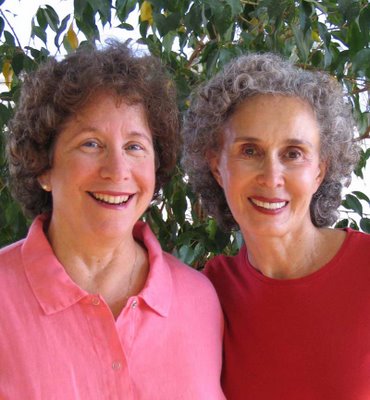
Join other women in the sandwich generation - share ideas and solutions as you learn to nourish family relationships without starving yourself.

Wednesday, September 28, 2011

Sandwiched Boomers: Our Gift to You

Just for today, please indulge us in a stroll down memory lane. It's been 10 years since we published our first Stepping Stones newsletter and 5 years that we've been blogging here at Nourishing Relationships.

Early on we discovered that the Internet was like the Wild West and we joined with other pioneers to build a thriving community. We've met some incredible women through our work and want to share narratives they wrote for issues of the newsletter, some dating way back to 2001.

Read about joys and struggles of family life:

stepmother survival tips
kitchen dancing
the loss of a love

And about women who took a big step beyond their comfort zone:

doing what you love
self discovery at 52
a pilgrimage

We want you to know, dear readers, that we appreciate you! Even though we often don't hear from you directly, the statistics show that you're stopping by and reading the posts. As a gift for your loyalty, please download these complimentary eBooks and feel free to share them with your friends:

Courage and Lessons Learned: Reaching Your Goals

Taking Control of Stress in a Financial Storm: Practical Strategies and Resources for Success

If interersted, sign the email list to the left of this post to receive our monthly newsletter. And if you have your own story to tell or a family issue you want to discuss, we're listening. Just click on 'comments' below and start writing. Or email us at Mentors@HerMentorCenter.com.

Labels: , , , , , , , , , ,

Thursday, March 04, 2010

Sandwich Generation: A Chance to Grow

As a member of the Sandwich Generation, perhaps you are constantly challenged to be the best that you can be. As you assess your resources and strengths, realize that faith in yourself may be your finest quality.

Listen to others but primarily rely on your own instincts. Joannie Rochette believed in what she was doing and concentrated on th Olympics competition. She felt she was where she belonged - it's what her mother would have wanted for her. What is familiar can be calming - have faith in what you’re doing to heal. Realize your hidden internal strength as you trust yourself and look inside for answers. Emotional discomfort can be an opportunity and serve as an invitation to grow.Figure Skating - Ladies Free Skating - Day 14
Increase your capacity to be resilient. It must have been extremely difficult for Joannie to maintain her composure and grace under these circumstances. Just as she has, take it one day at a time. Begin to develop strategies to manage stress and release tension. And you can call on your faith or spirituality. Step by step, you'll be able to turn your hopes and dreams into reality.

Labels: , , , , , , , , , ,

Wednesday, March 03, 2010

Sandwich Generation: Support after Loss

After the loss of a loved one, feeling the support of family and friends can make a big difference in how you grieve. With others to help you with some of the responsibilities, you are more free to mourn and make decisions about what to do next.

Face your uncertainty with the best attitude you can muster. Despite the unthinkable, Joannie Rochette still maintained a single-minded focus in the Olympic skating competition. And now she will be able to grieve her loss. You cannot change what has happened but you can have some control over the way you handle it. Of course, you may be feeling angry, sad or afraid of what is to come. Be aware that your reactions are normal and common. And try to face them directly as you work through your feelings.
Olympic Winter Games - Ladies Free Skating
Make a public commitment to those who want to see you do well. Joannie's exquisite performances, and the standing ovations, said it all. You can tell others about your intentions and create a strong reality that will motivate you. The initial goal is to uncover the courage to begin. Re-establish routine in your life, both at work and with family. Set new long range goals and short term objectives. Enlist your staying power. Your positive experiences will give you the incentive to continue. Although there may be stumbling blocks along the way, never give up.

Labels: , , , ,

Tuesday, March 02, 2010

Sandwich Generation: Assess Strengths and Support

As a member of the Sandwich Generation, you have so much experience managing the challenges of parents growing older and children growing up. Yet when facing the loss of a loved one, do you know what to do to care for yourself?
Figure Skating Women's Short Program - Vancouver 2010
Take control of what is within your reach. Joannie had the drive to win for her mom. She kept herself emotionally insulated, and the fact that she is a superior athlete helped her succeed. You, too, can keep going, no matter how hard it is. Identify your strengths and make them work for you. And have the wisdom to know the difference between what you can manage and what you can't.

Relish the support that comes from those who care about you. Joannie's loss resonated for athletes and fans alike. And everyone in the Pacific Coliseum was cheering her on. She said that all the love and support made it easier to give her best. Recognize that family and friends want to see you succeed and will be there to help sustain you. You can also find comfort in your spiritual community, a therapist or a bereavement group. You do not have to do it alone - make the decision to ask for help whenever you need it.

How do you take care of yourself? Click on 'comments' below to share your thoughts and ideas -and log on tomorrow for more tips.

Labels: , , , , , , , ,

Monday, March 01, 2010

Joannie Rochette: Olympic Courage Despite Tragic Loss

Now that the winter Olympic Games are over, we can savor the memories of all the athletes who gave their best to a sport that they love. But one picture of courage and grace stands out from the rest.

Just hours after learning that her mother had died of a sudden massive heart attack, Canadian figure skater Joannie Rochette was back on the ice. One of the favorites to win an Olympic medal, she practiced her jumps over and over again while her father watched with tears in his eyes.
Figure Skating
Joannie's fellow athletes concurred that she was doing the right thing by staying in the competition. They spoke about her inner strength, remarkable courage and determined attitude. Fans around the world appreciated that, with a heavy heart, she was facing the most difficult skates of her life. If, like Joannie Rochette, you are in shock or have been numbed by an unexpected loss, log on all week for tips that may help you begin to turn your upside down world right again.

Labels: , , , , , , ,

Monday, November 16, 2009

Menopause Brain?

Menopause The Musical Media Call

Last week we looked at ways to activate your brain and keep it young. But recent studies at UCLA indicate that women's brains may not function as well during the early stage of the menopause transition - women do not learn as well shortly before menopause as they do earlier or later. So if you are one of the 60% of women who notice that you have memory problems during your menopausal transition, take heart - your memory will come back once you are postmenopausal.

Menopause may bring many additional changes, emotional as well as physical. The meaning of "the change" may be different for each of you. For some, the aging process may signify the loss of physical beauty, even if you've not been overly concerned with looks before. Arleen loves the challenge of teaching and shares a close relationship with her husband and children. She participates as a volunteer in community activities. Even with her satisfaction with these roles, menopause is a reminder that she is getting older. "I hate looking in the mirror so I avoid it. I see things more magnified now with menopause – I look wrinkled, grayer, fatter and with a turkey neck. I hate it – looking old. I am constantly complaining about it."

It can bring the end of childbearing to the forefront even if you enjoy numerous other meaningful roles in your life. Sometimes the finality of the impossibility of pregnancy brings reductions in the amount of energy you want to invest in childrearing. Diane, who combines her career as a hairdresser with that of an involved parent, feels herself taking a step back from a daughter just entering her twenties. "I like not having a period. But it feels like the end of my motherhood thing. I feel that I’ve done a good job – she’s a good person and will turn out ok. So I am feeling some freedom."

You may also enjoy the freedom that comes from not being able to become pregnant again. Sue was frightened when she started missing her menstrual period. She thought that she might be pregnant with her fifth child. When she learned that her symptoms were the beginning of menopause, she remembers the moment. "I was relieved that’s all it was! Now I am more relaxed with intimacy because I am not worried about getting pregnant. I feel freer now to let myself experience my sexuality."

Menopause can also mark the beginning of thoughts about the finite nature of life, especially for Sandwiched Boomers. This can lead to fears about death or more motivation to accomplish goals. Janet is now thinking about changes she anticipates making in her life in the near future rather than the distant future. "Menopause pushes me to think about the future now and what I can look forward to. The years have passed too quickly. I realize if I want to accomplish things in life, I need to start now."

Has menopause changed your outlook on life? Karen, who has raised four children, has been able to cope with the issues of menopause because, "All of my life experience gives me a certain stability, understanding and strength in dealing with my aging. I don’t want to be a twenty-year old. I feel comfortable being fifty."

The realization that you have the freedom to 'wear purple' and be who you are without any need to please others can be invigorating. Carol, a teacher, is learning to trust herself and be who she is. "Now I have more authenticity – walking my walk, talking my talk – not needing to be so admired or wonderful at any price. There is some loss in coming off the pedestal but I can be selfish and a pain in the ass if I want."

What does menopause mean to you? What emotions are you feeling at the loss of your physical fertility? What does it feel like to know that some parts of your life are now over? What will you leave behind? How do these losses give you the freedom to move in new directions? How are your roles changing? What new opportunities are now opening for you? How will you pursue these? This would be a good time to reflect on your losses and on the new possibilities open to you.

Think about how you want to redefine your role. Click on the post title to take you to our website, www.HerMentorCenter.com where you can read one of our Stepping Stones newsletters. Let us hear from you. And tune in tomorrow when we'll give you some suggestions for coping with menopause.

Labels: , , , , , , , , , , ,

Link

Monday, August 31, 2009

Lessons Sandwiched Boomers Can Learn from Senator Ted Kennedy

Senator Ted Kennedy was the last of the Kennedy brothers whose power, challenges and triumphs dominated a generation of politics. He was eulogized as an inspiration to his family and to those in public service. His body of work toward progressive causes in the U.S. Senate was proof that he understood how policies affected people. And he cared passionately about the people he served and worked tirelessly on their behalf.


Yet his life was marred by tragedy and scandal - from the assassination of brothers John and Robert and the earlier death of his brother Joseph in World War II, to the deadly Chappaquiddick crash. Despite his personal losses and failings, Teddy Kennedy persevered. He served alongside 10 United States presidents and was well known for his political insight. One of his greatest family contributions was as the patriarch to his brothers' children and grandchildren.

It was an emotional weekend for mourners as this legendary politician was put to rest. In his eulogy, Ted Kennedy Jr. shared what his father told him when he lost his leg to cancer as a young boy: "There's nothing you can't do." And, sandwiched boomers, the same applies to you. Log on all week for practical tips that may help you with the challenges you are facing. Clicking on the title of this post will take you to HerMentorCenter.com and an article about another icon, Tim Russert.

Labels: , , , , , , , ,

Link

Tuesday, May 12, 2009

PART 2 - Thelma's Daughter Reads Poetry

Thelma walked solemnly up the stone steps leading to the grey, vine covered building that looked like a castle. Inside, people swarmed about, chatting, filling glasses of wine for each other. Thelma stopped a moment, until she spotted Joanna deep in conversation with a man who reminded her of Humpty Dumpty. Hell, she said to herself, I do know poetry after all. Joanna turned and waved, excusing herself from the fat man.

"Oh, mother, I'm so glad you came. I know this isn't your sort of thing, but I'm very glad you're here." Joanna took her mother by the arm and planted her in a seat right at the front. Too bad, Thelma thought, I can't take a snooze without everybody noticing.

Soon everyone was seated, the readers in a semi-circle in front of the small audience. Joanna sat next to the fat man, then there was a stern looking woman of fifty, and a pink looking young man. Thelma glanced down at her black shoes, her best, and suddenly felt that she needed more Jack Daniel's, preferably through a straw.

"Ladies and gentlemen, thank you very much for coming to this extraordinary event. We have here two eminent practitioners of the poetic art, Mark Pincus and Sandra Godzinski, and two wonderful critics of their work, Joanna Ryan and Larry Orgel. Mark and Sandra will read from their work, and Joanna and Larry will also read, then comment."

The fat man began to read, in a deep, rumbling voice, a voice that Thelma associated with high-toned radio programs.

"The wake of the sea, in its blue wash, oh god, in its blue waves of --"

Thelma looked down at her shoe. Shit - there was a piece of scotch tape where the buckle had broken. She reached down to pull off the tape, very genteelly, she thought, when her eyes rose to that of the stern looking woman. They were fixed on her. Thelma frowned, hoping her deep interest in the poetry would register in her brow.

"The deep anguish of my soul, when that sea washed over me--" How did Aegean Queen do in the fifth, she wondered. Aegean Queen was out of Royal Dynasty, that should be good for something, Rafael Pedroza was up - she had dreamt that one, dreamt that she would win.

"Royal, imperial was that moment, there on the shore--" Royal Donna, oh goddamn it, that's the one, Thelma thought. It'll be Royal Donna for sure. Why didn't I bet on her?

The reading went on. The fat man sat down, beads of perspiration on his face. He wiped himself with a big white handkerchief. The pink young man stood up. Thelma must have drifted off.

"’Love's pinnace,’" he pronounced it ‘penis,’ "will keep our bark afloat - now that line has tremendous significance as far as the sexual symbolization of the poem."

Did I hear "penis?" Thelma wondered with a start. She looked directly into the eyes of the fat poet, who was looking at her. He smiled and unbuttoned the lowest button on his bulging grey vest.

What would happen if I started yelling "penis, penis, penis?" Thelma wondered. He smiled at her again. He could read her mind! He was a poet, and he could read her mind.

Finally it was Joanna's turn. She stood up and started speaking, in that low, wistful voice of hers. What a beautiful girl, Thelma thought, as she looked at the solemn blonde, long hair tied in a velvet ribbon and hanging down her back, in her austere little T-shirt and denim skirt. But she was afraid to listen. It had always been that way. Her daughter was so lovely to her, but so alien, that she could never bear to listen to her even when she was the fairy princess in the school play or the lead singer in the high school chorus. She was the lead in everything, Thelma mused, and every lead meant loss.

Joanna held her arm as they walked out through the front hall. "I'm so glad you came, mother. Did you enjoy it at all?"

"It was fine, honey, just fine." Thelma said and patted her arm. "I don't know how you do it, really."

"Do what?"

"Do what you do, I mean, say all those things. You know so much."

As Joanna helped Thelma into the Plymouth, she said, "Listen, mother, I've been trying to tell you--"

"What honey?"

"I've been trying to tell you about Clive. We're engaged. I hope you won't be upset, you know, that I didn't tell you before."

Thelma sat uncertainly at the steering wheel. "Before when?"

Tune in tomorrow for Part 3

Labels: , , , , , , ,

Monday, March 02, 2009

Recover from Financial Panic by Investing in Yourself

The financial crisis has affected many people and involved losses on many levels –jobs, income, money in the stock market, a certain comfort level, retirement funds, a sense of security, dreams for the future. And, inevitably, these feelings of loss are accompanied by a period of grieving. Ever since Dr. Elizabeth Kubler-Ross first identified the stages of mourning in her seminal book, “On Death and Dying,” bards, mental health experts and pundits have waxed philosophical about this process.

These stages are universal and can relate to any catastrophic personal loss. Kübler-Ross maintained that the steps do not necessarily come in any particular order, nor are all of them necessarily experienced by everyone. If you or your loved ones have lost money, trust or confidence, evaluate where you are in this process by the stages and comments below:

• Denial – “Others may be worried about money issues but this can’t be happening to me.”
• Anger – “Why me? I haven’t done anything to deserve this financial mess.”
• Bargaining – “I’ll do anything if you just help me secure my retirement account.”
• Depression – “I’m so discouraged, what’s the point in even trying to save?”
• Acceptance – “These problems are serious, so I might as well prepare for the long haul.”

Dr. Kubler-Ross describes the final stage of acceptance as generating the energy to reinvest in new objects. As you begin to recover from the economic upheaval, don’t you think you will be best served by investing in your own wellbeing?

Tune in all week as we give you some tips for taking care of yourself in this financial crisis. And to help you get started, click on the title above to take you to our article, Sandwiched Boomers: 7 Tips on Fighting Inertia.

Labels: , , , , , , , ,

Link

Thursday, July 31, 2008

We Welcome Elaine Williams this morning, who is here to discuss her recently published book.

Why did you write A Journey Well Take: Life After Loss?

I wrote it initially for myself, but then realized that other women needed to read it. It's not just my experience but it's something many will go through. I wanted others to realize that even though their grief is unique, there are untold similarities in the universal process. None of us are alone. Once you suffer such a loss, your life changes. Not only in the obvious ways, but also emotionally and sometimes financially.

You were a caretaker for your husband during his illness?

Yes, with the esophagus cancer he couldn't eat and he was on heavy narcotics for pain control. Even though I wrote down everything, in the early days I was terrified of giving him an overdose. Once we signed up with hospice, they worked on his pain protocol constantly. I had always thought of hospice for end-of-life situations, but my sister-in-law, a nurse, told me pain control was their forte. Unfortunately, most regular doctors don’t know too much about long-term pain control.

You stated in A Journey Well Taken; Life After Loss, you were devastated by the loss of your husband of twenty years. Are you still feeling that devastation, four years later?

Some days it's still there, but not the total well of emptiness I carried for almost three years. I am cognizant of what my children and I have lost, what our lives could have been, but I’m no longer drained by the loss. My life is taking different directions. I have learned to love my life.

Do your kids talk about their dad?

Yes, we all do. My youngest boys are still home and we reminisce at times about funny incidences or remembrances involving their dad. My oldest, because he moved away, didn't have as much interaction in this manner, but I feel this really helped us, not being afraid to remember.

Do you think people in general understand the grief process?

Not entirely. Many times people think a year is the cut-off for grieving and you should be feeling better. A year is nothing in the grieving process. Some days you think you’re okay, then one day you’re driving along and you start crying. In grief, emotions seesaw without rhyme or reason. There is no right way to do it, and it’s in each individual’s time. You can’t hurry the process, but you can know that life does heal and become joyful again. If you allow life to come back to you, you will be blessed in unexpected and joyous ways.

Elaine, we appreciate your honest responses to some difficult questions. Now, Readers, please click on "Comments" below - ask your questions and share your own experiences with others.

Labels: , , , , , ,

Wednesday, May 07, 2008

Barack Obama has found his voice again - asking the voters to embrace change, even if it is coming from an imperfect messenger. And after Hillary Clinton's very narrow victory in Indiana yesterday, and despite her expressed determination to continue the fight, the political pundits are all but declaring the race over.

Think about how you deal with a difficult situation, as Sandwiched Boomers, when the outcome is inevitable and ultimately you have no choice but to let go. You may be facing the end of a role you took for granted or the control you once had. Every loss, even a symbolic one, needs to be mourned – such as the marriage of your child, which signals the end of your own youth, or caring for an aging parent, which triggers the fear of being a burden to your children.

During a time of loss and grieving, some emotional, physical or behavioral reactions are normal. You may find that you're angry, feel anxious or sad, perhaps even depressed. Without your familiar comfort zone, it’s difficult to be grounded. There can be changes in familiar patterns, like how much or little you sleep or eat. Or you notice a difference in your ability to focus or concentrate and to remain interested in activities or others. If you're not at ease with yourself, you may withdraw or avoid social situations altogether.

Any major life change is challenging and transition is always a process that takes time and patience. But know that what you are experiencing is common and normal, for you and for Hillary Clinton. And, with a positive attitude, there are many hidden gifts to be found along the way.

Labels: , , , , ,

Wednesday, February 20, 2008

As a Sandwiched Boomer, when you are counting on the support of your partner to cope with a serious illness, the barriers to straight talk that emerge may surprise you. Understanding what motivates your husband may make it easier for you to initiate more frankness into your conversations. Yesterday we outlined several possible grounds for difficulty; today we discuss two more.

Not surprisingly, your spouse is unable to fully comprehend what your illness is causing you to give up - feelings of control and invulnerability, your self-identity as a well person or expectations of a disease-free future. Consequently he may expect that you will be over your upsetting emotions sooner than you are. It's up to you to explain to him the depth of your losses, both present and future.

It may help to think about how you would react to a decline in your partner's well being, were the tables turned. It could easily threaten your sense of stability and change the role you play in your marriage. Blaire found herself pulling away from her husband in fear and anger. "Since my husband’s heart attack I hold back on love. It’s self-protective. He’s not taking care of himself - he won’t lose weight or stop smoking. I’m afraid I’ll lose him to an early death."

Facing a serious illness together leads to a complex set of reactions by both. This makes it even more important for you to reveal your feelings to each other, openly and honestly. As you begin to accept the difficulties in your conversations, you will also become aware of the positives that accompany the health challenges you have met together. Coping with a major disease often leads to a new perspective - with a greater appreciation of the preciousness of life - and a sense of increased intimacy with your partner. As you continue to move forward, your emotional closeness will be reflected in the deeper conversations that you share.

Labels: , , , , , ,